Torani Salted Caramel Syrup: The Sweet-Salty Flavor Review, Prices & Best Recipes
Classic caramel has a fan club. Salted caramel has a cult. When Torani took its butter-candy caramel base and folded in real salt, the result became one of the brand’s best-selling syrups — and the reason so many home baristas quietly prefer it over the original. This guide covers everything worth knowing before you buy: what it actually tastes like, the full nutrition panel, what’s inside the bottle, where it’s cheapest right now, exactly how much to pour, and the recipes that make it earn its “Best Seller” badge.
What Does Torani Salted Caramel Syrup Taste Like?
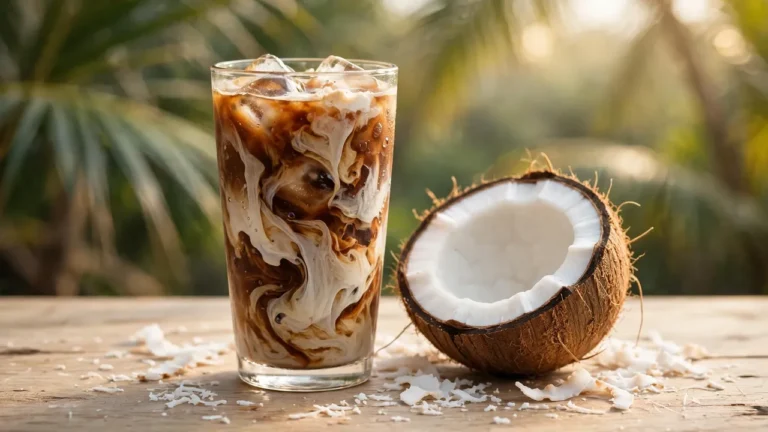
Start with classic caramel — buttery, sweet, a little round. Now sharpen it. The salt in this syrup isn’t a gimmick; it works the way salt works in baking, lifting the buttery notes so the caramel reads deeper and less one-note than the classic version. Torani’s own description puts it well: “a nice hit of salt emphasizes the luscious buttery notes,” building a syrup that leans indulgent in hot drinks — cocoas, coffees, lattes.
In a latte, it lands like a caramel chew with a pinch of sea salt on top: sweet first, savory shimmer right behind it, and a clean finish that doesn’t cling. Compared side by side with Torani Classic Caramel, the salted version is a touch less sweet-tasting (even though the sugar content is essentially the same) because the salt rebalances your palate. If you find classic caramel a bit flat in milk, this is the bottle to try.
One honest note: there is no dairy in the syrup — it’s sugar, water, salt, and natural flavors — so the “creamy” impression comes from whatever milk or cream you pair it with. In oat milk and whole milk alike it stays silky; see the curdling section below for why.
🧂 Torani Salted Caramel — Quick Facts
Nutrition figures from the official torani.com product page. Serving size: 2 Tbsp (1 fl oz).
Nutrition Facts: What’s Really in a Pump (or Two)
Torani defines a serving as 2 tablespoons (1 fl oz / 30 mL), which is roughly what a generous home pour amounts to — and about what two pumps from a Torani syrup pump dispense (each pump delivers 1/4 oz, so 1 oz = 4 pumps). Here’s the full panel, copied from the official product page:
Nutrition Panel (per 2 Tbsp / 1 fl oz serving)
| Torani Salted Caramel Syrup — Nutrition Facts | |
| Calories | 100 |
| Total Fat | 0 g (0%) |
| Cholesterol | 0 mg (0%) |
| Sodium | 105 mg (4%) |
| Total Carbohydrate | 25 g (9%) |
| Total Sugars (all added) | 24 g (49%) |
| Protein | 0 g |
| Servings per 750 mL bottle | ~25 |
Two things stand out. First, the 105 mg of sodium per serving — roughly 4% of a day’s worth — is what makes this syrup taste distinctly “salted.” It’s a meaningful bump over plain caramel syrups. If you’re watching sodium closely, it’s worth knowing. Second, 24 of the 25 grams of carbs are added sugars, so treat the sugar-free version (0 calories, 0 g sugar — details below) as the way in if that’s your lane.
Ingredients, Exactly as Listed
Pure Cane Sugar, Water, Salt, Natural Flavors, Citric Acid, Potassium Sorbate (To Preserve Freshness), Sodium Benzoate (To Preserve Freshness), Caramel Color.
That’s a short, readable list for a flavored syrup: cane sugar does the heavy lifting, salt is the third ingredient (genuinely present, not a whisper), and the preservatives are what keep the bottle shelf-stable once opened. Note there is no actual dairy in the bottle despite the buttery taste — the flavor comes from natural flavors. If you’re avoiding caramel color, though, flag it: it’s in here, unlike Torani’s Puremade line.
Allergens & Certifications
Torani’s product page lists every major allergen — milk/dairy, eggs, fish, shellfish, tree nuts, peanuts, wheat, soy, sesame — as absent, and marks the syrup gluten-free. It’s also OK Kosher certified and Halal certified by IFANCA, and made in the USA. Between the dairy-free ingredient list and the kosher/halal certifications, this is one of the least fussy Torani flavors for dietary restrictions.
How Much Does Torani Salted Caramel Syrup Cost?
Torani sells it directly at starting at $7.99 for the 750 mL glass bottle (with volume discounts — 5% off 3+ bottles, 10% off 12+ — at torani.com). Most single-bottle retail runs a few dollars higher. Here’s what major retailers were showing, observed on October 16, 2026. Prices move constantly, so treat these as a map, not a promise — always check the current listing before you buy.
💰 Where’s the Best Price Right Now?
Observed 2026-10-16 · 750 mL (25.4 fl oz) bottle · check current listings
*Amazon listing includes a syrup pump; some observations are from recent crawls — confirm live prices. Bulk savings: WebstaurantStore drops to $7.99/bottle in 3-lots and ~$6.58/bottle in a 12-case.
The typical single-bottle range in the US is about $8–$13. Two cost-saving angles worth knowing: WebstaurantStore sells a 12-bottle case for $78.99 (roughly $6.58 per bottle) if you’re stocking a café or splitting with friends, and a smaller 375 mL plastic bottle exists for people who want to try it before committing to the big glass bottle. For a fuller rundown of where Torani is sold online and in stores, see our complete guide to where to buy Torani syrup.
How Much Syrup Should You Use? (Ratios That Work)
Torani’s own guidance is “half to one ounce” per drink. The practical translation, using the standard Torani syrup pump (1/4 oz per pump):
- 12 oz latte: 2–3 pumps (1/2–3/4 oz) — 2 pumps for a balanced drink, 3 if you like it sweet
- 16 oz latte: 3–4 pumps (3/4–1 oz)
- Hot cocoa or mocha: 1–2 pumps; the cocoa already brings sweetness
- Iced coffee or cold brew: 2–3 pumps; cold dulls sweetness, so err toward 3
- Italian soda or sparkling water: 2 pumps per 12 oz glass, then taste and adjust
The single most common beginner mistake is pouring like it’s coffee creamer — a heavy glug easily doubles the sweetness. Start at 1/2 oz and work up. And because the salt amplifies perceived richness, salted caramel reads sweeter than classic caramel at the same dose, so many people use one pump less than they would of the original. For the full technique walkthrough, see our Torani Italian syrup guide — the dosing principles are the same across flavors.
☕ Salted Caramel Latte — Home Recipe Card
Torani-style café latte · makes one 12 oz drink
- Add 2 pumps (1/2 oz) Torani Salted Caramel Syrup to a 12 oz mug
- Pull 2 shots of espresso (or 1/2 cup strong coffee) over the syrup
- Steam or heat 8 oz milk and pour over
- Optional: drizzle with caramel sauce and a pinch of flaky sea salt
Iced version: same syrup + espresso, pour over ice, top with cold milk. Mocha twist: add 1 pump of chocolate syrup alongside — try our classic caramel review for the chocolate-pairing logic.
More Ways to Use It Beyond Lattes
- Salted caramel hot chocolate — 1 pump per cup of cocoa; the salt keeps cocoa’s richness in check
- Caramel apple cider — 1 oz syrup + hot apple cider, topped with whipped cream
- Dessert drizzling — thinly, over ice cream, brownies, or cheesecake; it pours like a thin caramel sauce
- Salted caramel cold foam — whisk 2 Tbsp syrup into cold foam for cold brew
- Cocktails — 1/2 oz in an espresso martini or a caramel white Russian
- Baking — swap into frostings or whipped cream (1–2 Tbsp); the salt is already built in
Will It Curdle in Milk? (Storage, Heat & Shelf Life)
Short answer: no. Torani formulated this syrup to resist curdling in milk and hold up under heat, so it works in hot lattes, steamed milk, and cold applications alike. Curdling usually comes from acids clashing with milk proteins — this syrup’s formula is balanced to avoid that, which is one reason cafés stock it.
On storage: Torani doesn’t print storage instructions on the official product page I could find, so here’s the honest state of things. The practical, widely-used rule for Torani syrups is a cool, dry pantry with the cap sealed tightly, away from direct sunlight — no refrigeration required. I could not find an official shelf-life statement from Torani; check the date printed on your bottle and use your senses (off smells, cloudiness) rather than a guessed number.
Salted Caramel vs. Classic Caramel: What’s the Difference?
They share a base — pure cane sugar, water, natural flavors, caramel color — but they diverge in exactly one place: salt is the third ingredient in salted caramel, and the salt rewires the whole experience. Side by side:
| Salted Caramel | Classic Caramel | |
|---|---|---|
| Defining note | Buttery + a savory salt lift | Round, sweet, buttery |
| Sugar per 2 Tbsp | 24 g | ~24 g (comparable) |
| Sodium per 2 Tbsp | 105 mg — noticeably higher | Lower |
| Best in | Lattes, cocoa, mochas, desserts | Lattes, drizzling, everyday use |
| Pick it if | You like sweet-savory contrast | You want pure sweet caramel |
Can’t decide? Read our full review of Torani Classic Caramel and compare the tasting notes — most people land on one side quickly. And if you want caramel without the sugar, our sugar-free classic caramel guide covers the zero-sugar family.
Sugar-Free & Zero Sugar Salted Caramel
Two no-sugar siblings exist, and they’re worth knowing separately because they’re sweetened differently:
- Torani Sugar Free Salted Caramel — 0 calories, 0 g sugar per 2 Tbsp serving. Sweetened with sucralose and acesulfame potassium, with xanthan gum for body. Sodium is a touch lower (95 mg per serving). Same “resists curdling” formulation as the regular version. Torani lists it from $7.99.
- Torani Puremade Zero Sugar Salted Caramel — also zero sugar, but built on the Puremade platform: natural flavors, no caramel color, non-GMO, and labeled keto. Around $11.99 at restaurant suppliers. Pick this one if caramel color or artificial sweeteners are your sticking points.
Both hold up in hot drinks the same way the regular bottle does. Note the honesty clause: Torani’s “keto” label tells you about carbs, not about your diet — 0 g sugar is the fact; keto-friendliness beyond that depends on the rest of your day.
Is It Vegan, Keto-Friendly, Halal & Kosher?
- Vegan: Yes — the ingredient list is plant-derived and Torani’s allergen panel marks dairy absent. No honey, no dairy, no animal-derived anything.
- Halal: Certified by IFANCA.
- Kosher: OK Kosher certified.
- Gluten-free: Yes, per Torani’s product page.
- Keto: The regular syrup has 24 g of added sugar per ounce — not a keto fit. The Puremade Zero Sugar version is the keto-labeled option.
FAQs
Does Torani Salted Caramel Syrup taste very salty?
No — it’s salt-forward but not salty. The 105 mg of sodium per serving is enough to sharpen the caramel notes and keep the sweetness from feeling flat, but nobody would mistake it for salt water. If you like salted caramel ice cream, this lands in exactly that territory.
How many calories are in Torani Salted Caramel Syrup?
100 calories per 2-tablespoon (1 oz) serving, with 25 g of carbs and 24 g of added sugar. A typical latte with 2 pumps (1/2 oz) adds about 50 calories.
Is Torani Salted Caramel Syrup vegan?
Yes. The ingredients are pure cane sugar, water, salt, natural flavors, citric acid, preservatives, and caramel color — no dairy, eggs, or other animal products.
Does it need to be refrigerated after opening?
Torani doesn’t instruct refrigeration on the product page. The standard practice is a cool, dry pantry with the cap sealed. Refrigeration isn’t harmful, but it can thicken the syrup.
Will it curdle in milk?
It’s specifically formulated to resist curdling in milk and hold up under heat, so it’s fine in hot lattes, steamed milk, and cold drinks.
How much syrup goes in a latte?
Torani recommends 1/2–1 oz per drink — about 2–4 pumps from a standard Torani pump (1/4 oz per pump). Start with 2 pumps in a 12 oz latte and adjust.
What’s the difference between salted caramel and classic caramel syrup?
Same caramel base; salted caramel adds salt as its third ingredient. Sugar content is essentially the same, but the salt makes the flavor read deeper and less one-note sweet.
Is there a sugar-free salted caramel syrup?
Yes — two, in fact. Torani Sugar Free Salted Caramel (sucralose, 0 calories) and Torani Puremade Zero Sugar Salted Caramel (keto-labeled, no caramel color).
Is it gluten-free and kosher?
Yes to both — Torani lists it as gluten-free and OK Kosher certified, plus IFANCA Halal certified.
How long does an opened bottle last?
I couldn’t find an official shelf-life statement from Torani. Store it sealed in a cool, dry place, check the date on the bottle, and trust your senses — discard it if it smells off or looks cloudy.
The Bottom Line
Torani Salted Caramel Syrup earns its “Best Seller” badge: it takes the familiar caramel base and fixes the one thing classic caramel sometimes lacks — depth. The salt is real (105 mg per serving, third on the ingredient list), the nutrition panel is exactly what you’d expect from a cane-sugar syrup, and the price is fair at $7.75–$11 for 25 drinks’ worth of lattes. Start with the 375 mL bottle if you’re curious, keep it at 2 pumps per latte, and put the sugar-free version in your cart if sugar is the issue. Your morning coffee will thank you.
Prices and product details observed October 16, 2026. Retailers change prices frequently — verify current listings before buying.