Torani Coconut Syrup: The Complete Guide to Flavor, Price, Nutrition & Recipes
Coconut has a way of making an ordinary drink feel like a small holiday. Torani Coconut Syrup is how thousands of coffee shops and home baristas get that creamy, tropical flavor into lattes, iced teas, and mocktails without hauling out a whole coconut.
But is it worth the money? What is actually in the bottle, how many calories does a pump add, and which version should you buy? This guide covers the flavor, nutrition facts, ingredients, allergen info, current prices, and five easy recipes — all based on Torani’s published product information.
Short answer: Torani Coconut Syrup is a 750 ml cane-sugar syrup with natural coconut flavor (90 calories and 23 g sugar per 2-tablespoon serving). It is gluten-free, kosher, and halal certified, and it mixes cleanly into hot or cold milk. A zero-calorie sugar-free version sweetened with sucralose is also available.
What Does Torani Coconut Syrup Taste Like?
Torani describes it as a Hawaiian-inspired syrup that “evokes the full-flavored coconut sweetness with a smooth creaminess and aroma you’ll love.” That is marketing copy, but it is also pretty accurate.
In practice, the flavor lands between fresh coconut water and a Mounds bar: unmistakably coconut, smooth rather than sharp, and sweet enough to carry a whole drink. The aroma is strong when you open the bottle — what Torani calls a “ripe coconut bouquet” — but it settles into drinks without taking over.
A few honest notes from how people actually use it:
- It is not as intense as coconut cream. This is a flavoring syrup, not coconut cream of coconut. It adds coconut flavor and sweetness; it does not add the rich, fatty body of coconut milk.
- It pairs best with creamy bases. Milk, oat milk, half-and-half, and pineapple juice all love it. Straight sparkling water gives a lighter, almost candy-like coconut.
- A little goes a long way. Start with 1 tablespoon in a 12-ounce drink and add more if you want. Two tablespoons is the standard coffeehouse-strength pour.
Ingredients, Allergens & Certifications
Here is the full ingredient list, straight from Torani’s published product information:
| Ingredient | What it does |
|---|---|
| Pure cane sugar | Sweetener and flavor carrier |
| Water | Base of the syrup |
| Natural flavors | The coconut flavor (no coconut meat or milk) |
| Citric acid | Balances sweetness, adds brightness |
| Potassium sorbate | Preservative for freshness |
| Sodium benzoate | Preservative for freshness |
Two things stand out. First, the bottle contains no actual coconut meat, coconut milk, or coconut oil — the flavor comes from natural flavoring, which is how nearly all coffeehouse syrups work. If you want the fat and richness of real coconut, pair the syrup with actual coconut milk.
Second, the allergen picture is friendly. The formula contains no milk, egg, soy, or gluten-containing ingredients. It is certified gluten-free, OK Kosher, and Halal by IFANCA. It also contains no animal-derived ingredients, which is why it shows up on many vegan coffee-shop menus (there is no official vegan certification printed on the label, so strict vegans should check the current packaging).
Allergy caution: the U.S. FDA classifies coconut as a tree nut. This syrup contains no coconut as an ingredient, but anyone with a coconut or tree-nut allergy should read the current label and check with their doctor before trying it. For a deeper look at how Torani labels its products, see our breakdown of what’s actually inside Torani syrups.
Torani Coconut Syrup Nutrition Facts
Per Torani’s published nutrition panel, here is what one standard 2-tablespoon (30 ml / 1 fl oz) serving contains:
| Nutrient | Per 2 Tbsp serving | % Daily Value |
|---|---|---|
| Calories | 90 | — |
| Total fat | 0 g | 0% |
| Sodium | 0 mg | 0% |
| Total carbohydrate | 23 g | 9% |
| Total sugars | 23 g | — |
| Added sugars | 23 g | 46% |
| Protein | 0 g | — |
| Vitamin D, calcium, iron, potassium | 0 | 0% |
The 750 ml bottle holds 25 of these servings. In other words, a full-strength coconut latte adds roughly the same sugar as a can of soda’s worth of sweetener — 23 grams of added sugar is 46% of the FDA’s daily value.
If that number makes you wince, cut back to 1 tablespoon (about 45 calories and 11–12 g sugar) or switch to the sugar-free version below. Our guide to keto-friendly Torani syrups has more on managing sugar across the whole lineup.
Regular vs. Sugar-Free Coconut Syrup
Torani sells coconut in two lines: the Original cane-sugar syrup and a Sugar-Free version sweetened with Splenda (sucralose). Here is how they compare:
| Original Coconut | Sugar-Free Coconut | |
|---|---|---|
| Sweetener | Pure cane sugar | Sucralose (Splenda) |
| Calories (2 Tbsp) | 90 | 0 |
| Carbs (2 Tbsp) | 23 g | 0 g |
| Flavor | Smooth, rounded coconut | Strong ripe coconut bouquet; slightly sharper |
| In milk | Formulated to resist curdling | More prone to curdling — mix carefully |
| Best for | Everyday lattes & sodas | Keto, low-carb, diabetic-friendly drinks |
Expert tip: if you are sensitive to sucralose’s aftertaste, try blending — 1 tablespoon of the regular plus 1 tablespoon of the sugar-free cuts the sugar roughly in half while keeping the rounder cane-sugar flavor. Neither version contains gluten, and both are kosher.
How Much Does Torani Coconut Syrup Cost?
A 750 ml bottle is the standard size everywhere. Prices move around a lot between retailers, and bundle-with-pump listings cost more than the bare bottle, so here is a snapshot of prices observed across retailers as of October 22, 2026. Always check the current listing before you buy — sales and multi-packs change the math.
| Retailer | Listing | Observed price |
|---|---|---|
| Amazon | 750 ml with pump | ~$14.99 |
| Amazon | Sugar-free 750 ml with pump | ~$14.99 |
| TikTok Shop | 25.4 oz with pump, free shipping | $13.99 |
| WebstaurantStore | 750 ml glass bottle (food-service) | $9.89 ea. ($7.99 in lots of 3)* |
| Instacart (CHEF’STORE) | 25.4 fl oz, same-day delivery | $8.04* |
| Gopuff | Sugar-free 750 ml | $9.99 |
| Amazon (multi-pack) | Sugar-free 750 ml, pack of 4 | $27.76 |
| SnapKlik | 25.4 oz, 4-pack | $54.98–$69.98 (varies by region) |
| Costco.ca | 6 × 750 ml variety + pump | 69.99 CAD (out of stock) |
* Older listing; price may no longer be current. All prices observed October 22, 2026 — confirm on the live listing.
For a one-time purchase, the food-service sellers (WebstaurantStore) are usually cheapest per bottle, but watch the shipping. Amazon’s pump bundles are convenient for home use. If you go through a lot of syrup, the 4-pack on Amazon brings the per-bottle cost well under $10. See our complete guide to where to buy Torani syrup for store-by-store strategies.
5 Easy Torani Coconut Syrup Recipes
Coconut is one of Torani’s most versatile flavors because it works in creamy, fruity, and sparkling drinks alike. All five recipes below use the 750 ml bottle and scale easily for a crowd.
1. Iced Coconut Latte (the classic)
The drink most people buy the bottle for. Tastes like the coffeehouse version at a fraction of the price.
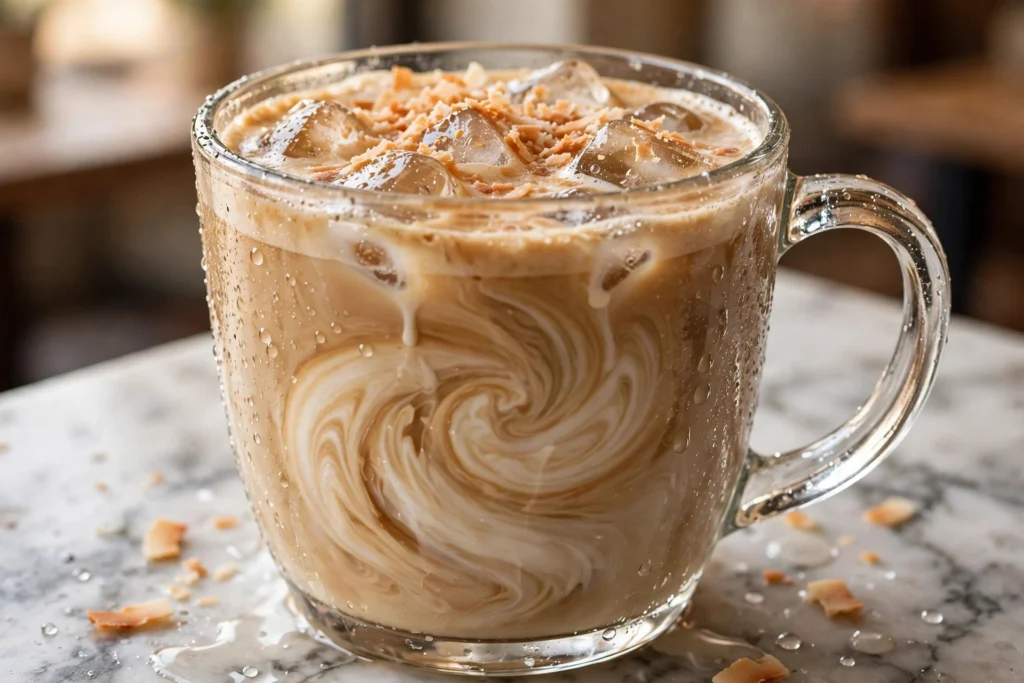
You need: 2 shots espresso (or ½ cup strong brewed coffee, cooled) · 2 Tbsp Torani Coconut Syrup · 6 oz cold milk or oat milk · ice · toasted coconut flakes (optional).
How: stir the syrup into the hot espresso so it dissolves fully, then pour over a tall glass of ice and milk. Top with a pinch of toasted coconut flakes. For a lighter drink, use 1 tablespoon of syrup.
2. Coconut Italian Soda
Sparkling, sweet, and dangerously easy. This is the drink that sells coconut syrup at Italian soda stands.
You need: 2 Tbsp Torani Coconut Syrup · 8 oz sparkling water · ice · optional splash of half-and-half for a “creamy” soda.
How: fill a glass with ice, add syrup, pour in sparkling water, and stir gently. The half-and-half version — sometimes called a coconut Italian cream soda — is richer and more dessert-like.
3. Piña Colada Mocktail
All the beach-bar flavor with zero alcohol. Coconut and pineapple are a natural pairing — the syrup handles the coconut, real pineapple juice handles the rest.
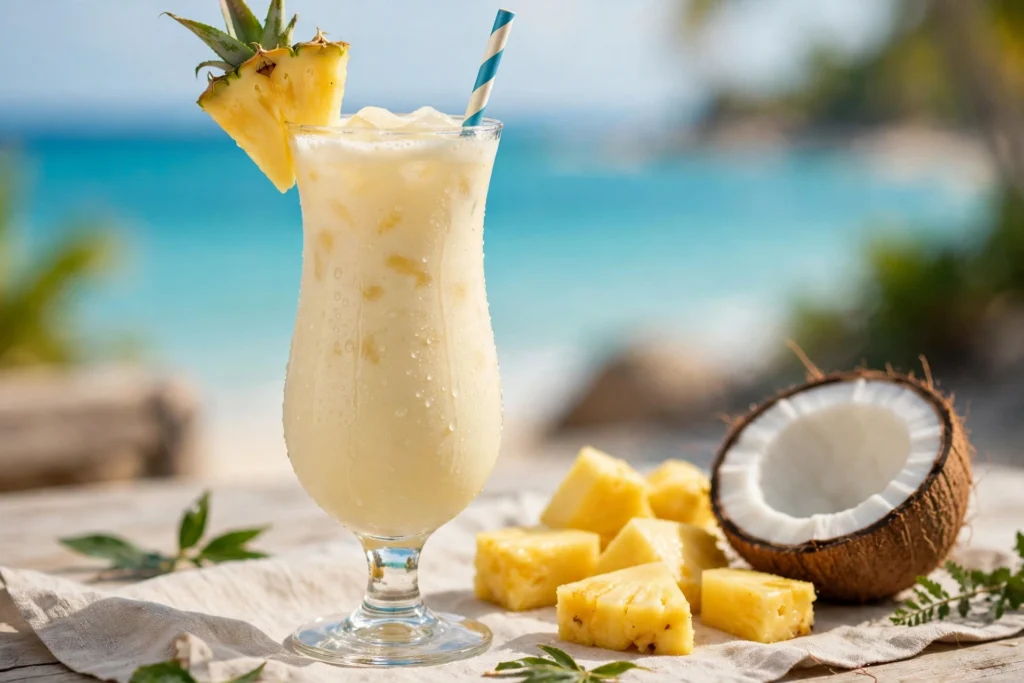
You need: 1 oz (2 Tbsp) Torani Coconut Syrup · 4 oz pineapple juice · 2 oz coconut water · ice · pineapple wedge to garnish.
How: shake everything with ice and strain into a hurricane glass, or blend with a cup of ice for the frozen version. For the full lineup of spooky Halloween drinks, coconut plus blue raspberry syrup makes a great “tide pool” punch.
4. Coconut Iced Tea
An underrated combo. The coconut smooths out black tea’s bitterness and makes green tea taste almost floral.
You need: 8 oz freshly brewed black or green tea, cooled · 1–2 Tbsp Torani Coconut Syrup · ice · lemon wedge.
How: brew the tea double-strength, stir in the syrup while warm, then pour over ice. Add the lemon wedge at the end — a little citrus wakes the coconut up.
5. Coconut Hot Chocolate
Winter’s answer to the coconut latte. Think Mounds bar in a mug.
You need: 8 oz hot milk · 2 Tbsp cocoa powder + 1 Tbsp sugar (or your favorite cocoa mix) · 1–2 Tbsp Torani Coconut Syrup · whipped cream (optional).
How: whisk the cocoa into the hot milk, stir in the coconut syrup off the heat, and top with whipped cream. For a comparison of the two product lines, see Torani syrups vs. sauces — the chocolate sauce plus coconut syrup is the full candy-bar combo.
Storage & Shelf Life
Unopened, the bottle keeps for well over a year in a cool, dark cabinet — check the best-by date printed on the neck. Once opened, the preservatives (potassium sorbate and sodium benzoate) keep it stable for months at room temperature.
Refrigeration is not required, though some people prefer the syrup chilled for iced drinks. The one real enemy is heat and sunlight, which fade the flavor faster. For the full rules across every Torani line, see whether Torani syrups need to be refrigerated.
Will Torani Coconut Syrup Curdle in Milk?
The Original coconut syrup is specifically formulated to mix into hot and cold milk without curdling — that is a stated design feature of Torani’s cane-sugar line. In normal use (syrup stirred into coffee, then milk added, or syrup plus steamed milk), it blends cleanly.
When curdling does happen, the usual culprits are:
- The sugar-free version. Sucralose-based syrups are more temperamental in dairy than the cane-sugar original.
- Very acidic mixes. Citrus-heavy or highly acidic drinks can curdle milk on their own, syrup or not.
- Order of operations. Stir the syrup into the coffee or warm milk first, then add the rest — dumping cold syrup into near-boiling milk is asking for trouble.
Bottom line: with the regular coconut syrup in ordinary lattes, curdling is rare. If you are mixing big batches ahead of time (cold brew concentrate, party punch), do a small test glass first.
Coconut Syrup FAQs
What does Torani Coconut Syrup taste like?
Smooth, sweet coconut with a creamy aroma — between fresh coconut and a candy-bar filling. It is flavored with natural flavors rather than real coconut meat or milk, so the taste is clean and consistent rather than rich and fatty.
Is Torani Coconut Syrup made with real coconut?
No. The flavor comes from natural flavors; the bottle contains no coconut meat, coconut milk, or coconut oil. If you want real coconut richness, combine the syrup with coconut milk in your recipe.
How many calories are in Torani Coconut Syrup?
A standard 2-tablespoon (1 fl oz) serving of the Original has 90 calories and 23 grams of sugar. The sugar-free version has 0 calories and 0 grams of carbs per serving.
Is Torani Coconut Syrup gluten-free?
Yes. It contains no gluten ingredients and is labeled gluten-free. It is also certified OK Kosher and Halal by IFANCA.
Is Torani Coconut Syrup vegan?
It contains no animal-derived ingredients, and it is a staple on many vegan café menus. There is no official vegan certification on the label, so strict vegans may want to check current packaging.
Is there a sugar-free coconut syrup?
Yes — Torani Sugar Free Coconut Syrup is sweetened with sucralose (Splenda) and has zero calories and zero carbs. It has a slightly sharper coconut flavor and is more prone to curdling in milk than the original.
Does Torani Coconut Syrup need to be refrigerated?
No. The preservatives keep it stable at room temperature after opening. Store it in a cool, dark cabinet and use it within a few months of opening for the best flavor.
How much coconut syrup should I use in coffee?
Torani’s serving is 2 tablespoons (1 fl oz) per 12–16 oz drink — full coffeehouse strength. Start with 1 tablespoon if you prefer a lighter touch, then adjust.
Will Torani Coconut Syrup curdle in milk?
The Original cane-sugar version is formulated to resist curdling in hot and cold milk. The sugar-free version curdles more easily — stir it in carefully and avoid near-boiling milk.
Where can I buy Torani Coconut Syrup?
Amazon (often bundled with a pump, ~$15), TikTok Shop (~$14), food-service sellers like WebstaurantStore (often under $10 plus shipping), Gopuff, and Instacart for same-day delivery. Prices were observed on October 22, 2026 — check the live listing.
How long does a 750 ml bottle last?
At full strength (2 Tbsp per drink), one bottle makes 25 drinks. Using 1-tablespoon pours, it stretches to about 50 drinks — several weeks of daily coffee for most households.
What flavors pair well with Torani Coconut Syrup?
Chocolate (coconut mocha), pineapple (piña colada), vanilla, caramel, coffee, lime, and blue raspberry are the classic pairings. Coconut also plays well with almond and macadamia nut for a tropical-nut profile.
Key Takeaways
- Flavor: smooth, creamy coconut from natural flavors — no real coconut in the bottle, but a consistent, coffeehouse-ready taste.
- Nutrition: 90 calories and 23 g sugar per 2-Tbsp serving; a zero-calorie sugar-free version exists.
- Diet-friendly: gluten-free, OK Kosher, IFANCA Halal, no animal ingredients.
- Price: roughly $10–$15 for 750 ml depending on the retailer (observed October 22, 2026), working out to about $0.40–$0.60 per drink.
- Best uses: iced coconut lattes, Italian sodas, piña colada mocktails, coconut iced tea, and coconut hot chocolate.
Ready to try it? New to the brand, start with our guide to how to use Torani syrup, browse the complete list of Torani flavors, or see where coconut lands in our ranking of the most popular Torani syrups.