Torani Strawberry Syrup Review: The Sweet-Tart Berry Classic Your Drinks Deserve
Some flavors try to be everything. Strawberry doesn’t have to. Torani’s strawberry syrup is the kind of bottle you reach for when you want instant, unmistakable summer — a bright red, sweet-tart syrup that turns plain soda water into an Italian soda and plain lemonade into something you’d pay five dollars for at a café.
But is it any good next to heavy hitters like Torani raspberry syrup, and does the ingredient list hold up under scrutiny? I dug into the official specs, nutrition label, and real-world prices to give you a complete answer. Short version: it earns its shelf space.
Quick verdict: a genuinely tasty, candy-leaning strawberry flavor that’s excellent in sodas, lemonades, and milk drinks. Watch the sugar (19g per serving) and the Red 40 coloring — and if you want zero sugar, the sugar-free version exists.
19g sugar (cane sugar)
Full-bodied mouthfeel
Best for: sodas, milk drinks
0g sugar (sucralose + Ace-K)
Thinner texture
Best for: low-cal sodas, teas
What Torani Strawberry Syrup Tastes Like
Torani describes strawberry with a line that shows up on every bottle: “Strawberries awake memories of spring and summer.” That is marketing, but the tasting notes behind it are real. The flavor is sweet first, tart second, and more “strawberry candy” than “fresh-picked berry.”
Think strawberry hard candy, strawberry milk, and the syrup at the bottom of a strawberry sundae — all in the same sip. It is vivid and aromatic rather than subtle. If you want a whisper of fruit, use half a pump. If you want a proper strawberry Italian soda, commit to the full measure.
Compared to Torani’s other fruit flavors, strawberry is the crowd-pleaser: less sharp than raspberry, less citrusy than grenadine, and more versatile than either across milk, water, and sparkling drinks. Where raspberry demands attention, strawberry just fits in.
What’s Inside the Bottle: Ingredients and Allergens
Here is the full ingredient list for the regular (Original) Torani Strawberry Syrup, taken from current retailer label data: pure cane sugar, water, natural flavors, citric acid, tartaric acid, sodium benzoate (to preserve freshness), and FD&C Red #40.
A few honest observations. Sugar is the first ingredient, so there is no pretending this is a health drink. The color comes from Red #40 rather than strawberry juice, which explains the vivid hue and the candy-leaning flavor. “Natural flavors” does the heavy lifting on the strawberry note — real strawberry juice is not in the bottle.
On the allergy front, the news is good. Torani states that all of its products are Kosher certified, and the Original Strawberry Syrup is listed as Halal certified on torani.com’s religious certification page. Retailer label data lists it as gluten-free and milk-free, and the ingredient list contains no milk, soy, wheat, peanuts, tree nuts, eggs, or fish. As always, check your own bottle’s label, since formulations can change.
Want the flavor without the sugar? The sugar-free version swaps cane sugar for sucralose and acesulfame potassium, drops to 0 calories per serving, and keeps the same Red #40 coloring. It works in the same drinks, though the mouthfeel is thinner — syrup viscosity comes mostly from dissolved sugar.
How Much Syrup to Use: The Ratios That Actually Work
Torani’s official serving size is 2 tablespoons (1 oz) per drink, and a standard Torani syrup pump dispenses about ¼ oz per pump — so four pumps equals one full serving. In practice, most home drink-makers land somewhere between 1 and 2 tablespoons depending on the drink.
For sparkling water and Italian sodas, start with 2 tablespoons per 8–10 oz of soda water, then add cream or half-and-half if you want the classic French-style soda. For lemonade, 1–2 tablespoons per 8 oz of lemonade gives you a proper strawberry lemonade; the lemonade’s own sugar means you can lean toward the lighter end.
In coffee and milk drinks, 1 tablespoon per 8–12 oz is the sweet spot — strawberry is assertive, and milk amplifies sweetness. Go easy the first time. You can always add more syrup, but you cannot take it back out of a latte.
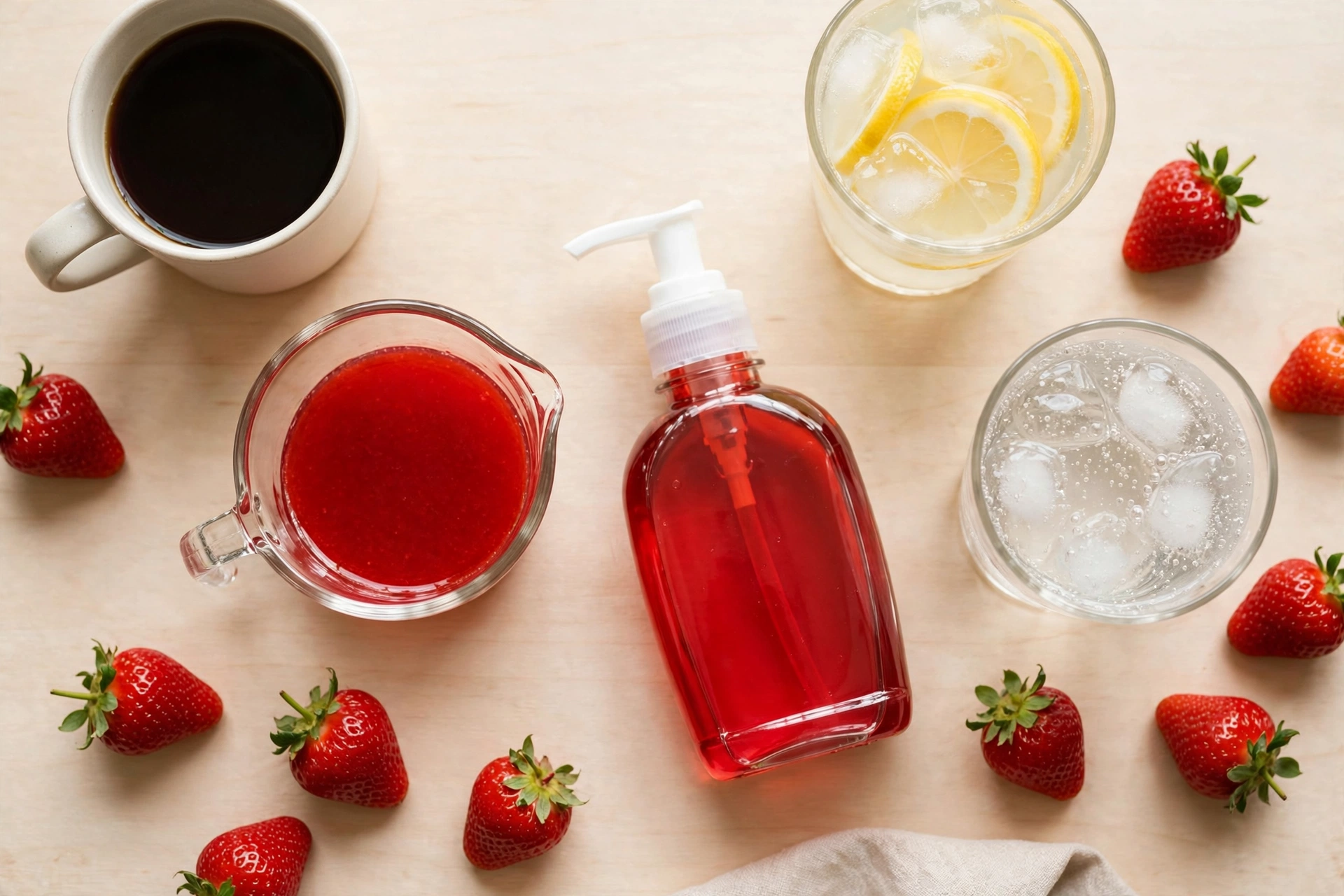
The Best Drinks to Make With It
Strawberry is one of Torani’s most versatile fruit flavors because it plays well with water, milk, and sparkling bases alike. Here are the four builds I keep coming back to, each tuned so the strawberry leads without drowning everything else.
1. Classic Strawberry Italian Soda
Fill a tall glass with ice. Add 2 tablespoons of Torani strawberry syrup, then pour 8–10 oz of chilled sparkling water or club soda over it and stir gently. For the café version, float 2 tablespoons of half-and-half on top — the pink swirl is half the fun.
This is the drink Torani was originally built for, and it still shows. The carbonation lifts the candy notes and the result tastes like the best strawberry soda you have never bought in a can. A squeeze of lime at the end adds a bright edge.
2. Strawberry Lemonade
Combine 1–2 tablespoons of syrup with 8 oz of lemonade over ice. Torani itself suggests a strawberry-ginger-lemonade riff: 1 oz syrup, 8 oz lemonade, a couple of ginger slices, and a lemon wedge. The ginger sounds odd until you try it — it gives the drink a grown-up backbone.
Homemade lemonade works best here since you control the sweetness. If your lemonade is already sweet, start with 1 tablespoon of syrup and adjust. Kids tend to prefer the full 2 tablespoons.
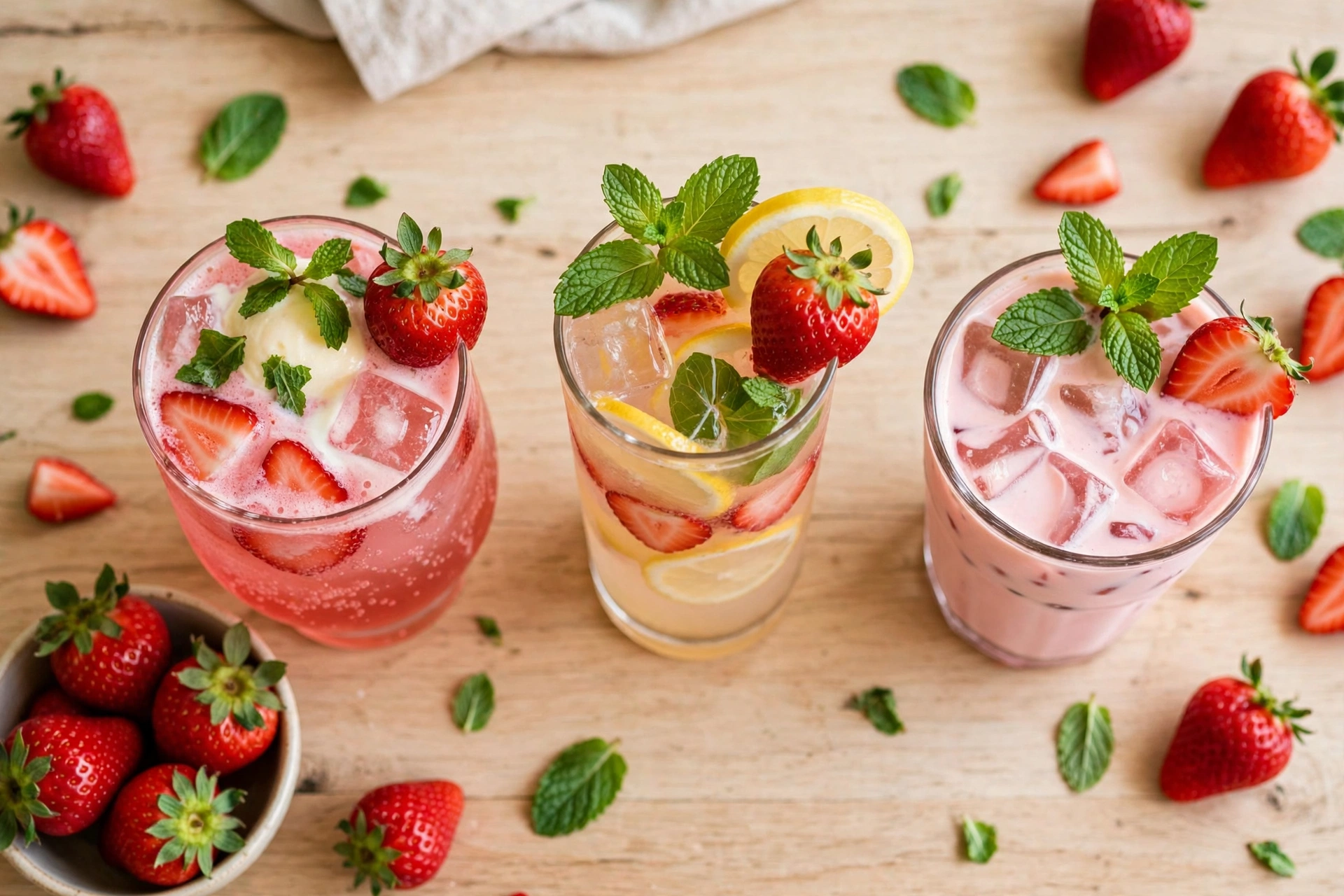
3. Strawberry Iced Latte
Strawberry and coffee sounds wrong until you taste a well-balanced strawberry latte. Add 1 tablespoon of syrup to a glass of milk, stir to dissolve, add ice, then pour 1–2 shots of espresso over the top. The milk-first method keeps the syrup from seizing on contact with hot espresso.
Strawberry pairs especially well with a half pump of French vanilla or white chocolate — the creamy flavors round out the tart edge. It also works in hot lattes, though the fruit note reads a little louder against steamed milk.
4. Strawberry Cream Soda / Dirty Soda
The dirty soda trend was made for this bottle. Mix 2 tablespoons of strawberry syrup with 8 oz of lemon-lime soda or cola over ice, then add a splash of coconut creamer or half-and-half. The result is a creamy, fizzy, pink drink that tastes like a carnival.
Price Snapshot: What a Bottle Costs
A 750 ml bottle (about 25 servings) is the standard size, and prices cluster in the $7–$11 range depending on where you shop. I checked prices across major retailers on 2026-10-17 — here is where things stand. Prices change often, so treat these as a snapshot and check current listings before you buy.
| Retailer | Price | Notes |
|---|---|---|
| WebstaurantStore | $7.39 | foodservice supplier |
| Instacart (CHEF’STORE) | $7.69 | grocery delivery |
| Instacart (Lunardi’s) | $7.09 | 12.7 oz bottle |
| World Market | $10.99 | specialty retail |
| Torani.com | $10.99 | list price, direct |
| Target | $5.29 | 12.7 oz bottle |
| Sugar-free 750 ml | ~$8.04 | via Instacart |
| Walmart (deal) | $15.05 | 4-pack variety deal price |
If you are buying your first bottle, check our where to buy Torani syrup guide for the full list of online and in-store options. Restaurant supply shops like WebstaurantStore tend to beat grocery prices, while Amazon and Walmart pricing swings enough that it pays to compare the day you buy.
Strawberry vs. the Other Berry Syrups
Choosing between the fruit syrups comes down to what you drink most. Strawberry is the all-rounder. Raspberry is darker and sharper — better in iced tea and cocktails, where its bite cuts through. Grenadine is technically a pomegranate-and-cherry blend, sweeter and heavier, best as a cocktail modifier rather than a soda base.
For milk drinks, strawberry wins outright — raspberry can taste medicinal against dairy, while strawberry reads as strawberry milk in the best way. For straight sodas it is a toss-up between strawberry and raspberry, and honestly, owning both covers nearly every fruit-drink situation. A strawberry-vanilla combo also gives you a shortcut to flavors like caramel can’t touch — fruit and cream, not dessert spice.
One more useful comparison: if you are deciding between brands rather than flavors, our Torani vs. Starbucks syrups breakdown covers how Torani’s fruit line stacks up against the coffee-giant’s offerings.
Common Mistakes (and How to Avoid Them)
Using too much. Strawberry is the easiest Torani flavor to over-pour because it smells so good. Start with 1 tablespoon in a 12 oz drink and taste before adding more. A heavy hand turns lemonade into candy.
Adding it to hot drinks straight. Pouring syrup into hot espresso can mute the fruit top notes. For hot lattes, add the syrup to the milk before steaming, or stir it in after the espresso — both preserve more flavor than pouring syrup onto a hot shot.
Storing it wrong. No refrigeration needed. Keep the bottle at room temperature with the cap sealed and away from direct sunlight. Torani’s foodservice specs list a long ambient shelf life, but once opened, plan to use the bottle within a few months for the brightest flavor.
Expecting real strawberry juice. This is a flavored sugar syrup with Red #40, not a fruit purée. If you want real-berry flavor, Torani’s puree blends (including a strawberry purée) are the step up — different product line, different price.
Key Takeaways
- Flavor: sweet, candy-leaning strawberry with a tart edge — great in sodas, lemonades, and milk drinks.
- Nutrition: 80 calories and 19g sugar per 2 Tbsp; sugar-free version has 0 calories.
- Allergens: gluten-free, milk-free, Kosher and Halal certified; contains FD&C Red #40.
- Best uses: Italian sodas, strawberry lemonade, iced lattes, dirty sodas.
- Price: typically $7–$11 for 750 ml (~$0.38 per drink at mid-range pricing), observed 2026-10-17.
Frequently Asked Questions
Is Torani strawberry syrup gluten-free?
Yes. Retailer label data lists Torani strawberry syrup as gluten-free and milk-free, and the ingredient list contains no wheat or gluten-containing ingredients. Torani also certifies all of its products Kosher, and the Original Strawberry Syrup is listed as Halal certified.
Does Torani strawberry syrup need to be refrigerated?
No. Store the bottle at room temperature with the cap tightly sealed, away from direct sunlight. Refrigeration is not required before or after opening.
How many calories are in Torani strawberry syrup?
The regular version has 80 calories per 2-tablespoon (1 fl oz) serving, with 19 grams of total sugars. The sugar-free version has 0 calories per serving.
What are the ingredients in Torani strawberry syrup?
Pure cane sugar, water, natural flavors, citric acid, tartaric acid, sodium benzoate (to preserve freshness), and FD&C Red #40. There is no real strawberry juice in the Original syrup.
Does Torani strawberry syrup contain real strawberries?
No. The strawberry flavor comes from natural flavors, and the color comes from FD&C Red #40. If you want real fruit, look at Torani’s puree blends line, which includes a real strawberry purée.
Can I use Torani strawberry syrup in coffee?
Yes — strawberry iced lattes are a café favorite. Use about 1 tablespoon per 8–12 oz drink, add the syrup to the milk before the espresso, and consider pairing it with vanilla or white chocolate to round out the tart edge.
What is the difference between regular and sugar-free Torani strawberry syrup?
The regular version is sweetened with pure cane sugar (80 cal per serving). The sugar-free version uses sucralose and acesulfame potassium, has 0 calories per serving, and a thinner mouthfeel. Both contain Red #40 coloring.
How long does Torani strawberry syrup last once opened?
Torani’s foodservice specifications list a long ambient shelf life for sealed bottles. Once opened, the syrup keeps for several months at room temperature with the cap sealed — use it within a few months for the brightest flavor and discard it if the color, smell, or taste changes.
Does Torani strawberry syrup have artificial colors?
Yes. It is colored with FD&C Red #40, a synthetic food dye. It does not use caramel color or natural fruit coloring. The sugar-free version also contains Red #40.
Is Torani strawberry syrup vegan?
The ingredient list contains no animal-derived ingredients — just sugar, water, flavorings, acids, a preservative, and Red #40 — and Torani describes its syrups as vegan-friendly. Strict vegans sometimes avoid refined cane sugar and synthetic dyes, so that is a personal call.
How much syrup should I use per drink?
Start with 1–2 tablespoons (4–8 pumps) per 8–12 oz drink: 2 tablespoons for Italian sodas, 1–2 for lemonade, and about 1 tablespoon for milk or coffee drinks. Adjust to taste from there.
Where can I buy Torani strawberry syrup?
It is widely available: grocery stores, Target, World Market, Amazon, Walmart, restaurant supply stores like WebstaurantStore, and directly from torani.com. Prices observed on 2026-10-17 ranged from about $7.39 to $10.99 for a 750 ml bottle — check current listings before buying.
The Bottom Line
Torani strawberry syrup is the rare flavor that justifies being a pantry staple. It makes café-level sodas and lemonades with almost no effort, it plays well with milk, and at under forty cents a drink it is one of the cheapest upgrades in your kitchen.
The trade-offs are clear: it is a sugar syrup with artificial coloring, not a fruit product. If that bothers you, the sugar-free version or a real-fruit purée is the honest alternative. For everyone else, this is the bottle that turns “I wish I had something nice to drink” into a thirty-second reality.
Next up in the fruit lineup: if strawberry has you hooked, our raspberry syrup review covers the darker, sharper sibling — and hazelnut and lavender are worth a look when you want to move beyond fruit entirely.