Torani vs Starbucks Syrups: An Honest, No-Hype Comparison for Home Baristas
If you have ever tried to recreate your favorite café drink at home, you have probably stood in the syrup aisle asking the same question: should I grab the Torani bottle or hunt down the actual Starbucks syrup? Both promise café-quality flavor, but they come from very different companies with very different business models.
This guide puts Torani and Starbucks (Fontana) syrups head to head. You will get the real ingredient lists, side-by-side nutrition facts, actual prices spotted at retailers, and honest buying advice for every kind of home barista. No sponsorship, no fluff — just the facts so you can pick the right bottle.
The Short Answer: Which Syrup Is Better?
For most home coffee drinkers, Torani is the better buy. It costs less per ounce, is sold at far more stores, and comes in more than 150 flavors — including sugar-free and clean-label Puremade options. The flavor is close enough to café syrup that most people cannot tell the difference in a finished latte.
Starbucks syrups (sold under the Fontana brand in 1-liter bottles) make sense in exactly one situation: you want the exact syrup your barista pumps into your drink at the café, and you are willing to pay more and hunt harder to get it. Keep reading for the full breakdown.
- 🍶 750 ml glass bottle (12.7 oz also available)
- 🌍 150+ flavors, incl. sugar-free & Puremade
- 💲 Roughly $8–$13 per 750 ml bottle
- 🏪 Grocery, Target, Walmart, Amazon, coffee shops
- ✅ Made for cafés and home kitchens
- 🍶 1 liter plastic bottle
- 🌍 Small café core lineup (vanilla, caramel, classic…)
- 💲 Roughly $12–$20 in stores, more online
- 🏪 Starbucks cafés (if in stock) + online resellers
- ✅ The exact syrup used behind the counter
Torani at a Glance
Torani has been making flavored syrups since 1925, when it started in South San Francisco with just a handful of Italian-style soda flavors. A century later it is one of the largest syrup makers in the world, and its gold-capped 750 ml glass bottles are a fixture in independent cafés as well as home kitchens.
The Classic line — the one most people buy — is built on pure cane sugar, water, natural flavors, and preservatives (sodium benzoate and potassium sorbate) to keep it fresh after opening. Torani also makes a Puremade line with no artificial flavors, colors, or preservatives, plus a large sugar-free range sweetened with sucralose and acesulfame potassium.
Torani is sold as a retail product first and a café supply second. That is why you can find it on grocery shelves, at Target and Walmart, and all over Amazon — usually for under $13 a bottle.
Starbucks Syrups at a Glance
Starbucks does not really sell “Starbucks syrup” as a retail brand. The syrups used in its cafés are made for the company under the Fontana name and come in 1-liter plastic bottles. When a café agrees to sell you a bottle, that is what you get: the same 1-liter Fontana bottle the barista pumps from.
Because these bottles are café supplies, availability is patchy. Many stores will only sell the core year-round flavors — vanilla, caramel, and Classic (an unflavored sweetener) — and only when they have stock to spare. There is no official Starbucks web store for syrups, so everywhere else you see them online is a reseller, and prices climb accordingly.
One practical note: the 1-liter Fontana bottles accept the same standard syrup pumps that fit Torani’s 750 ml bottles, so if you already own a pump, it will almost certainly fit.
Ingredients: What’s Actually in the Bottle?
This is where the two brands are more alike than the marketing suggests. Both are essentially sweetened, flavored water with preservatives — and both list natural flavors as their flavor source.
Torani Classic Vanilla — ingredients
Pure cane sugar, water, natural flavors, sodium benzoate (to preserve freshness), potassium sorbate (to preserve freshness), citric acid. That is the full list from the label, and it is representative of the Classic line across flavors.
Starbucks Vanilla Syrup (Fontana) — ingredients
Water, sugar, natural flavors, preservative (potassium sorbate), citric acid. Some product listings for other Starbucks/Fontana flavors also note artificial flavors, so read the specific label if that matters to you.
What the comparison really shows
Honestly? The ingredient decks are nearly twins: sugar + water + natural flavors + preservative + citric acid. Neither is a “health” product. The meaningful differences sit at the edges: Torani’s Puremade line drops artificial flavors, colors, and preservatives entirely for shoppers who want a cleaner label, and Torani offers a far bigger sugar-free range. Starbucks keeps it simple with one standard formula across its café syrups.
Allergy note: both lines are generally free of the major allergens (milk, eggs, nuts, gluten) in their standard flavors, but flavored varieties can differ. Check the label on the exact bottle you buy — formulations change, and this site tracks dietary questions like vegan and kosher status separately in our Torani vegan, halal & kosher guide.
Nutrition Face-Off
Per 2-tablespoon (30 ml) serving — the standard serving size printed on both brands’ labels:
| Nutrient | Torani Classic | Starbucks (Fontana) |
|---|---|---|
| Calories | 80 | 80 |
| Total fat | 0 g | 0 g |
| Sodium | 0 mg | 0 mg |
| Total carbohydrate | 20 g | 20 g |
| Total sugars | ~20 g | 20 g |
| Protein | 0 g | 0 g |
As you can see, it is effectively a tie. Both deliver about 80 calories and 20 grams of sugar per serving, all from added sugar. One Starbucks café pump dispenses roughly a quarter-ounce (about 20 calories and 5 grams of sugar), which is why a standard grande flavored latte with four pumps lands around 80 calories from syrup alone.
Bottom line on nutrition: if sugar is your concern, the brand does not matter — the pump count does. Both companies sell sugar-free vanilla if you want the flavor without the sugar.
Price Comparison: What You’ll Actually Pay
Prices below were spotted in online listings around October 2026. Syrup prices move with sales and sellers, so treat these as a snapshot and check the current listing before you buy.
| Product | Price spotted | Where |
|---|---|---|
| Torani Classic Vanilla, 750 ml | $8.99 | Grocery / Instacart listing |
| Torani Classic Vanilla, 750 ml | $7.92 | Coffee supply store |
| Torani Classic Vanilla 2-pack, 750 ml each | $24.94 (~$12.47/bottle) | Amazon (Aug 2026) |
| Torani French Vanilla, 750 ml | $8.04 | Grocery / Instacart listing |
| Torani Naturally Sweetened Vanilla, 12.7 oz | $5.29 | Target |
| Starbucks Vanilla Syrup, 1 L (Fontana) | $12–$20 | Starbucks café (if they’ll sell) |
| Starbucks Vanilla Syrup, 1 L with pump | $22.99 | Online marketplace |
| Starbucks SF Vanilla, 1 L (1.06 qt) | $19.81 | Office supply retailer |
| Starbucks syrups, 1 L (resellers) | $20–$40 | Amazon / eBay / TikTok shops |
Easy to find on sale
Harder to find at retail
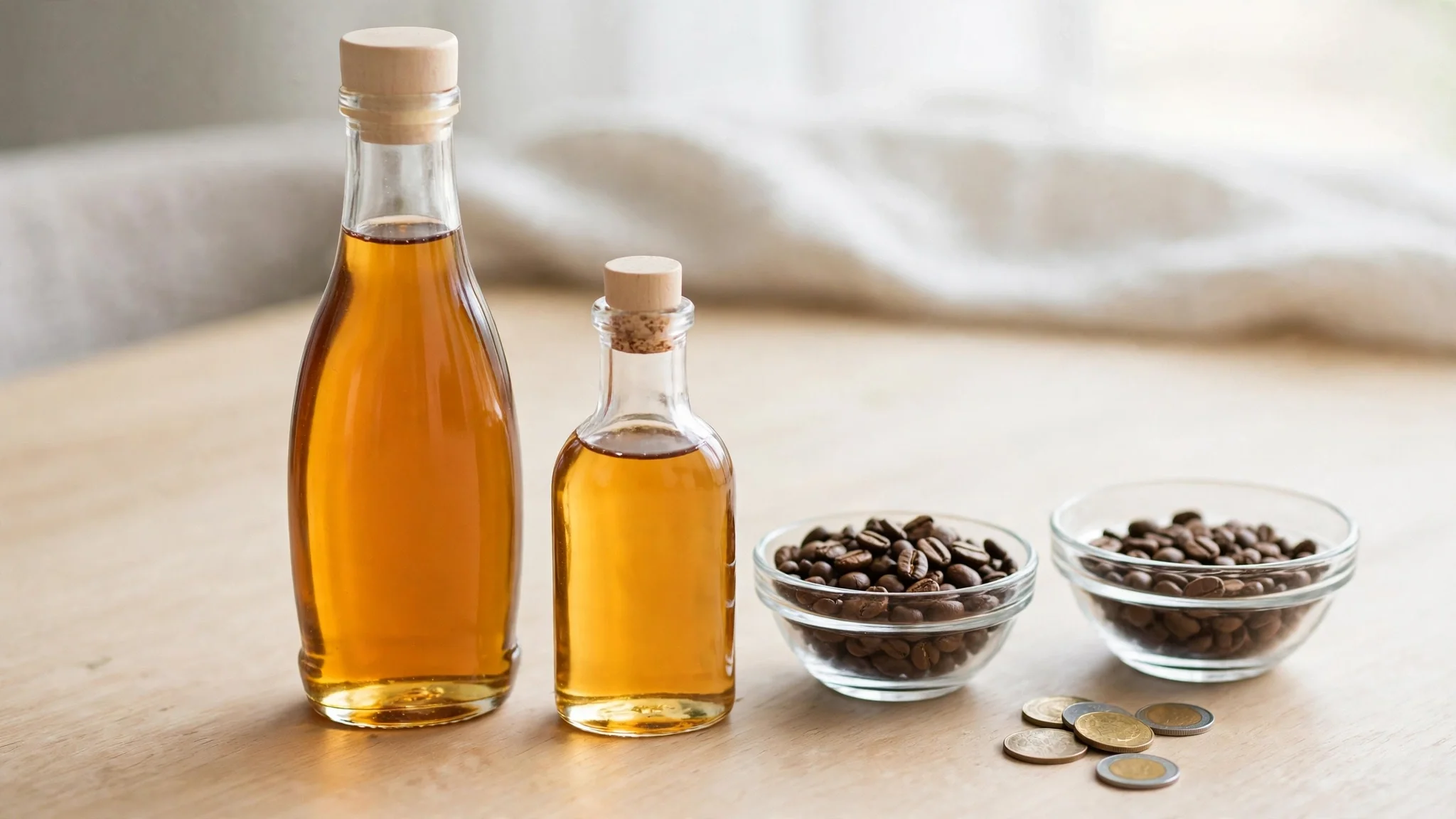
The takeaway: bought at a fair price, the per-ounce gap is modest. But “fair price” is the catch — Torani is almost always available at its normal price, while Starbucks syrup bought from resellers routinely costs double or more.
Flavor Variety: 150+ vs a Café Core
This is the least close round of the comparison. Torani sells more than 150 flavors — from everyday vanilla and caramel to lavender, toasted marshmallow, and seasonal specialties — plus sugar-free versions of the most popular ones. If you like experimenting with Italian sodas, flavored lemonades, or dessert drinks, Torani is in another league.
Starbucks syrups available for home purchase are essentially the café’s working lineup: vanilla, caramel, Classic sweetener, hazelnut, and a rotating cast of seasonal flavors like peppermint. The seasonal ones are the hardest to find at retail — they sell out in cafés first.
So the variety question answers itself: if you want one perfect vanilla that tastes exactly like the café, either works. If you want a flavor library for your home bar, Torani wins by a mile. Our Torani French Vanilla review and Torani Classic Caramel review show how deep the lineup goes.
Where to Buy Each Syrup
Where to buy Torani
Almost anywhere. Grocery stores, Target, Walmart, Amazon, restaurant supply shops, and Torani’s own website all stock the 750 ml bottles, and our where to buy Torani syrup guide maps the best options with current pricing tips. Multi-packs on Amazon often bring the per-bottle price under $10.
Where to buy Starbucks syrup
There are three routes, in order of reliability:
- Ask at a Starbucks café. Politely ask during a quiet moment whether they can sell you a 1-liter bottle of vanilla, caramel, or Classic. Expect $12–$20. They can only sell what they have in excess, and the bottle will not include a pump.
- Online resellers. Amazon, eBay, and TikTok shops list the 1-liter Fontana bottles, usually $20–$40. Watch for inflated prices, missing pumps, and check best-by dates — some buyers report receiving short-dated bottles.
- Grocery-store Starbucks bottles. Starbucks also licenses smaller syrup bottles for grocery shelves, but these are formulated for home use and may taste slightly different from the café version.
Copycat Corner: The Starbucks-Style Vanilla Latte at Home
Here is the part most readers came for. A grande Starbucks vanilla latte uses two shots of espresso, steamed 2% milk, and four pumps of vanilla syrup — roughly one ounce. You can build the same drink with either brand.
Which Should You Buy? Pick by Use Case
- Everyday home lattes and iced coffee → Torani. Cheaper, easier to find, and the taste difference in a finished drink is negligible. Start with vanilla or caramel — see our salted caramel review if you want something richer.
- Exact Starbucks copycat drinks → Starbucks (Fontana). If “close enough” bothers you and you want the genuine article, pay the premium and buy from a café or a trusted reseller.
- Sugar-free or keto-friendly → Torani. The sugar-free lineup is far broader, and bottles are easier to find at normal prices.
- Clean-label ingredients → Torani Puremade. No artificial flavors, colors, or preservatives — Starbucks does not offer an equivalent clean-label line.
- Flavor experiments (sodas, lemonades, cocktails) → Torani. With 150+ flavors, there is no contest; our Italian syrup guide is a good starting point for soda-making.
- Running a small café → either, but check costs. Many independent shops use Torani for margin; Starbucks loyalists pay for the brand name.
Torani — ~20% less per oz
Torani — sold everywhere
Torani — 150+ flavors
Starbucks — the real Fontana bottle
Tie — 80 cal / 20 g sugar each
Tie — sugar, water, natural flavors
Frequently Asked Questions
Does Starbucks use Torani syrup?
No. Starbucks cafés use syrups made for the company under the Fontana brand, not Torani. Some licensed or independent cafés may use Torani, which is where the confusion comes from — but a company-owned Starbucks store pumps Fontana.
What syrup is closest to Starbucks vanilla?
Torani Classic Vanilla is the closest widely available match. In a finished latte with milk and espresso, most people cannot distinguish it from the Starbucks/Fontana vanilla. For an exact match, buy the 1-liter Fontana bottle from a Starbucks café.
Can you buy Starbucks syrup in stores?
Sometimes. Many Starbucks cafés will sell you a 1-liter bottle of a core flavor (vanilla, caramel, or Classic) for roughly $12–$20 if they have stock to spare. Availability varies by store and manager discretion — call ahead or ask during a quiet moment.
Is Torani healthier than Starbucks syrup?
Not meaningfully. Both contain about 80 calories and 20 grams of sugar per 2-tablespoon serving, with near-identical ingredient lists. If you want a lighter option, both brands offer sugar-free vanilla — Torani’s sugar-free range is simply larger and easier to find.
How long does an opened bottle last?
Both brands recommend storing opened syrup in a cool, dark place — no refrigeration needed. Expect best quality for about 1–3 months after opening for Starbucks/Fontana, while Torani’s preservative system keeps Classic syrups fresh for several months. Always check the best-by date on the bottle.
Do the pumps fit both bottles?
Yes. Standard syrup pumps made for 750 ml Torani bottles also fit the 1-liter Fontana/Starbucks bottles — the threading is the same. This is handy because bottles bought at Starbucks cafés do not include a pump.
Which is cheaper per serving?
Torani, in most cases. A 750 ml bottle at $8.99 works out to about $0.35 per ounce versus roughly $0.44 per ounce for a Starbucks 1-liter bottle at $15. Reseller prices for Starbucks syrup can push the cost past $1.00 per ounce, widening the gap dramatically.
Does Starbucks sell sugar-free syrup?
Yes — Starbucks cafés carry a sugar-free vanilla syrup, and 1-liter bottles (labeled Fontana Sugar Free Vanilla) appear through office-supply and online resellers. Torani’s sugar-free lineup is much broader, covering caramel, hazelnut, chocolate, and many more flavors.
Can I use Torani syrup to make Starbucks copycat drinks?
Absolutely — that is what most home baristas do. Use the same ratios (about 1 ounce / 4 pumps per 16-ounce drink) and you will land very close to the café version. The recipe card above walks through a copycat vanilla latte step by step.
Are Starbucks syrups gluten-free?
The standard Starbucks/Fontana syrups contain no wheat, barley, or rye ingredients and are generally considered gluten-free, as are Torani’s standard flavors. As always, verify the label on your specific bottle, since formulations can change.
The Bottom Line
Torani and Starbucks syrups are far more similar in the bottle than their branding suggests — nearly identical ingredients, identical nutrition, and comparable flavor. The real differences are price, availability, and variety, and on all three, Torani wins for home use.
Buy Torani when you want great-tasting syrup at a fair price without a scavenger hunt. Buy Starbucks syrup when only the exact café bottle will do. Either way, you are starting from the same sweet foundation — the magic is in the espresso, the milk, and the ratios.