Torani Syrup Ingredients Explained: What’s Really Inside the Bottle in 2026
Flip a bottle of Torani syrup around and the ingredient list is short enough to read in seconds — but a couple of entries, like “natural flavors” and “potassium sorbate,” raise more questions than they answer. What’s actually in there, and does any of it matter for your coffee?
Here’s the plain-English breakdown: Torani Classic syrups are built on pure cane sugar, water, natural flavors, and a small amount of preservatives that keep the bottle shelf-stable after opening. The exact recipe shifts across lines — Sugar Free swaps sugar for sucralose and acesulfame potassium, while Puremade strips the list down to just four ingredients.
The Classic Recipe: Cane Sugar, Water, and a Few Helpers
The Classic line is Torani’s workhorse — the bottles you see behind café counters. The label on a 750 ml bottle of Torani Vanilla lists its ingredients in descending order: pure cane sugar, water, natural flavors (vanilla extract in the vanilla flavor), citric acid, potassium sorbate, and sodium benzoate. Caramel adds caramel color to the same base.
Pure cane sugar is the backbone. It does two jobs at once: it sweetens, and it gives the syrup its body and viscosity. Torani uses cane sugar rather than high fructose corn syrup — a distinction the brand calls out on its own product descriptions.
How the flavor gets in
The “natural flavors” line is where each flavor gets its identity. In the vanilla syrup it’s literally vanilla extract blended with other natural flavors to keep the taste consistent from batch to batch. Fruit flavors may also include FD&C colors — the orange syrup, for example, lists FD&C Yellow #6 to get its sunny look.
The preservation trio
Three ingredients exist to keep the bottle safe and stable once opened. Citric acid gently balances sweetness with a whisper of tartness and helps preserve freshness. Potassium sorbate and sodium benzoate are widely used food preservatives that stop mold, yeast, and bacteria from growing — they’re the reason an opened bottle can sit on your counter for months. We’ve covered exactly how long in our guide on whether Torani syrup needs refrigerating.
Nutrition Facts: The Numbers on the Label
A standard serving of Classic Torani syrup is 2 tablespoons (30 ml, about 1 fl oz). Here’s what the label says for a 750 ml bottle of vanilla, based on retailer nutrition panels:
| Nutrient (per 2 tbsp) | Classic Vanilla |
|---|---|
| Calories | 80 |
| Total fat | 0 g |
| Sodium | 0 mg |
| Total carbohydrate | 20 g |
| Total sugars (all added) | 20 g (39% DV) |
| Protein | 0 g |
Most Classic flavors land at 80 calories and 19–20 g of sugar per serving. A few fruit flavors run slightly higher — the orange syrup clocks in at 90 calories and 22 g of sugar. Where nutrition data is unavailable for a specific flavor, say so plainly: the numbers above are a reliable baseline, not a promise for every bottle.
Calories: ~80 per serving (some fruit flavors: 90)
Sugar: ~19–23 g, all added cane sugar
The catch: one serving is nearly half the American Heart Association’s suggested daily added-sugar limit for women (25 g) — so measure, don’t pour freehand.
Sugar Free: What Replaces All That Sugar?
The Sugar Free line keeps the flavor but drops the calories entirely. A 375 ml bottle of Sugar Free Caramel lists: water, natural flavors, acesulfame potassium, citric acid, potassium sorbate, sodium benzoate, xanthan gum, and sucralose.
The sweetness comes from two calorie-free sweeteners working together: sucralose (the sweetener sold as Splenda) and acesulfame potassium. Xanthan gum, a plant-derived thickener, gives the syrup a bit of the body that sugar normally provides. The result: 0 calories and 0 g of sugar per serving, with just a trace of sodium (about 5 mg).
One honest caveat: sugar-free versions are noticeably thinner than the Classic line, since sugar is what makes a syrup syrupy. Some drinkers also notice a slight aftertaste from the sweetener blend — it’s a personal thing, so try a small bottle before committing to the big 750 ml.
Puremade: The Shorter, Cleaner Label
Puremade is Torani’s answer to shoppers who read labels closely. The ingredient list is radically shorter — for example, Puremade Crème de Menthe lists just: pure cane sugar, water, natural flavors, ascorbic acid. No artificial colors, no artificial flavors, no preservatives, and the line is certified GMO-free.
Ascorbic acid (vitamin C) does the preserving work here, and fruit juice or caramel color provides tinting instead of synthetic dyes. The trade-off is a shorter shelf life once opened and a higher price — you’re paying for the cleaner label.
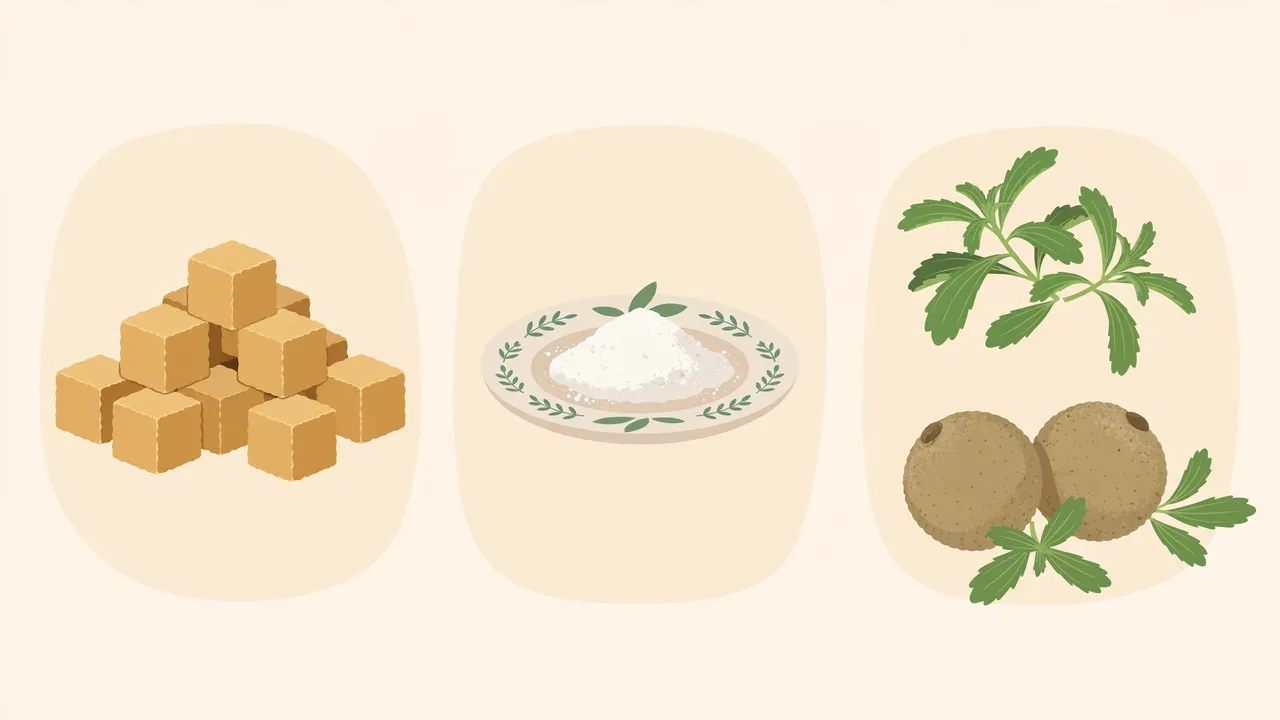
There’s also a Puremade Zero Sugar line, sweetened with erythritol, stevia leaf extract, and monk fruit instead of sucralose. Its ingredient list runs: water, erythritol, inulin, natural flavors, salt, stevia leaf extract, fruit juice (for color), pectin, xanthan gum, caramel color, citric acid — with 0 calories and 0 g of sugar per 30 ml serving.
| Natural flavors | Flavor compounds extracted from real plant or animal sources (vanilla beans, fruit, spices), blended for consistency. The exact blend is proprietary. |
| Citric acid | A mild acid from citrus fermentation; brightens flavor and helps preserve freshness. |
| Sodium benzoate | Common food preservative that inhibits mold and bacteria; keeps opened bottles shelf-stable. |
| Potassium sorbate | Partner preservative that targets yeast and mold; used in tiny amounts. |
| Sucralose | Zero-calorie sweetener (Splenda) used in the Sugar Free line; about 600× sweeter than sugar. |
| Acesulfame-K | Second zero-calorie sweetener blended with sucralose for a rounder sweetness. |
| Xanthan gum | Plant-derived thickener that restores body in sugar-free formulas. |
| Ascorbic acid | Vitamin C; acts as the preservative in the Puremade line. |
| Erythritol | Sugar alcohol used in Puremade Zero Sugar; near-zero calories, mild cooling taste. |
“Natural Flavors”: What That Phrase Really Means
This is the label line that confuses people most, so let’s be direct. Under U.S. food labeling rules, “natural flavors” means flavoring compounds derived from natural sources — real vanilla beans, fruit, bark, roots, or spices — as opposed to flavors synthesized in a lab.
What it doesn’t mean: that the flavor is simple, or that you’ll recognize the source from the name. Torani blends multiple natural flavor compounds to hit an exact, repeatable taste — the “natural flavors” in a strawberry syrup may come from several different fruits and plants. The blend is proprietary, which is why the label can’t be more specific. If you have a severe allergy to a particular plant source, this vagueness is worth knowing about — though Torani flags known major allergens separately on the label.
Allergens and Diet Flags: Who Can Sip Safely?
Torani is broadly friendly to restricted diets. Distributor nutrition sheets for Classic syrups list eggs, milk, soy, wheat, peanuts, tree nuts, fish, and crustacean shellfish all as “free from,” and most Classic flavors carry kosher certification. The syrups are also gluten-free by ingredient and vegan-friendly — we go deeper on all three in our guide to is Torani syrup keto.
The exceptions to watch: nut-flavored syrups (hazelnut, almond) can carry a “contains tree nuts” statement — the Puremade Hazelnut label, for instance, explicitly says “contains tree nuts (hazelnut).” And fruit flavors with synthetic colors list their FD&C dyes. As always, read the bottle in your hand, not just the website — formulations can change.
What a Bottle Costs Right Now
Prices vary a lot by retailer and whether a pump is included. Here are real prices we observed on October 20, 2026 — treat them as a snapshot, and check current listings before buying:
| Bottle | Retailer | Price (Oct 20, 2026) |
|---|---|---|
| Classic Vanilla, 25.4 fl oz | Amazon (with pump) | $14.99 |
| Classic French Vanilla, 25.4 fl oz | Walmart | $14.26 |
| Classic Watermelon, 25.4 fl oz | Amazon (with pump) | $14.99 |
| Classic Apple, 750 ml | Walmart | $16.98 |
| Classic Lavender, 750 ml | Walmart | $13.09 |
| Classic Lemon, 750 ml (glass) | WebstaurantStore | $9.89 |
| Classic Cinnamon, 750 ml (glass) | WebstaurantStore | $9.89 |
| Sugar Free Caramel, 375 ml | Super 1 Foods | $4.98 |
| Sugar Free French Vanilla, 25.4 fl oz | Amazon | $7.23 |
| Classic Vanilla, 375 ml | Harris Teeter (sale) | $4.49 |
| Classic Vanilla, 12.7 fl oz | Dave’s Markets | $7.69 |
| Classic White Chocolate, 25.4 fl oz | Amazon (with pump) | $18.99 |
The pattern: expect roughly $13–$17 for a 750 ml Classic bottle at major retailers, a few dollars less at restaurant-supply stores, and small 375 ml bottles under $5 for sampling a flavor. If you’re deciding where to shop, our roundup of where to buy Torani syrup compares the main options.
- First ingredient = the sweetener. “Pure cane sugar” means Classic; “water” first usually means Sugar Free or Zero Sugar.
- Scan for the sweetener blend. Sucralose + acesulfame potassium = Sugar Free line. Erythritol + stevia = Puremade Zero Sugar.
- Check the color line. Fruit flavors may list FD&C colors; Puremade uses fruit juice or caramel color instead.
- Look below the ingredients. “Contains” statements flag tree nuts on nut flavors — don’t skip this if you have allergies.
- Compare serving sizes. Most panels use 2 tbsp (30 ml). Scale up if you pour generously — the calories add up fast.
Frequently Asked Questions
What are the main ingredients in Torani syrup?
Classic Torani syrup is made from pure cane sugar, water, natural flavors, citric acid, potassium sorbate, and sodium benzoate. Some flavors add caramel color or FD&C dyes for their look.
Is Torani syrup healthy?
The Classic line is essentially flavored sugar water — about 80 calories and 20 g of sugar per 2-tbsp serving — so it’s best treated as an occasional indulgence. The Sugar Free and Puremade Zero Sugar lines offer the flavor without the calories or sugar.
Does Torani syrup contain high fructose corn syrup?
No. Torani uses pure cane sugar in its Classic and Puremade syrups, and states that it never uses high fructose corn syrup.
What sweeteners are in Torani Sugar Free syrup?
The Sugar Free line is sweetened with sucralose (Splenda) and acesulfame potassium, with xanthan gum added for body. The newer Puremade Zero Sugar line uses erythritol, stevia leaf extract, and monk fruit instead.
Does Torani syrup have gluten?
Torani syrups are gluten-free by ingredient — no wheat, barley, or rye appears in the formulas. If you have celiac disease, still check the label on your specific bottle.
Is Torani syrup vegan?
Yes, the vast majority of Torani syrups are vegan — they contain no animal-derived ingredients. Some specialty products (like sauces with dairy) are the exception.
Why does Torani syrup contain preservatives?
Potassium sorbate and sodium benzoate prevent mold, yeast, and bacteria from growing after the bottle is opened, keeping the syrup safe at room temperature for months. The Puremade line uses ascorbic acid (vitamin C) instead.
What does “natural flavors” mean on a Torani label?
It means the flavoring compounds are extracted from natural sources like vanilla beans, fruit, or spices rather than synthesized in a lab. The exact blend is proprietary, which is why the label can’t be more specific.
How many calories are in Torani syrup?
Classic Torani syrup has about 80 calories per 2-tbsp (30 ml) serving, with a few fruit flavors at 90. Sugar Free and Puremade Zero Sugar have 0 calories per serving.
Is Torani Puremade better than Classic Torani?
“Better” depends on what you value. Puremade has a shorter ingredient list — cane sugar, water, natural flavors, ascorbic acid — with no artificial colors, flavors, or preservatives and GMO-free ingredients. It costs more and has a shorter opened shelf life, but the flavor is the same family recipe.
Key Takeaways
- Classic Torani = pure cane sugar, water, natural flavors, and a small amount of preservatives (citric acid, potassium sorbate, sodium benzoate).
- One 2-tbsp serving has about 80 calories and 20 g of sugar — measure your pours.
- Sugar Free swaps sugar for sucralose + acesulfame potassium (0 calories); Puremade Zero Sugar uses erythritol, stevia, and monk fruit.
- Puremade strips the label to four ingredients with no artificial anything — at a higher price.
- Most syrups are vegan, gluten-free, and kosher; nut flavors may carry a tree-nut “contains” statement.
Now that you know what’s inside the bottle, browse every Torani flavor to pick your next one — and check our serving guide on how much syrup to use per drink so those 80-calorie servings stay honest.