Baking with Torani Syrup: The Complete Guide to Ratios, Techniques & Best Flavors
Baking with Torani syrup is one of the easiest upgrades a home baker can make. Instead of another teaspoon of vanilla extract, you swap part of your recipe’s sugar and liquid for a concentrated flavored syrup — and the result tastes like it came from a bakery case.
This guide covers swap ratios, four ways to add syrup, the best flavors, sugar-free oven behavior, bottle costs, and a signature poke-cake recipe.
Why Torani Syrup Works So Well in Baking
Torani syrups are concentrated flavor plus sugar plus water — pure cane sugar, water, natural flavors, citric acid, and preservatives. Because the flavor is pre-dissolved in sweetened liquid, it blends into batters and frostings more evenly than dry flavorings.
Where vanilla extract gives aroma with almost no sweetness, a spoonful of Torani gives aroma and sugar — so you adjust the recipe rather than just adding. Here is what’s inside a typical serving:
| Nutrient (per 1 fl oz / 2 tbsp) | Torani Classic Syrup | Torani Sugar-Free Syrup |
|---|---|---|
| Calories | 80 | 0 |
| Total fat | 0 g | 0 g |
| Sodium | 0 mg | 0 mg |
| Total carbohydrate | 20 g | 0 g |
| Total sugars (added sugars) | 20 g (20 g) | 0 g |
| Protein | 0 g | 0 g |
| Sweetener | Pure cane sugar | Sucralose (Splenda brand) |
Most Torani syrups are gluten-free, and many clear syrups contain no animal-derived ingredients. The cream-style flavors — white mocha, pumpkin spice, pistachio — do contain dairy, so check the label on the exact bottle you use. See our guide to is Torani syrup keto and Torani syrup ingredients explained for the full breakdown.
The Golden Rule: How Much Syrup to Use
Here is the rule that prevents most baking mishaps: for every 4 tablespoons (1/4 cup) of Torani syrup you add, remove 2 tablespoons of sugar and 2 tablespoons of liquid from the recipe. The syrup is already sweet and wet, so this swap keeps your batter’s chemistry intact.
For a standard 8- or 9-inch cake or a dozen cupcakes, 2 to 4 tablespoons of syrup is the sweet spot. Two tablespoons gives a gentle background note; a full 1/4 cup makes the flavor the star. Start low — you can always bake bolder next time.
Four Ways to Get Torani Flavor Into Baked Goods
Some of the best uses happen after the cake leaves the oven. These four methods cover almost anything.
1. In the batter or dough
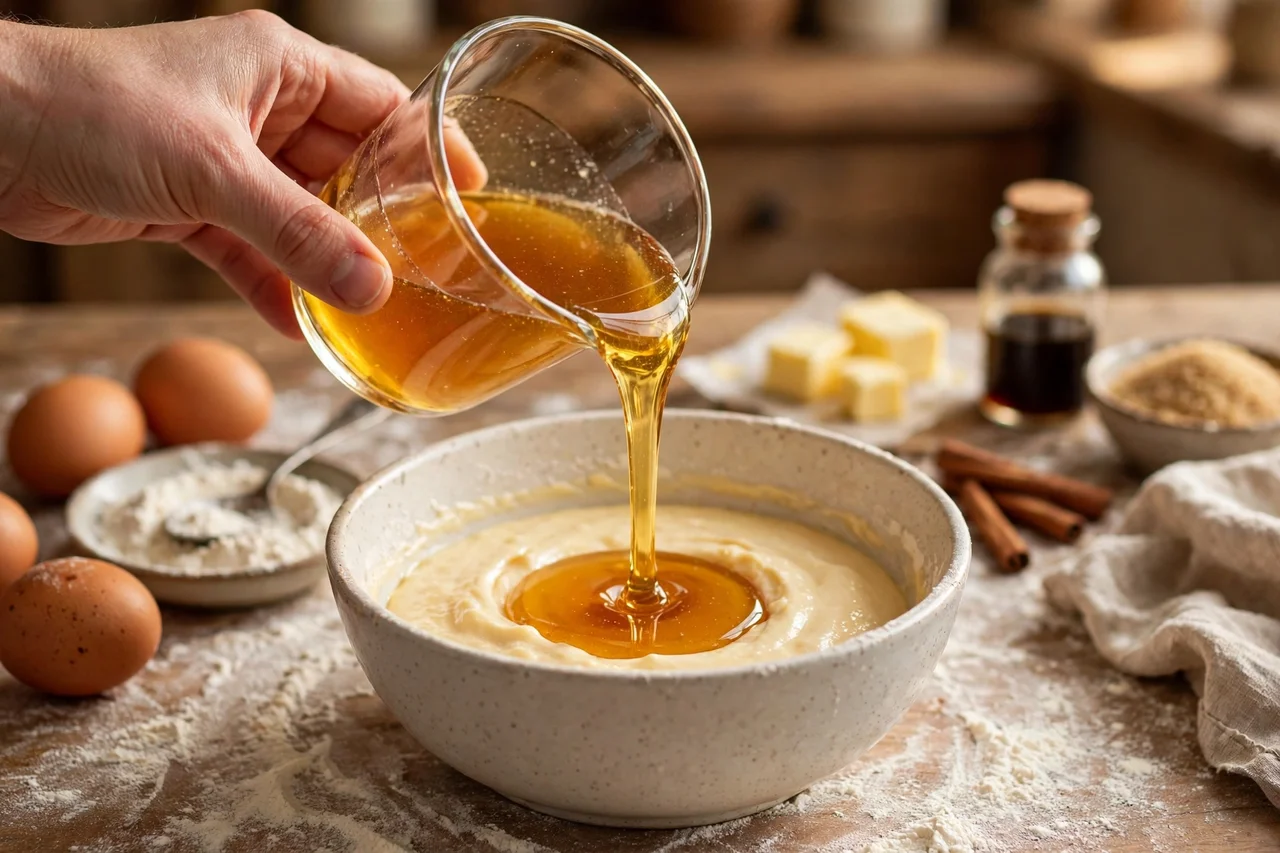
Whisk the syrup into your wet ingredients — cakes, cupcakes, muffins, quick breads, and cookie doughs all work. With box mixes, 1/4 cup of syrup needs no adjustment beyond the swap rule.
2. As a warm soak (poke cake method)
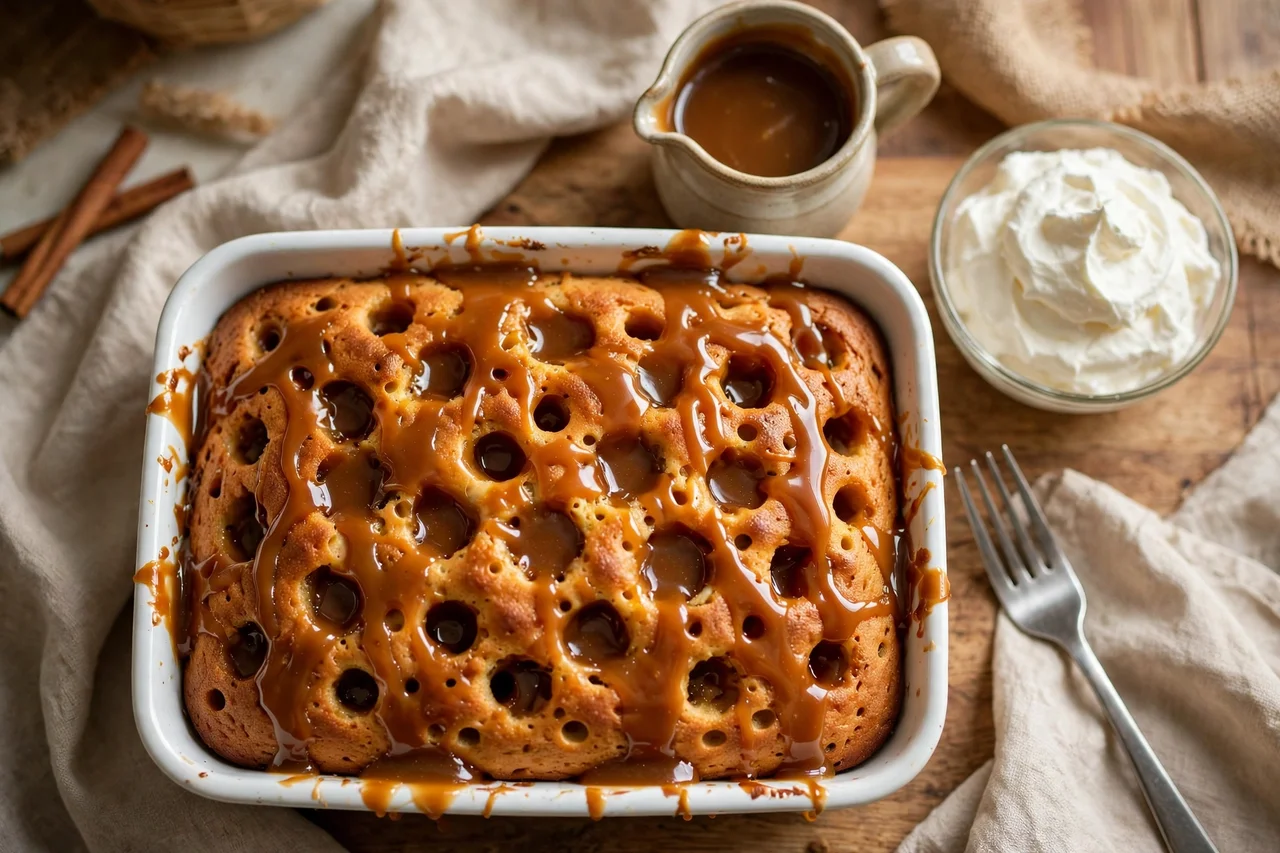
Bake a plain cake, poke holes all over while warm, and spoon a syrup soak over the top for a dramatically moist crumb. Use 1/4 to 1/2 cup of soak per 9×13 cake, thinned with a little warm milk or water.
- Bake plain. A vanilla or yellow cake is the ideal canvas.
- Poke while warm. Within 10 minutes out of the oven, poke deep holes every inch with a fork or skewer.
- Mix the soak. Whisk 1/3 cup Torani syrup with 2–3 tablespoons of warm milk or water.
- Spoon slowly, letting each addition absorb before adding more.
- Cool completely, then frost. The flavor deepens overnight.
3. In frostings, glazes, and whipped cream
Frosting is where Torani shines — no heat to soften the flavor. Beat 1–2 tablespoons of syrup per cup of powdered sugar into buttercream or cream cheese frosting, adding slowly so it stays pipeable. For whipped cream, add about 1 tablespoon per cup of heavy cream before whipping.
4. As a swirl or ribbon
For coffee cakes, blondies, and cheesecakes, drizzle syrup over the batter and drag a knife through once or twice for marbled pockets of flavor. Caramel and raspberry are the classic choices.
The Best Torani Flavors for Baking
The workhorse flavors, grouped by what they do best:
- French Vanilla — the all-rounder for any cake, cookie, or frosting. See our French Vanilla deep dive.
- Classic Caramel — made for drizzles, poke-cake soaks, and blondies. See the full Classic Caramel review.
- Hazelnut & Almond — the nutty pair for biscotti, coffee cakes, and frostings.
- Brown Sugar Cinnamon — cinnamon rolls, snickerdoodles, and streusel toppings.
- Peppermint — brownies and holiday cookies. Start with half your usual amount.
- Pumpkin Spice — fall baking in a bottle; great with cream cheese frosting. See our pumpkin spice guide.
- Raspberry & Strawberry — best in frostings, fillings, and swirls, where bright fruit notes stay vivid.
Start with vanilla — it replaces extract in almost anything — then add caramel for finishing work. Our guide to using Torani syrup covers drink pairings too.
Regular vs. Sugar-Free Torani in Baking: An Honest Comparison
Sugar-free Torani syrups use sucralose (Splenda) instead of cane sugar — one change that affects almost everything about oven behavior.
| Baking behavior | Regular Torani (cane sugar) | Sugar-Free Torani (sucralose) |
|---|---|---|
| Sweetener | Pure cane sugar | Sucralose (Splenda) |
| Calories per 1 fl oz | 80 | 0 |
| Browning & caramelization | Yes — browns and caramelizes normally | No — bakes up noticeably paler |
| Moisture & tenderness | Sugar holds moisture; tender crumb | Less moisture retention; can bake drier |
| Structure / bulk | Contributes to creaming and crumb | Adds no bulk; denser crumb possible |
| Heat stability | Fully stable | Widely treated as heat-stable; one 2024 food-chemistry study raised questions about breakdown at high heat — see note below |
| Best baking uses | Batters, soaks, glazes, frostings — everything | Frostings, glazes, drizzles, no-bake fillings; batters with adjusted expectations |
Two sugar-free flavors worth knowing for bakers: sugar-free vanilla for frostings and sugar-free caramel for drizzles. Both give you the flavor with zero added sugar.
Signature Recipe: Vanilla-Caramel Poke Cake
Bake this one first: the warm-soak method, a box mix, and two Torani flavors — vanilla in the crumb, caramel in the soak and drizzle.
Once you have the poke-cake method down, try it with hazelnut syrup and chocolate frosting, or peppermint syrup in a chocolate cake for the holidays. The technique never changes — only the bottle does.
What Does a Bottle Cost?
A 750 ml bottle (25.4 fl oz) is the standard retail size — roughly 25 two-tablespoon servings, or a dozen-plus bakes. Prices move around, so check current listings before you buy:
| Price | Product | Retailer |
|---|---|---|
| $14.99 | Torani Vanilla Syrup, 750 ml with pump | Amazon (observed 2026-10-22) |
| $14.99 | Torani Sugar-Free Coconut Syrup, 750 ml | Amazon (observed 2026-10-22) |
| $14.71 | Torani Sugar-Free Lime Syrup, 750 ml | Amazon (observed 2026-10-22) |
| $11.99 | Torani Puremade Signature Vanilla, 750 ml | torani.com (observed 2026-10-22) |
| $9.79 | Torani Classic Syrup, 750 ml glass bottle | WebstaurantStore (observed 2026-10-22) |
Per bake it’s friendly: at $15 a bottle, the 1/4 cup in a cake costs roughly a dollar. Glass bottles and restaurant-supply stores run cheaper than pump-bundled listings. For storage, see whether Torani syrups need to be refrigerated.
Myth vs. Fact: Baking with Torani Syrup
Myth: Torani syrup is just like vanilla extract, so swap it 1:1.
Fact: extract is flavor in alcohol; syrup is flavor in sugar water — use the 4-tablespoon swap rule instead.
Myth: The oven destroys the flavor, so baking with syrup is pointless.
Fact: heat mellows flavor but doesn’t erase it — and flavor added after baking (soaks, glazes, frostings) arrives at full strength. Layering both is the pro move.
Myth: Sugar-free syrup bakes exactly like regular syrup.
Fact: sucralose doesn’t caramelize or add bulk — expect paler, slightly drier results. It performs best in no-bake uses.
Myth: More syrup always means more flavor.
Fact: beyond about 1/4 cup per batch, extra syrup throws off the sugar-liquid balance and can make cakes gummy. For bolder flavor, finish with a glaze instead.
Myth: Any Torani flavor works in any baked good.
Fact: concentrated syrups can overpower delicate bakes. Halve the amount for intense flavors like peppermint or lavender.
Key Takeaways
- Syrup works four ways: in batter, as a warm soak, in frostings and glazes, and as a swirl.
- Start with 2–4 tablespoons per standard cake batch; intense flavors need less.
- Regular syrup browns and moistens like sugar; sugar-free is best for no-bake uses.
- Layer flavor: some in the batter, some after baking, for maximum impact.
Frequently Asked Questions
Can you put Torani syrup in cake batter?
Yes. Add 2–4 tablespoons of Torani syrup to a standard cake or cupcake batter, and remove about 2 tablespoons of sugar plus 2 tablespoons of liquid for every 4 tablespoons of syrup. This keeps the batter balanced while boosting flavor.
How much Torani syrup should I use when baking?
Start with 2 tablespoons per batch for gentle flavor or 1/4 cup for bold flavor. Torani syrups are concentrated, so it is easier to add more next time than to fix an overpowering bake.
Does Torani syrup replace vanilla extract in recipes?
Not one-for-one. Vanilla extract is mostly alcohol and flavor with no sugar, while Torani syrup is sugar, water, and flavor. Swap 1 teaspoon of extract for about 1 tablespoon of syrup and reduce another liquid slightly.
Can I bake with sugar-free Torani syrup?
Yes, and sucralose is generally considered heat-stable. Expect paler, slightly drier results since sucralose does not caramelize or add bulk like sugar. Many bakers prefer sugar-free syrups for no-bake uses like glazes and drizzles.
Does baking destroy Torani syrup’s flavor?
Oven heat softens the flavor but does not erase it. For maximum impact, add syrup twice: some in the batter and some after baking as a soak, glaze, or drizzle.
What are the best Torani flavors for baking?
French Vanilla, Classic Caramel, Hazelnut, Almond, Brown Sugar Cinnamon, and Peppermint are the most versatile. Raspberry and Strawberry shine in frostings, fillings, and poke cakes.
Can you make a poke cake with Torani syrup?
Yes. Bake a plain cake, poke holes all over while warm, and spoon a syrup soak over the top — see the vanilla-caramel recipe card above.
Is Torani syrup vegan and gluten-free for baking?
Most Torani syrups are gluten-free, and many clear syrups contain no animal-derived ingredients. Cream-style flavors like white mocha and pumpkin spice contain dairy — always check the label.
Do I need to refrigerate Torani syrup after opening?
Torani recommends storing syrups in a cool, dry place away from sunlight. Many bakers refrigerate opened bottles to protect flavor — see our refrigeration guide for the full breakdown.
Can I use Torani syrup in frosting?
Yes. Beat 1–2 tablespoons of syrup into buttercream or cream cheese frosting per cup of powdered sugar, adding it slowly so the frosting stays pipeable.
Will Torani syrup make my cake soggy?
Not if you measure. Stick to the swap rule and soaks of 1/4 to 1/2 cup per cake — sogginess comes from adding syrup with no other adjustments.
How long do baked goods made with Torani syrup stay fresh?
Like any homemade bake: 2–3 days airtight at room temperature, or up to 5 days refrigerated for cream-based frostings and fillings.