Torani vs Monin: Which Syrup Brand Is Better for Coffee, Cocktails & Home Bars?
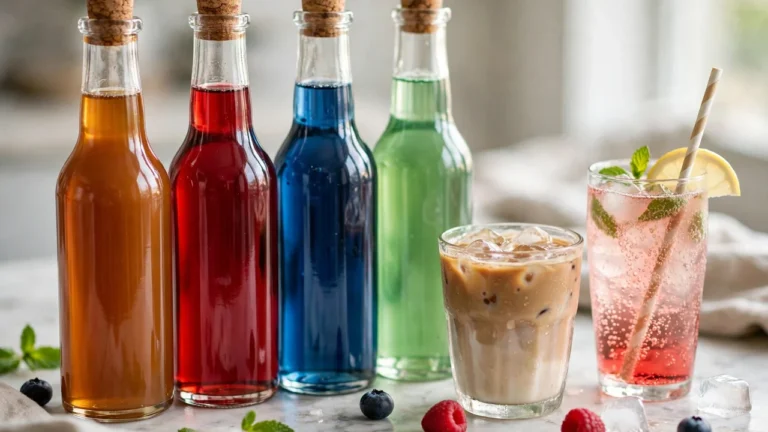
Torani vs Monin is the debate every home barista runs into sooner or later. Both brands fill café shelves, both come in the same tall 750 ml glass bottles, and both promise to turn an ordinary latte into something worth ordering again. So which one should you actually buy?
The honest answer is that neither brand wins everywhere. Monin usually tastes a little more natural and a little less sweet, while Torani wins on flavor variety, price, and how easy it is to find in a regular store. The right pick depends on what you drink most, how much you care about ingredients, and what your budget looks like.
This guide compares the two brands head to head using facts from the brands’ own product pages, current retailer prices observed on 11 November 2026, and published comparisons from coffee writers and café suppliers. No guessing, no invented numbers: where data was unavailable, we say so.
- Best overall taste: Monin — smoother, more natural-tasting, and more concentrated, so you use less per drink.
- Best value and variety: Torani — 100+ flavors, lower shelf prices, and far easier to find in US grocery stores.
- Best for bold iced coffee: Torani — its sweeter, bolder flavor cuts through cold brew and ice.
- Best for lattes and cocktails: Monin — lets the coffee or spirit stay in charge instead of taking over.
- Sugar-free: Both offer strong zero-calorie lines; Torani’s is much wider, Monin’s tastes a touch cleaner.
- Price per bottle (750 ml, observed 11 Nov 2026): Torani from $7.99 direct; Monin around $12.00 on Amazon — but Monin’s concentration narrows the real cost gap.
The Short Answer: Monin Wins on Taste, Torani Wins on Value
If you only buy one bottle and you want the best-tasting vanilla latte, buy Monin Vanilla. It tastes closer to real vanilla bean, it is less candy-sweet, and because it is more concentrated you need fewer pumps to get there.
If you want a shelf full of flavors without spending a fortune, or you need a bottle today from a local store, buy Torani. Its catalog is enormous, its prices are lower, and its sugar-free range is the widest of any major syrup brand. For most home coffee bars, Torani is the practical pick and Monin is the premium upgrade.
Many serious home baristas end up owning both: Monin for the two or three flavors they use every day, Torani for everything fun, seasonal, or sugar-free. That split is the real winner of this comparison.
Torani at a Glance: The American Original
Torani started in 1925, when Rinaldo and Ezilda Torre brought handwritten syrup recipes home from Lucca, Italy, to their North Beach neighborhood in San Francisco. They began with just five syrups. Today the family-owned company makes more than 100 flavors of syrups, sauces, and beverage bases.
Torani’s big idea was the flavored latte itself: the company says its syrup was used to create the world’s first flavored latte. That café heritage is why Torani feels so familiar in American coffee shops. If you have ordered a flavored latte anywhere in the US, there is a good chance Torani was in the cup.
The brand sells four main syrup lines. The Original line is the classic range, made with pure cane sugar.
The Puremade line uses a shorter ingredient list with cane sugar and natural flavors. The Sugar Free line is sweetened with sucralose and acesulfame potassium and carries zero calories. Torani also makes sauces, smoothie mixes, and Real Fruit Smoothie blends.
Torani bottles come in 750 ml glass and 375 ml plastic sizes. The 750 ml bottle is the standard café size and the one most home buyers choose. A matching pump is sold separately for $4.99 on torani.com.
Monin at a Glance: The French Premium Brand
Monin is older. Georges Monin founded the company in 1912 in Bourges, France, making fruit cordials and liqueurs. More than a century later it is still family-owned, still based in Bourges, and now sells in more than 140 countries.
Monin offers more than 150 flavors across six ranges: syrups, fruit mixes, sauces, frappé powders, liqueurs, and smoothies. Its syrups are built around a clean-label philosophy: the company says it never uses artificial flavors, and its US syrups are based on pure cane sugar.
In the US, Monin is the brand you are most likely to see behind a craft cocktail bar or in a specialty café. It is less common on ordinary grocery shelves than Torani, which is part of why many home buyers first meet Monin online or at a restaurant supply store.
Monin syrups come in 750 ml glass bottles in the US, with a 1 liter size for some flavors. Sugar-free versions are sold in 1 liter bottles in some markets and 750 ml in others, so check the label before you buy.
Torani vs Monin: Head-to-Head Comparison
Here is the whole comparison in one place. The details behind each row follow in the sections below.
| Category | Torani | Monin | Winner |
|---|---|---|---|
| Founded | 1925, San Francisco, USA | 1912, Bourges, France | Monin (older) |
| Flavor count | 100+ syrups, sauces & bases | 150+ flavors across 6 ranges | Monin on paper; Torani in practice for US buyers |
| Taste style | Bold, sweet, instantly recognizable | Smoother, more natural, less candy-sweet | Monin |
| Sweetener (regular) | Pure cane sugar (Original & Puremade) | Pure cane sugar (US syrups) | Tie |
| Concentration | Standard; 4–5 pumps per 16 oz latte | More concentrated; about 3 pumps per 16 oz latte | Monin |
| Sugar-free range | Very wide, sucralose + acesulfame K | Smaller range, erythritol + sucralose | Torani for choice; Monin for clean taste |
| 750 ml price (observed 11 Nov 2026) | From $7.99 at torani.com | About $12.00 on Amazon | Torani |
| Availability in the US | Grocery stores, warehouse clubs, Amazon | Specialty stores, online, café suppliers | Torani |
| Best for coffee | Iced coffee, cold brew, bold drinks | Lattes, hot coffee, subtle flavor | Depends on the drink |
| Best for cocktails | Good, especially fruit flavors | Excellent; bar-industry favorite | Monin |
| Shelf life (unopened) | Check the bottle; Torani does not publish one figure | Up to 36 months | Monin (published) |
Taste Test: How They Compare Flavor by Flavor
Taste is subjective, but the pattern across published comparisons is remarkably consistent. Monin tastes more like the real ingredient. Torani tastes more like the flavor you expect from a café drink. Both are good; they are good in different ways.

Vanilla
Monin Vanilla tastes smooth and close to vanilla bean, with the sweetness sitting in the background. Torani Vanilla is creamier and sweeter, with the flavor announcing itself in every sip. In a hot latte, Monin lets the espresso come through. In an iced latte, Torani’s bolder profile holds up better against cold milk and ice.
For a straight vanilla latte, most tasters pick Monin. For a vanilla sweet cream cold brew or a vanilla milkshake, Torani’s extra sweetness is an advantage rather than a flaw.
Caramel
Caramel splits people down the middle. Monin Caramel is restrained and buttery, with the caramel flavor rather than the sugar leading. Torani Caramel is richer and more indulgent, closer to a dessert topping. Salted caramel follows the same split: Monin keeps the salt subtle, Torani goes sweeter and bolder.
If you drizzle syrup over ice cream or make caramel frappes, Torani feels right. If you want a caramel latte that still tastes like coffee, Monin is the better bottle.
Hazelnut
Monin Hazelnut tastes toasted and nutty, like actual hazelnuts. Torani Hazelnut pops harder and sweeter, which works well in cold brew and iced drinks where flavors get muted by ice. This is the clearest example of the two brands’ personalities: Monin is subtle and true, Torani is loud and fun.
Fruit flavors
Fruit is where Torani’s catalog really shines. With flavors like watermelon, guava, blood orange, and pomegranate, Torani covers the Italian soda and lemonade world better than any other brand. Monin’s fruit flavors — peach, mango, raspberry, passion fruit — are widely praised for tasting like real fruit, but the range you can actually buy in the US is smaller.
For Italian sodas, lemonades, and dirty sodas, Torani is the practical winner. For a single standout fruit flavor in a cocktail, Monin often tastes more authentic.
Ingredients: What Is Actually in the Bottle?
Both brands’ regular syrups are built on pure cane sugar and water. The differences are in the details: Torani’s Original line includes preservatives, while Monin’s regular vanilla keeps its list very short. Neither brand’s regular vanilla syrup contains any of the major allergens, and both are gluten-free.
Torani Vanilla Syrup (Original line)
Ingredients, per torani.com: pure cane sugar, water, vanilla extract with other natural flavors, potassium sorbate and sodium benzoate (to preserve freshness), citric acid. Nutrition per 2 tablespoons (30 ml): 80 calories, 20 g total carbohydrate, 20 g total sugars. Gluten-free.
Torani Puremade Signature Vanilla
Ingredients, per torani.com: pure cane sugar, water, natural flavors, citric acid. No preservatives. Nutrition per 2 tablespoons (30 ml): 90 calories, 24 g total carbohydrate, 23 g total sugars. This is Torani’s cleaner-label answer to Monin, and it is the Torani vanilla to buy if the ingredient list matters to you.
Monin Vanilla Syrup
Ingredients, per Monin’s product data: pure cane sugar, water, natural flavors, natural vanilla extract, fruit or vegetable juice (for color). No preservatives are listed.
Monin’s Australian product fact sheet lists per 30 ml serving: about 103 calories, 25.5 g carbohydrate, 25.2 g sugars. US label values may differ slightly, so check your bottle. Both the regular and sugar-free Monin vanilla syrups are listed as allergen-free.
One honest caveat: Monin’s higher calorie and sugar numbers per serving do not mean it is the sweeter syrup in the cup. Because Monin is more concentrated, most people use less of it per drink. The per-serving numbers only tell the story if you pour the same amount, and most people do not.
| Vanilla syrup | Calories | Total sugars | Sweetener | Preservatives |
|---|---|---|---|---|
| Torani Vanilla (Original) | 80 | 20 g | Pure cane sugar | Yes |
| Torani Puremade Vanilla | 90 | 23 g | Pure cane sugar | No |
| Monin Vanilla | ~103* | 25.2 g* | Pure cane sugar | None listed |
| Torani Sugar Free Vanilla | 0 | 0 g | Sucralose + acesulfame K | Yes |
| Monin Sugar Free Vanilla | 0 | 0 g | Erythritol + sucralose | Yes |
* Monin figures are from Monin’s Australian product fact sheet (per 30 ml). US label values may differ slightly. Sources: torani.com product pages; Monin product fact sheet. All figures checked 11 November 2026.
Price Comparison: What a Bottle Really Costs
Torani is cheaper per bottle, almost everywhere you look. But the gap is smaller than the shelf price suggests, because Monin’s concentration means a bottle lasts longer. Here are the prices we observed on 11 November 2026. Prices change often, so treat these as a snapshot and check current listings before you buy.
| Product (750 ml unless noted) | Retailer | Price observed | Date observed |
|---|---|---|---|
| Torani Vanilla Syrup | torani.com | From $7.99 | 11 Nov 2026 |
| Torani Puremade Signature Vanilla | torani.com | $11.99 | 11 Nov 2026 |
| Torani Sugar Free Cinnamon Vanilla | torani.com | $10.99 | 11 Nov 2026 |
| Torani Vanilla, 4-pack (750 ml each) | Amazon | $25.92 ($6.48 per bottle) | Oct 2026 report |
| Torani Sugar Free Lime | Amazon | $17.04 | 10 Nov 2026 |
| Torani Mango, 4-pack with pumps | Amazon | $59.99 ($15.00 per bottle) | 10 Nov 2026 |
| Torani Vanilla Bean, 4-pack with pumps | Amazon | $61.99 ($15.50 per bottle) | 9 Nov 2026 |
| Monin Vanilla Syrup | Amazon | $12.00 | 10 Nov 2026 |
| Monin Amaretto Syrup | Amazon | $12.00 | 10 Nov 2026 |
| Monin Macadamia Nut Syrup | Amazon | $12.00 | 10 Nov 2026 |
| Monin Cherry Syrup (1 liter) | Amazon | $14.00 | 10 Nov 2026 |
| Monin Hazelnut Syrup | Amazon | List $17.26; lowest $10.50 (Aug 2025) | 11 Nov 2026 |
Cost per ounce and cost per drink
On a straight per-ounce basis, Torani Vanilla direct from torani.com costs about $0.31 per ounce ($7.99 for 25.4 oz). Monin Vanilla at $12.00 on Amazon costs about $0.47 per ounce. That is roughly a 50% premium for Monin.
But the per-drink math is kinder to Monin. A Canadian café supplier reports that a 16 oz latte needs 4 to 5 pumps of Torani but only about 3 pumps of Monin for the same sweetness and flavor. Other writers report using about a quarter to a third less Monin than Torani. If you use a third less syrup per drink, Monin’s effective cost per drink drops to roughly $0.31 per ounce equivalent — about the same as Torani.
The practical lesson: if you buy single bottles at full retail price, Torani is cheaper. If you buy in bulk or use Monin’s concentration to your advantage, the difference mostly disappears. And if you buy Torani’s 4-packs, Torani pulls ahead again at about $6.48 per bottle.
| Measure | Torani Vanilla | Monin Vanilla |
|---|---|---|
| 750 ml bottle | From $7.99 (torani.com) | $12.00 (Amazon) |
| Cost per ounce | ~$0.31 | ~$0.47 |
| Pumps per 16 oz latte | 4–5 | ~3 |
| Best bulk deal found | $6.48/bottle (4-pack, Amazon) | $6.58/bottle (12-case, WebstaurantStore) |
| Bottom line | Cheaper per bottle | Cheaper per drink than it looks |
Prices change often. Check current listings before buying, and compare cost per drink, not just cost per bottle.
Sugar-Free Syrups: Torani Has the Range, Monin Has the Cleaner Taste
Sugar-free is the one category where Torani wins clearly on paper. Its Sugar Free line covers dozens of flavors — vanilla, caramel, hazelnut, brown sugar cinnamon, s’mores, peppermint, salted caramel, and many more — all sweetened with sucralose and acesulfame potassium. Every one is zero calories, zero sugar, zero carbs, keto-friendly, gluten-free, and kosher.
Monin’s sugar-free range is much smaller. The core flavors are vanilla, caramel, and hazelnut, sweetened with erythritol and sucralose. What Monin lacks in range it makes up in taste: several reviewers find Monin’s sugar-free syrups cleaner-tasting, with fewer sharp edges than Torani’s.
If you drink sugar-free every day and you like variety, Torani is the only sensible choice. If you only need sugar-free vanilla or caramel and you are sensitive to aftertaste, try Monin first. For a deeper look at the sugar-free world, see our guide to the best sugar-free Torani syrups for coffee.
Which Brand Is Better for Coffee?
For hot lattes and cappuccinos, Monin usually wins. Its smoother flavor lets the espresso stay in charge, and its concentration means you add less syrup and less sweetness overall. If your morning coffee still tastes like coffee, Monin did its job.
For iced coffee and cold brew, Torani usually wins. Cold dulls flavor, and Torani’s bolder, sweeter profile survives ice in a way Monin’s subtlety sometimes does not. A Torani iced vanilla latte tastes like a café drink with no effort at all.
For flavored cold brew, frappes, and sweet cream drinks, Torani again has the edge — and its dessert flavors (cheesecake, cookie dough, toasted marshmallow) have no real Monin equivalent. Our full Torani syrup for coffee guide covers ratios and recipes in detail.
A practical tip for either brand: start with less than you think you need. With Monin, one pump is often enough for a full mug, and two pumps can push a drink into dessert territory fast. With Torani, the sweetness ramps up more forgivingly, so you can add a second pump without wrecking the drink. Our guide to how much Torani syrup to use has exact ratios and serving sizes.
Which Brand Is Better for Cocktails?
Monin is the bartender’s brand. It was built for bars, its flavors are designed to mix rather than dominate, and its fruit syrups taste like the fruit on the label. A Monin lavender, ginger, or passion fruit syrup can carry a cocktail without turning it into candy.
Torani holds its own in cocktails, especially with fruit and dessert flavors. Its blue curacao, grenadine-style fruit syrups, and tropical flavors make great tiki drinks and spritzes. Where Torani falls short is subtlety: in a delicate gin or vodka cocktail, Torani can taste a little too sweet and a little too obvious.
If you are building a home bar for cocktails, start with Monin for the classics (vanilla, caramel, orgeat-style almond, ginger) and add Torani for the fun fruit flavors. For more cocktail ideas, see our Torani syrup for cocktails guide.

Which Brand Is Better for Baking and Desserts?
Torani wins for baking and desserts, mostly on range. Its dessert flavors — cheesecake, cupcake, cookie dough, butter pecan, toasted marshmallow — were made for frostings, milkshakes, and ice cream toppings. Monin has dessert flavors too, but fewer of them, and they are harder to find in US stores.
One thing to know: neither brand’s syrup is a one-to-one replacement for sugar in baking. Syrups add liquid and flavor, so they work best as flavoring in frostings, glazes, whipped cream, milkshakes, and ice cream, rather than as the main sweetener in a cake batter. Our Torani syrup for desserts and ice cream guide has tested uses and recipes.
Flavor Variety: The Catalogs Compared
Torani says it crafts more than 100 flavors. Monin says it offers more than 150 flavors across its six product ranges. On paper, Monin has the bigger catalog. In an American kitchen, Torani usually has the bigger usable catalog, because more of its flavors are actually stocked by US retailers.
Torani’s edge is novelty and dessert flavors: cheesecake, s’mores, cookie butter, forest pine, shortbread, salted honey butter, and a deep bench of seasonal flavors. Monin’s edge is classic and cocktail flavors: lavender, violet, orgeat, gingerbread, hibiscus, and unusual fruit flavors that Torani does not make.
Neither brand is missing the essentials. Both make excellent vanilla, caramel, hazelnut, chocolate, raspberry, peach, and strawberry. If you only ever buy the classics, the catalog difference does not matter. It only matters when you want something unusual.
| If you… | Buy this |
|---|---|
| Want the best-tasting vanilla latte | Monin Vanilla |
| Drink mostly iced coffee or cold brew | Torani |
| Want the most flavors for the least money | Torani |
| Mix cocktails at home | Monin |
| Need lots of sugar-free options | Torani Sugar Free |
| Care most about a short ingredient list | Monin (or Torani Puremade) |
| Make Italian sodas and lemonades | Torani |
| Bake, make milkshakes, or top desserts | Torani |
| Want one bottle that does everything well | Monin Vanilla — then add Torani for fun flavors |
Shelf Life and Storage
Monin publishes its shelf life clearly: an unopened 750 ml glass bottle keeps for up to 36 months, and an opened bottle keeps for 90 to 180 days at room temperature with the cap on. If you leave a pump in the bottle, expect 30 to 60 days, because the pump lets air in.
Torani does not publish a single shelf-life figure across its range, so check the date on your bottle. In practice, Torani syrups last a similar length of time when stored the same way: cool, dark place, cap on, pump removed between uses if you want the longest life.
Both brands should be stored at room temperature, not in the fridge. Refrigeration does not help and can make thicker syrups pour slowly. Keep bottles out of direct sunlight and away from heat. For the full storage guide, see our article on whether Torani syrups need to be refrigerated.
Common Mistakes When Choosing Between Torani and Monin
Judging by bottle price alone. Monin looks expensive until you count pumps per drink. Because it is more concentrated, a $12 Monin bottle can cost about the same per drink as a $7.99 Torani bottle. Compare cost per drink, not cost per bottle.
Using the same amount of both. If you pour Monin the way you pour Torani, your drink will be too sweet. Start with one pump of Monin, taste, and then decide. Over-pouring Monin is the most common complaint new buyers have, and it is entirely avoidable.
Buying Monin for flavors Torani does better. Monin is the premium brand, but that does not make it better at everything. For Italian sodas, dirty sodas, and dessert drinks, Torani’s fruit and dessert flavors are the better tool.
Buying Torani’s Original line when you want clean labels. If preservatives and artificial colors bother you, buy Torani Puremade or Monin instead of Torani Original. The Puremade line closes most of the ingredient gap between the two brands.
Ignoring the pump. Both brands’ bottles need a pump for consistent pouring, and pumps are sold separately. Torani’s pump is $4.99 on torani.com.
Monin sells its own pump for 750 ml bottles. Free-pouring from a full bottle is how most spills happen.
Torani vs Monin vs the Rest: Quick Context
Torani and Monin are the two biggest names, but they are not the only options. DaVinci Gourmet is cheaper than both and popular in cafés, though many tasters find it more artificial. Jordan’s Skinny Syrups are the zero-calorie specialists. Starbucks sells its own syrups, but they are harder to buy and usually more expensive.
We have compared Torani with two of those rivals already: Torani vs Starbucks syrups and Torani vs Skinny Syrup. If you are still weighing alternatives, our guide to the best Torani syrup alternatives and substitutes covers the full field.
Frequently Asked Questions
Is Monin better than Torani?
Monin is better for taste and for subtle drinks like hot lattes and cocktails. Torani is better for value, variety, and bold iced drinks. Neither is better at everything, so the best brand depends on what you drink most.
Is Monin sweeter than Torani?
No — Monin is usually described as less sweet-tasting than Torani, even though its vanilla syrup has slightly more sugar per tablespoon. The difference is concentration and flavor balance: Monin tastes more like the real ingredient and less like candy, so it reads as less sweet in the cup.
Why is Monin more expensive than Torani?
Monin positions itself as a premium, clean-label brand with no artificial flavors, and it is imported or distributed through specialty channels in the US. Torani is made in the US, sold in grocery stores, and competes on price. The gap narrows per drink because Monin is more concentrated and you use less of it.
Can you use Monin and Torani pumps interchangeably?
Both brands sell pumps made for their own 750 ml bottles, and the neck sizes are similar, but fit is not guaranteed. Buy the pump made for the brand you own. A Torani pump costs $4.99 on torani.com.
Which brand has more flavors?
Monin lists more than 150 flavors across its six product ranges, while Torani lists more than 100 flavors of syrups, sauces, and bases. In US stores, though, you will usually find a wider Torani selection on the shelf.
Is Torani or Monin better for lattes?
Monin is better for hot lattes, where its smoother flavor lets the espresso shine. Torani is better for iced lattes, where its bolder flavor holds up against cold milk and ice.
Do Torani and Monin syrups need to be refrigerated?
No. Both brands are shelf-stable and should be stored at room temperature in a cool, dark place with the cap on. Refrigeration is not needed and can make the syrup pour slowly.
Which sugar-free syrup tastes better, Torani or Monin?
Most reviewers give Monin’s sugar-free syrups a small edge on taste, describing them as cleaner with less aftertaste. Torani wins on range: it offers far more sugar-free flavors, all zero calories and keto-friendly.
Are Torani and Monin syrups gluten-free?
Yes, both brands’ regular and sugar-free vanilla syrups are gluten-free. Torani lists its syrups as gluten-free, and Monin’s vanilla syrups are listed as allergen-free. Always check the label on the specific flavor you buy, since formulations can vary.
Can I mix Torani and Monin syrups in one drink?
Yes. The brands mix fine together, and many home baristas combine them — for example, Monin Vanilla for the base flavor with a pump of Torani caramel or fruit syrup for sweetness. Just remember Monin is more concentrated, so use less of it.
The Bottom Line
Torani vs Monin does not have a single winner, and that is the useful truth. Monin is the better-tasting syrup. Torani is the better-value syrup.
If you drink one latte a day and you want it to taste its best, spend the extra few dollars on Monin. If you run a home coffee bar, love seasonal flavors, drink sugar-free, or make Italian sodas for the family, Torani gives you more for your money.
The smartest setup is both. Keep a bottle of Monin Vanilla and Monin Caramel for your daily lattes and cocktails, and keep Torani for everything else: the fruit flavors, the dessert flavors, the sugar-free range, and the seasonal fun. You get Monin’s quality where it matters most and Torani’s variety everywhere else.
Start with the two vanilla syrups side by side. Make the same latte with each, one pump of Monin against two pumps of Torani, and taste them back to back. Ten minutes and two cups of coffee will tell you more than any article can — including this one.
References & Sources
- Torani Vanilla Syrup — official product page (torani.com)
- Torani Puremade Signature Vanilla — official product page (torani.com)
- Torani Sugar Free Cinnamon Vanilla — official product page (torani.com)
- Monin vs Torani — Which Syrup Is Better? (Coffee Scholars)
- Monin vs. Torani Syrup: Which Makes Better Flavored Coffee (Bean Ground)
- Torani vs DaVinci vs Monin: The Best Cafe Syrups 2026 (Chicken Pieces)
- Monin vs Torani: Which Syrup Is Best for Coffee & Cocktails? (Denver Coffee Life)
Prices in this article were observed on 11 November 2026 and change often. Check current listings before buying. Nutrition figures come from the brands’ own product pages and product fact sheets; US label values may differ slightly from the Australian Monin fact sheet cited for Monin Vanilla.