Torani Syrup for Coffee: The Complete Guide to Flavors, Ratios, and Café-Style Drinks at Home
Torani syrup for coffee is the simplest way to turn an ordinary home brew into a café-style drink. One pump or tablespoon adds sweetness and flavor in seconds, with no cooking and no special equipment.
This guide covers everything that matters before you buy a bottle. You will find the best flavors for hot, iced, and cold-brew coffee, exact ratios by cup size, nutrition facts from Torani’s own product pages, and the prices seen on retailer listings on 30 October 2026.
If you only remember one rule, make it this: start with less syrup than you think you need. You can always stir in a little more, but you cannot take sweetness back out of a finished cup.
What Is Torani Syrup, and Why Does It Work So Well in Coffee?
Torani is a San Francisco company that has made flavored syrups since 1925. Its Classic syrups are built on pure cane sugar, water, and natural and artificial flavors, with citric acid and preservatives to keep the bottle fresh.
That simple base is exactly why the syrup works in coffee. It dissolves instantly in hot drinks, blends smoothly into milk, and carries flavor without changing the texture of your brew. Unlike granulated sugar, it needs no stirring marathon, and unlike flavored creamers, it lets you control sweetness and flavor separately.
Torani sells its syrups in three main lines. Classic is the original cane-sugar line and the widest range. Puremade uses a shorter ingredient list with no artificial preservatives or colors. Sugar Free swaps sugar for sucralose and acesulfame potassium, so a serving has zero calories.
Most bottles are 750 ml (25.4 fl oz), which works out to about 25 two-tablespoon servings. A smaller 375 ml plastic bottle exists for some flavors, which is a good way to test a new flavor before committing to a full-size bottle.
☕ The 30-Second Answer
Best all-round starter: Vanilla or French Vanilla — they suit almost every coffee style.
Starting ratio: 1 tablespoon (½ oz) per 8 oz cup; 2 tablespoons per 12–16 oz mug.
Calories: About 80 per 2 tablespoons of Classic or Puremade syrup; 0 for Sugar Free.
One pump = about ¼ oz (½ tablespoon), so 2 pumps ≈ 1 tablespoon.
How Much Torani Syrup to Put in Coffee
Getting the ratio right is the difference between a balanced latte and a cup that tastes like dessert soup. Coffee strength, milk, and personal taste all shift the ideal amount, but the table below is a reliable starting point.
For a deeper breakdown by drink size and sweetness level, see our guide to how much Torani syrup to use.
| Drink size | Light sweetness | Standard sweetness | Extra sweet |
|---|---|---|---|
| 8 oz (small) | ½ tbsp (1 pump) | 1 tbsp (2 pumps) | 1½ tbsp (3 pumps) |
| 12 oz (medium) | 1 tbsp (2 pumps) | 1½ tbsp (3 pumps) | 2 tbsp (4 pumps) |
| 16 oz (large) | 1½ tbsp (3 pumps) | 2 tbsp (4 pumps) | 2½–3 tbsp (5–6 pumps) |
| Espresso shot (1–2 oz) | ¼–½ tbsp | ½–1 tbsp | 1 tbsp |
Always add the syrup to the hot espresso or coffee first, then pour in the milk. The heat helps it blend evenly, and stirring before the milk goes in prevents a sweet layer sitting at the bottom of the cup.
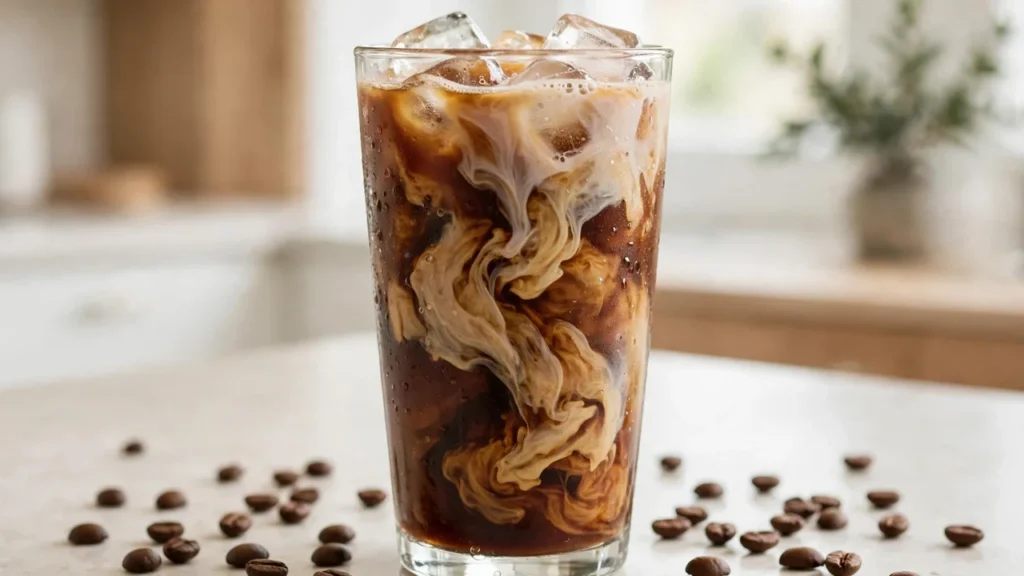
For iced coffee, the same ratios apply, but taste matters more. Cold dulls sweetness, so many people prefer the standard or extra-sweet column for iced drinks. Stir well, since syrup mixes more slowly into cold liquid.
Classic vs. Puremade vs. Sugar Free: Which Line Should You Buy?
The three lines taste similar in the cup, but they are not identical. Your choice comes down to ingredients, calories, and how picky you are about labels.
| Classic | Puremade | Sugar Free | |
|---|---|---|---|
| Sweetener | Pure cane sugar | Pure cane sugar | Sucralose + acesulfame potassium |
| Calories per 2 tbsp | About 80 | 80 | 0 |
| Sugar per 2 tbsp | About 20 g | 20 g | 0 g |
| Preservatives / colors | Sodium benzoate, potassium sorbate; some flavors use caramel color | None artificial | Sodium benzoate, potassium sorbate; xanthan gum |
| Flavor range | Widest | Core flavors | Wide, including most coffee favorites |
| Best for | Everyday coffee, widest choice | Cleaner label, same sweetness | Low-sugar or keto-style routines |
Puremade Vanilla is a good reference point because Torani publishes its full panel: 2 tablespoons give 80 calories, 20 g of carbohydrate, and 20 g of added sugars, with 0 g fat, 0 mg sodium, and 0 g protein. Classic flavors land in the same neighborhood, though exact numbers vary slightly by flavor.
Sugar Free syrups, by contrast, list 0 calories and 0 g of carbohydrate per 2-tablespoon serving. They are sweetened with sucralose and acesulfame potassium, which is why they suit low-sugar routines — but some drinkers notice a slight aftertaste, especially in plain black coffee. They tend to disappear more in milky lattes.
If you want the full sugar-free shortlist, our roundup of the best sugar-free Torani syrups for coffee compares the flavors that hold up best in hot and iced drinks.
Which Line in One Line Each
Classic: The biggest flavor range and the classic café taste.
Puremade: Same sweetness, shorter ingredient list, no artificial preservatives.
Sugar Free: Zero calories and zero sugar, best in milky drinks where any aftertaste hides.
Nutrition, Ingredients, and Allergens
Torani syrup is essentially flavored sugar water, so its nutrition panel is short. The table below uses Torani’s published figures for Puremade Vanilla as the reference, with Sugar Free French Vanilla for comparison.
| Per 2 tbsp (30 ml) serving | Puremade Vanilla | Sugar Free French Vanilla |
|---|---|---|
| Calories | 80 | 0 |
| Total fat | 0 g | 0 g |
| Sodium | 0 mg | 5 mg |
| Total carbohydrate | 20 g | 0 g |
| Total sugars (added sugars) | 20 g (20 g) | 0 g |
| Protein | 0 g | 0 g |
Puremade Vanilla’s ingredient list is just four items: pure cane sugar, water, natural flavors, and citric acid. Classic Vanilla adds vanilla extract with other natural flavors plus sodium benzoate and potassium sorbate as preservatives. Sugar Free versions replace the sugar with sucralose and acesulfame potassium and add xanthan gum for body.
Torani itself notes that its published nutrition data can differ slightly from the label on the bottle you buy, because recipes change over time. Always check the bottle in your hand for the final word, especially if you are tracking sugar closely.
Allergens: What to Watch For
Most plain Torani syrups contain no major allergen ingredients, and many are labeled gluten-free. The exceptions are flavors built around an allergen itself. Classic Hazelnut, for example, is labeled as containing hazelnut and peanut allergens.
That is why flavor-by-flavor checking matters more than any blanket claim. Nut, dairy-derived, and caramel flavors deserve a label read every time, even if you have bought the brand before. For a flavor-by-flavor walkthrough, see our guide to Torani syrup ingredients explained.
Does Torani Syrup Have Caffeine?
Torani syrups themselves contain no meaningful caffeine. The caffeine in your drink comes from the coffee, not the syrup. That also means a flavored decaf stays decaf, and a syrup-sweetened cold brew is only as strong as the brew underneath it.
The Best Torani Syrup Flavors for Coffee
There is no single “best” flavor — there is a best flavor for each kind of coffee. Vanilla flatters everything, caramel loves milk, hazelnut suits darker roasts, and seasonal flavors shine for a few weeks a year.
| Coffee style | Best Torani flavors | Why it works |
|---|---|---|
| Hot latte / cappuccino | Vanilla, French Vanilla, Salted Caramel | Smooth, milky flavors that blend rather than compete |
| Iced latte | Vanilla, Caramel, Hazelnut | Bold enough to survive ice and cold milk |
| Cold brew | Vanilla, Salted Caramel, Brown Sugar Cinnamon | Stands up to cold brew’s chocolatey depth |
| Black coffee / Americano | Vanilla, Hazelnut, Almond | Adds aroma without needing milk to round it out |
| Mocha | Dark Chocolate sauce + Peppermint or Raspberry | Sauce gives body; syrup adds the twist |
| Fall / winter drinks | Pumpkin Spice, Pumpkin Pie, Peppermint | Seasonal flavors built for cozy drinks |
If you are buying your very first bottle, start with Torani French Vanilla syrup. It is richer and slightly more custard-like than plain vanilla, which makes it forgiving in both hot lattes and iced coffee. Plain vanilla is the safer pick if you plan to mix flavors, since it steps back and lets a second flavor lead.
For caramel lovers, Torani Salted Caramel syrup is the crowd-pleaser. The salt sharpens the caramel instead of just making the drink sweeter, which is why it works in everything from morning lattes to iced cold brew.
🍂 Flavor Pairings Worth Trying
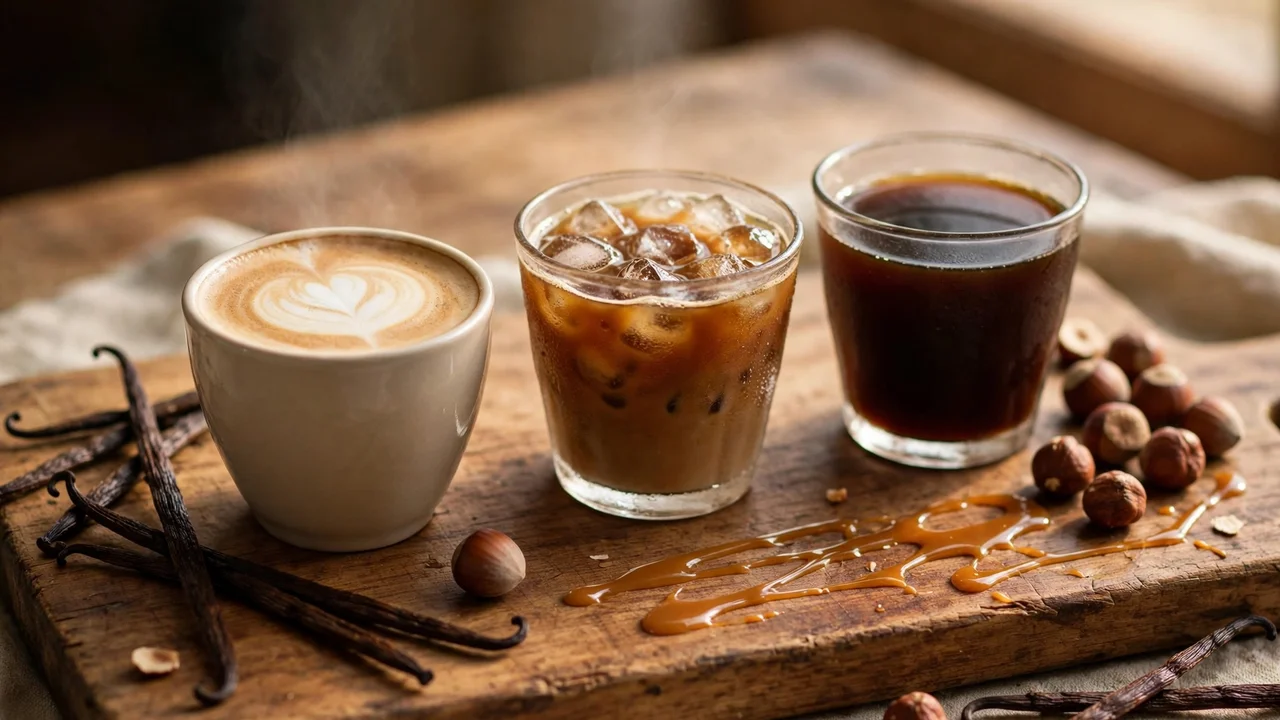
Vanilla + Caramel: The classic café duo — sweet, buttery, and hard to get wrong.
Hazelnut + Vanilla: Nutty warmth with a smooth finish; great in dark roasts.
Salted Caramel + Hazelnut: A praline-style latte without a specialty menu.
Peppermint + Dark Chocolate: The winter mocha, at home, in two minutes.
Use half the usual amount of each flavor when pairing, so the total sweetness stays the same.
3 Easy Torani Coffee Recipes
1. Classic Vanilla Latte (Hot)
- Brew a double shot of espresso into a mug.
- Stir in 1 tablespoon of Torani Vanilla syrup while the espresso is hot.
- Steam or heat 8 oz of milk until hot and frothy, then pour it over the espresso.
- Spoon a little foam on top and serve immediately.
For a lighter version, use ½ tablespoon of syrup and let the milk do more of the work. For a coffee-shop-sweet latte, go to 1½ tablespoons.
2. Iced Salted Caramel Cold Brew
- Fill a tall glass with ice and pour in 8–10 oz of cold brew.
- Add 1½ tablespoons of Torani Salted Caramel syrup and stir for a full 10 seconds.
- Float 2–3 oz of cold milk or cream on top and stir gently.
- Taste and add ½ tablespoon more syrup only if the cold has muted the flavor.
Cold brew is naturally smooth and low in acidity, which is why caramel and vanilla shine in it. Strong, bitter cold brew can handle the extra half-tablespoon; a mild brew cannot.
3. Hazelnut Iced Latte
- Stir 1 tablespoon of Torani Hazelnut syrup into a double shot of espresso.
- Pour over a glass full of ice.
- Top with 6–8 oz of cold milk and stir.
- Add a pinch of cocoa on top if you want a nutty mocha twist.
Torani Syrup vs. Sugar, Honey, and Flavored Creamer
Sugar sweetens but adds no flavor. Honey adds flavor, but its floral notes can fight with coffee, and it dissolves slowly in cold drinks. Flavored creamer adds flavor, sweetness, and dairy in one pour, but you cannot adjust one without the others.
Syrup wins on control. You choose the flavor, the sweetness, and the milk separately, which is exactly how cafés build drinks. It also wins on consistency: a tablespoon is a tablespoon every time, while a “spoonful” of sugar varies by spoon and by person.
The trade-off is real, though. A tablespoon of syrup is added sugar — about 10 g in a standard 1-tablespoon serving of Classic syrup. If you drink three sweetened coffees a day, that adds up to roughly 30 g of sugar before you have eaten anything. Sugar Free syrup removes that cost, but at the price of a sweetener aftertaste some drinkers notice.
Common Mistakes (and How to Fix Them)
- Adding syrup after the milk: It sinks and pools at the bottom. Fix: stir syrup into the hot coffee first.
- Using the same amount for iced and hot: Cold dulls sweetness, so iced drinks often need a touch more. Taste before adding extra, though.
- Mixing three or more flavors: The result tastes muddy. Stick to one lead flavor plus one supporting flavor.
- Pouring syrup into boiling milk: Scalded milk tastes off and can split. Heat milk until hot and steaming, not boiling.
- Skipping the stir in iced coffee: Syrup is denser than cold coffee and sinks. Stir for a full 10 seconds.
Why Does Torani Syrup Sometimes Curdle in Milk?
Curdling usually comes from acidity, not from the syrup itself. Very acidic coffee, citrus-flavored syrups, or milk that is close to its date can all cause milk proteins to clump when they meet. Using fresh milk, avoiding an extra squeeze of lemon, and adding syrup to the coffee before the milk all reduce the risk.
It also helps to know that curdling is a texture problem, not a sign that the syrup has gone bad. If the milk smells fresh and the bottle is in date, the drink is unpleasant rather than unsafe — but nobody wants to drink it, so prevention is worth the few seconds it takes.
How to Store Torani Syrup (and How Long It Lasts)
An opened bottle of Torani syrup keeps well at room temperature in a cool, dark cupboard, away from heat and sunlight. Refrigeration is not required for Classic syrups, though some people prefer the fridge for Sugar Free bottles once opened.
Check the bottle for its best-by date, and use the pump or cap promptly after pouring. Sticky residue around the neck attracts dust and can make the cap stick, so a quick wipe after each use keeps the bottle pleasant to handle.
If syrup ever smells off, tastes sour, or shows mold, throw it away. That is rare for a sugar-based syrup stored properly, but it is the only safe call once you see or smell a change.
Where to Buy Torani Syrup, and What It Costs
Torani syrups are widely available in the United States at grocery stores, warehouse clubs, café suppliers, and online. For a store-by-store breakdown, see our guide on where to buy Torani syrup.
Prices move by flavor, seller, and pack size, so treat the figures below as a snapshot, not a promise. They were observed on 30 October 2026, and readers should check current listings before buying.
| Pack | Price seen (30 Oct 2026) | Notes |
|---|---|---|
| Single 750 ml bottle (US) | Roughly $13–$19 | Most flavors; third-party Amazon listings trend higher than grocery prices |
| Single 750 ml bottle (Canada) | About CAD $19.99 | Amazon.ca listing for Vanilla, observed 30 Oct 2026 |
| 4-pack of 750 ml bottles (US) | Roughly $26–$60 | Wide range: plain 4-packs near the low end, pump-included gift sets near the high end |
| Sugar Free 750 ml bottle (US) | About $14.71 | Price-tracker listing for Sugar Free Lime, 1 Oct 2026, down from $17.46 |
A pump is worth buying if you drink syrup coffee daily. One pump delivers about ¼ oz, which makes ratios repeatable and stops the bottle neck from getting sticky. Torani’s own pumps fit its 750 ml bottles; third-party pumps usually do too, but check the neck size before ordering.
💰 Buying Smart: Price Snapshot (30 October 2026)
Budget pick: A single 750 ml bottle of a core flavor (Vanilla, Caramel, Hazelnut) — usually the cheapest per serving.
Best value: A 4-pack of a flavor you already love — plain 4-packs were seen near $26, far below four singles.
Skip for now: Gift sets with pumps at $60 unless you actually need four bottles at once.
Prices change often. Check the current listing before you buy — the figures above are observations, not quotes.
Key Takeaways
- Start with 1 tablespoon per 8 oz cup and adjust to taste — cold drinks usually need a touch more.
- Vanilla and French Vanilla are the safest first bottles; salted caramel is the best second bottle.
- Classic, Puremade, and Sugar Free all sweeten well; choose by ingredient list and calories, not by hype.
- Stir syrup into hot coffee before adding milk, and stir iced coffee for a full 10 seconds.
- One 750 ml bottle gives about 25 servings, making home lattes far cheaper per cup than café drinks.
If you are just starting out, our broader guide to how to use Torani syrup walks through sodas, teas, and desserts too — coffee is only the beginning.
Frequently Asked Questions
How much Torani syrup should I put in coffee?
Start with 1 tablespoon per 8 oz cup, or 2 tablespoons for a 12–16 oz mug. Adjust up or down by half a tablespoon until it tastes right for your coffee and milk.
Does Torani syrup dissolve in cold coffee?
Yes, but more slowly than in hot coffee. Stir iced coffee for a full 10 seconds so the syrup blends instead of sinking to the bottom of the glass.
Which Torani syrup is best for coffee?
Vanilla and French Vanilla suit almost every coffee style. Salted Caramel is the best second choice for lattes and cold brew, and Hazelnut suits darker roasts.
Is Torani syrup gluten-free?
Many Torani syrups are labeled gluten-free, but not every flavor carries the same label. Check the bottle for the flavor you are buying before assuming.
Does Torani syrup have caffeine?
No, Torani syrups contain no meaningful caffeine. All the caffeine in your drink comes from the coffee itself.
Can I use Torani syrup in cold brew?
Yes. Cold brew’s smooth, chocolatey character pairs well with Vanilla, Salted Caramel, and Brown Sugar Cinnamon. Use the standard ratio and stir well.
What is the difference between Classic, Puremade, and Sugar Free Torani?
Classic is the original cane-sugar line with the widest range. Puremade uses a shorter ingredient list with no artificial preservatives. Sugar Free uses sucralose and acesulfame potassium and has zero calories per serving.
How long does an opened bottle of Torani syrup last?
Stored in a cool, dark cupboard away from heat, an opened bottle lasts until its best-by date in most cases. Discard it if it smells off, tastes sour, or shows mold.
Can I use Torani syrup instead of sugar?
Yes. One tablespoon of Classic syrup replaces roughly one tablespoon of sugar in sweetness, while also adding flavor. Sugar Free syrup replaces sugar with no calories.
Why does Torani syrup curdle in milk coffee?
Curdling usually comes from acidity in the coffee or milk that is near its date, not from the syrup alone. Add syrup to the coffee before the milk, use fresh milk, and avoid citrus flavors in milky drinks.
Sources: Torani’s official Puremade Vanilla product page (nutrition and ingredients); Torani’s official Cane Sweetener page; retailer and price-tracker listings observed 30 October 2026. Prices change — check current listings before buying.