How to Make Torani Syrup at Home: DIY Copycat Recipes That Actually Taste Like the Bottle
You can make Torani-style syrup at home with just sugar, water, and flavoring — no special equipment and no hard-to-find ingredients. The trick is matching the sweetness strength of the real bottle, not just following a generic simple-syrup recipe.
This guide gives you a master base recipe, copycat versions for vanilla, caramel, hazelnut, and fruit flavors, and honest notes on cost, storage, and where homemade syrup falls short. It is not affiliated with Torani, and these are homemade syrups made in the same style — not Torani’s actual formulas, which the company does not publish.
If you only want one recipe, start with the vanilla version below. It takes about 10 minutes, keeps for weeks in the fridge, and works spoon-for-spoon in place of a bottled vanilla syrup.
Quick Answer: The Homemade Torani-Style Base
Torani’s classic syrups are built on pure cane sugar and water, flavored, and preserved for shelf stability. A homemade copycat skips the preservatives, so it must live in the fridge and be used within a few weeks.
The key difference from ordinary simple syrup is strength. A standard 1:1 simple syrup (equal cups of sugar and water) is thinner and less sweet per spoonful than Torani. Matching the bottle means using about 1¼ cups of sugar to 1 cup of water, which lands close to Torani’s roughly 19–20 grams of sugar per 2-tablespoon serving.
🧪 Recipe at a Glance: Master Base
Ratio: 1¼ cups sugar + 1 cup water + flavoring
Yield: About 1⅔ cups (roughly 13 servings of 2 tablespoons)
Time: 10 minutes + cooling
Sweetness: Spoon-for-spoon match for Torani classic syrups
Storage: Refrigerate in a clean, sealed bottle; use within 3–4 weeks
Use: 2 tablespoons (4 pumps) per 16 oz latte, to taste
What Is Actually in Torani Syrup?
Understanding the bottle helps you copy it. Torani’s classic syrups list pure cane sugar first, then water, natural flavors, citric acid, and preservatives (potassium sorbate and sodium benzoate). Caramel versions add caramel color.
That short list is good news for home cooks. There is no secret thickener or exotic ingredient in a classic Torani syrup — the body comes from a high sugar concentration, and the flavor comes from extracts and flavorings you can buy at any grocery store.
What you cannot copy at home is the shelf life. Commercial preservatives and sealed bottling let an unopened Torani glass bottle last up to 36 months from manufacture (24 months for PET bottles), according to Torani’s own FAQ. Your homemade version has no preservatives, so refrigeration and a short use-by window are non-negotiable.
Nutrition: Bottled vs. Homemade Vanilla
Torani’s classic caramel syrup lists 80 calories and 19 grams of sugar per 2-tablespoon (30 mL) serving, with 20 grams of total carbohydrate. Vanilla is in the same range at about 80 calories and 20 grams of sugar per serving.
A homemade vanilla syrup made with 1¼ cups of sugar to 1 cup of water comes to roughly 70 calories and 19 grams of sugar per 2 tablespoons, based on standard USDA figures for granulated sugar. That is close enough that you can swap it into any recipe without changing the amount.
| Syrup (2 Tbsp / 30 mL) | Calories | Total carbs | Sugars | Fat / protein |
|---|---|---|---|---|
| Torani Classic Caramel (label) | 80 | 20 g | 19 g | 0 g / 0 g |
| Torani Vanilla (label range) | ~80 | ~20 g | ~20 g | 0 g / 0 g |
| Homemade vanilla copycat (estimate) | ~70 | ~19 g | ~19 g | 0 g / 0 g |
| Standard 1:1 simple syrup (estimate) | ~64 | ~17 g | ~17 g | 0 g / 0 g |
These homemade figures are estimates from ingredient math, not lab-tested values. If you need exact nutrition for medical or dietary reasons, check the labels of the specific ingredients you use.
Ingredients and Allergens
A basic homemade syrup contains sugar, water, and flavoring — naturally free of gluten, dairy, and nuts unless your flavoring adds them. That is a real advantage if you are avoiding an allergen, because you control every ingredient.
Watch the flavoring, though. Hazelnut, almond, and other nut extracts can trigger nut allergies, and some caramel colors and flavorings carry their own allergen warnings. Always read your extract or flavoring bottle, and label your homemade bottles with the flavor and the date you made them.
For a deeper breakdown of what goes into the bottled versions, see our guide to Torani syrup ingredients explained.
Master Recipe: Homemade Vanilla Syrup (Torani-Style)
This is the recipe to master first. Once you can make vanilla well, every other flavor is a small variation on the same method.
Ingredients
- 1¼ cups granulated (cane) sugar
- 1 cup water
- 1 tablespoon pure vanilla extract (or 1 split vanilla bean, seeds scraped)
Steps
- Combine the sugar and water in a small saucepan over medium heat. Stir until the sugar has fully dissolved and the liquid looks clear, about 3–4 minutes. It does not need to boil hard.
- Take the pan off the heat and let the syrup cool for about 10 minutes.
- Stir in the vanilla extract. If you used a vanilla bean, add the seeds and pod while the syrup is warm, then remove the pod before bottling.
- Pour into a clean, dry bottle or jar, seal it, and refrigerate. Let it cool fully before closing the lid tight if the bottle is glass and the syrup is still hot.
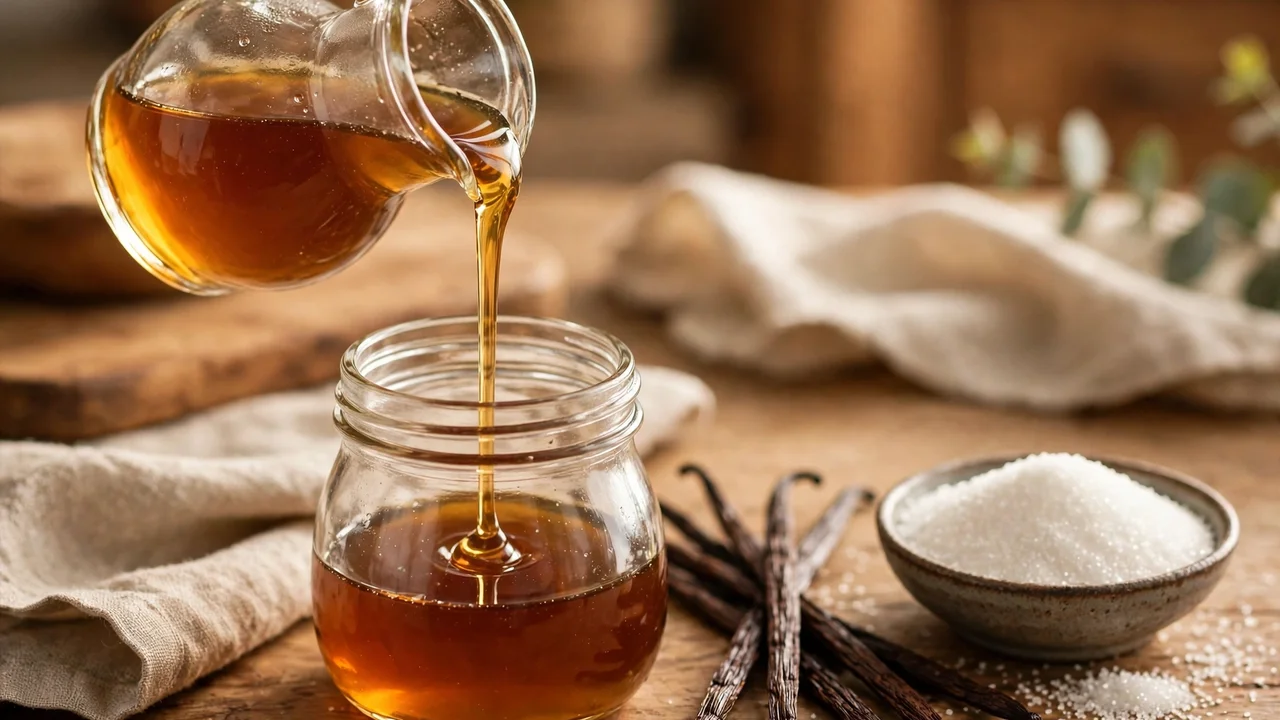
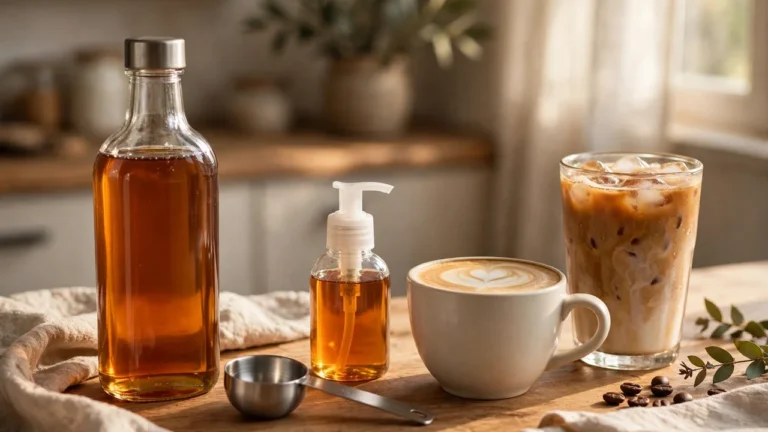
Taste it in a latte before you judge it. Use 2 tablespoons in a 16 oz latte with 2 shots of espresso and steamed milk, then adjust up or down by half a tablespoon. Your beans, milk, and sweetness preference all shift the ideal amount.
For more on getting the dose right, read how much Torani syrup to use — the same ratios apply to your homemade bottle.
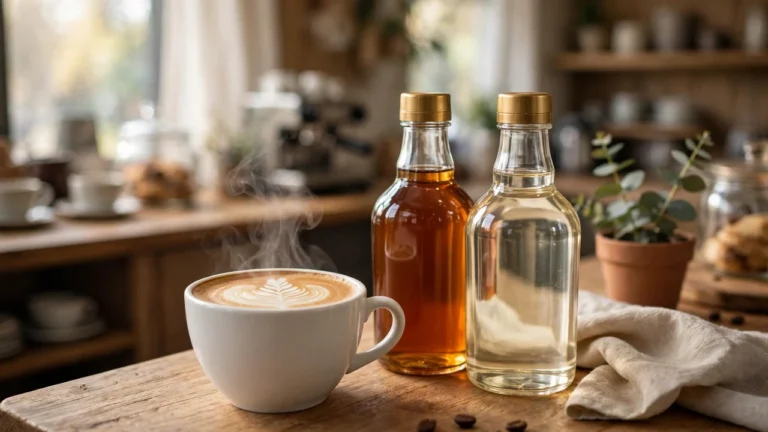
Copycat Variations: Caramel, Hazelnut, Fruit, and Sugar-Free
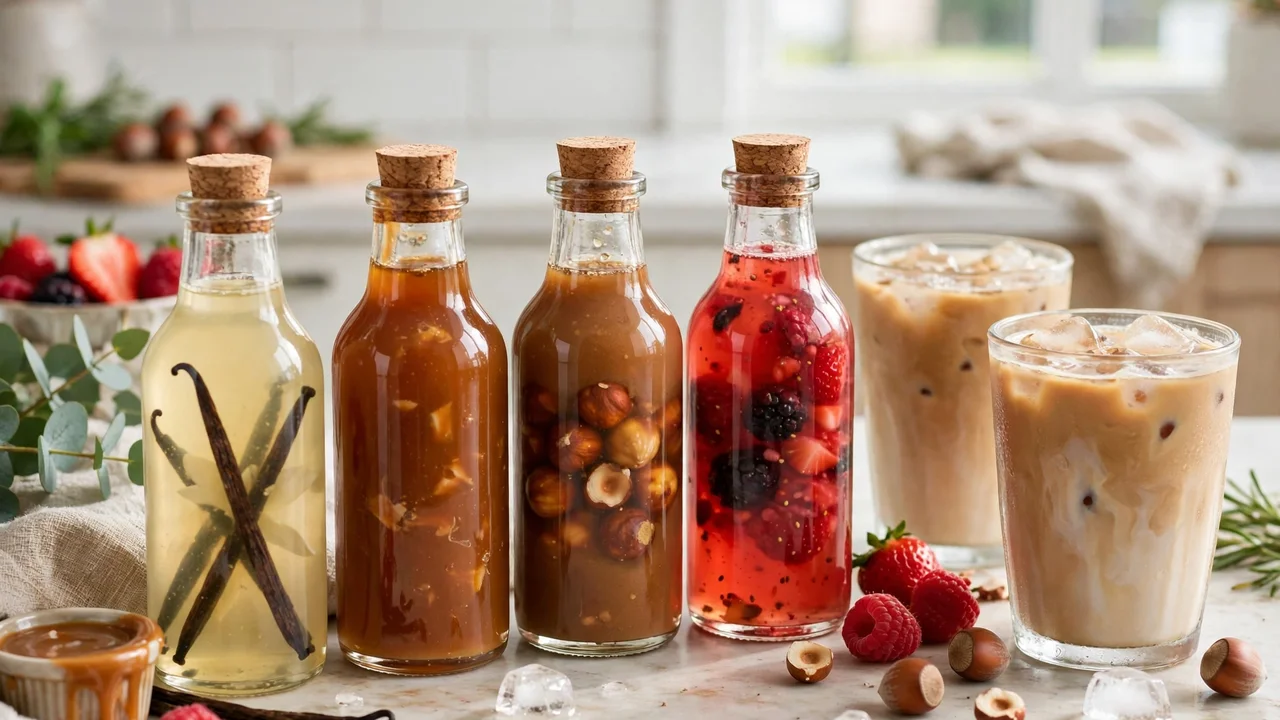
Keep the same 1¼ cups sugar to 1 cup water base, and change only the flavoring step. That consistency is what makes the whole set taste like it came from one shelf.
Caramel
For caramel, cook the sugar first: heat 1¼ cups of sugar alone in a dry, heavy saucepan over medium heat, swirling (not stirring) until it turns deep amber. Carefully add 1 cup of warm water — it will bubble fiercely — then stir until smooth. Off the heat, add 1 tablespoon of vanilla extract and a pinch of salt for a salted-caramel style.
Do not walk away from caramelizing sugar. It goes from amber to burnt in under a minute, and burnt caramel cannot be rescued. If it smells bitter or looks nearly black, start over.
Hazelnut
Make the base syrup, then stir in 1–2 teaspoons of hazelnut extract off the heat. Start with 1 teaspoon, taste, and add more slowly — nut extracts are strong, and too much tastes artificial. Label the bottle clearly, since hazelnut is a tree-nut allergen.
Fruit Flavors (Strawberry, Raspberry, Cherry)
Simmer 1 cup of fresh or frozen fruit with the sugar and water for 10–15 minutes, mashing gently, then strain through a fine sieve and discard the pulp. Fruit syrups are thinner and spoil faster: use within 2 weeks, refrigerated, and keep them cold.
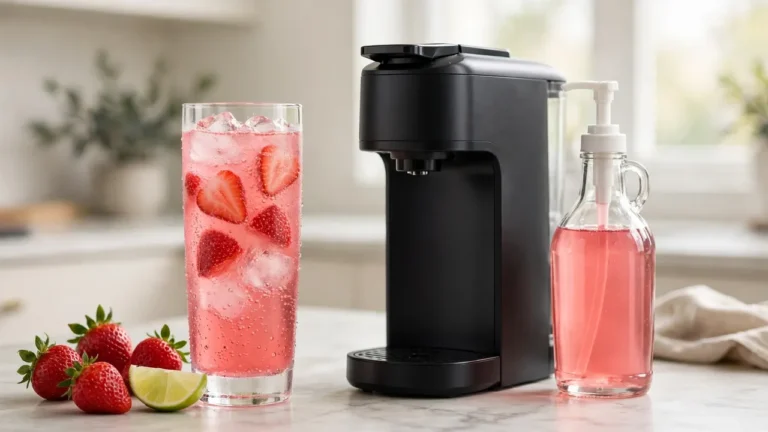
Fruit versions also pair beautifully with sparkling water and lemonade. Our French vanilla syrup guide and complete coffee guide show the drink combinations that work best with each style.
Sugar-Free Version
A sugar-free copycat is possible but harder to match. Use a cup-for-cup sugar substitute blend made for syrups (usually sucralose- or allulose-based), following the package ratio, and add ¼ teaspoon of xanthan gum whisked in while warm if you want more body.
Be honest with yourself here: sugar-free homemade syrups taste thinner and can develop an aftertaste that bottled sugar-free Torani masks with its own flavor system. They are still useful for iced drinks, where cold dulls aftertaste, but they rarely fool anyone in a hot latte.
🍯 Flavor Builder: One Base, Five Syrups
| Flavor | Flavoring step | Best in |
|---|---|---|
| Vanilla | 1 Tbsp vanilla extract, off heat | Lattes, cold foam, baking |
| Caramel | Caramelize sugar first, then add water | Macchiatos, iced coffee |
| Hazelnut | 1–2 tsp hazelnut extract, off heat | Lattes, mochas, hot chocolate |
| Strawberry | Simmer 1 cup berries, strain | Italian sodas, lemonade, milkshakes |
| Sugar-free vanilla | Sugar substitute + ¼ tsp xanthan gum | Iced lattes, cold brew |
Homemade vs. Store-Bought: Cost Comparison
Homemade syrup wins on cost per batch, but the gap is smaller than most blogs claim once you count vanilla extract. A batch of vanilla copycat uses about 1¼ cups of sugar (pennies) plus a tablespoon of pure vanilla extract, which is the most expensive ingredient in the bottle.
Still, one batch costs roughly $1–$3 in ingredients depending on your vanilla extract price, versus $5–$13 for a comparable bottled syrup. Where the bottle wins is time, consistency, and shelf life — you pay for a product that needs no fridge and tastes identical every time.
What a Bottle Costs Right Now
Prices below were observed on 1 November 2026 from retailer and price-tracking listings. They change often, so check current listings before you buy — and note that sizes differ, so compare the per-ounce price, not just the sticker price.
| Retailer / listing | Product | Observed price |
|---|---|---|
| WebstaurantStore | Torani Puremade Zero Sugar Vanilla, 750 mL | $12.49 |
| Target | Torani Naturally Sweetened Vanilla, 12.7 fl oz | $5.29 |
| Target | Torani Sugar Free Vanilla, 1500 mL (4-count) | $21.99 |
| Amazon.ca | Torani Vanilla, 750 mL | CAD $19.99 |
| Amazon US (price tracker, 1 Oct 2026) | Torani Sugar-Free French Vanilla, 25.4 fl oz (4-pack) | $25.92 |
| Amazon US (price tracker, 22 Oct 2026) | Torani Sugar-Free Vanilla with pump, 25.4 fl oz (4-pack) | $35.19 |
| GoSupps (import listing) | Torani Puremade Signature Vanilla, 750 mL PET | $34.99 |
| General US range (roundup listings) | Torani 750 mL classic syrups | $6.69–$11.99 |
For a full buying walkthrough, see where to buy Torani syrup.
💰 Is It Worth Making at Home?
Homemade batch (about 1⅔ cups): roughly $1–$3 in ingredients
Comparable bottle (750 mL): roughly $7–$13 in the US, before shipping
Verdict: Make it at home if you use one or two flavors heavily and enjoy cooking. Buy the bottle for rare flavors, gifting, or a syrup you want to keep for months.
A homemade batch makes about 13 drinks at 2 tablespoons each; a 750 mL bottle makes about 25. Per drink, homemade is usually under $0.25, bottled roughly $0.30–$0.50.
How Much Syrup to Use in Each Drink
A standard Torani pump dispenses ¼ fluid ounce, which is ½ tablespoon. So 2 tablespoons — the usual amount for a 16 oz latte — equals 4 pumps. Your homemade bottle has no pump, so measure with a tablespoon until you learn your pour.
| Drink size | Syrup (homemade) | Equivalent pumps |
|---|---|---|
| 8 oz | 1 tablespoon | 2 pumps |
| 12 oz | 1½ tablespoons | 3 pumps |
| 16 oz | 2 tablespoons | 4 pumps |
| 20 oz | 2½ tablespoons | 5 pumps |
For iced drinks, add about 25% more syrup than you would for a hot drink, because ice dilutes the flavor as it melts. And always stir syrup into the hot espresso first, even for an iced latte — syrup poured into cold milk sinks and clumps.
Learn the full system in how to use Torani syrup: the complete guide.
Storage, Safety, and Shelf Life
Refrigerate every homemade syrup, even the plain sugar ones. Without preservatives, an opened homemade syrup is best within 3–4 weeks; fruit syrups within 2 weeks. Use a clean, sealed bottle, and never pour leftover syrup from a drink back into the bottle.
Watch for cloudiness, mold, sour or fermented smells, or fizzing when you open the bottle — all signs to throw it out. Crystallization (gritty sugar at the bottom) is different: it is harmless and usually means the syrup got too cold or too concentrated. Warm the bottle gently in warm water and stir to redissolve.
Bottled Torani, by contrast, is shelf-stable and does not need refrigeration after opening — see do Torani syrups need to be refrigerated? for the full breakdown. Do not copy that habit with your homemade bottles.
⚠️ Troubleshooting: Fix It Before You Toss It
Too thin? You used a 1:1 ratio. Next batch, use 1¼ cups sugar per cup of water.
Tastes flat? Add a tiny pinch of salt or a few drops of lemon juice — both sharpen flavor without adding taste of their own.
Crystallized? Warm gently and stir; do not microwave a sealed bottle.
Flavor faded? Extracts weaken with heat. Always add them off the heat, after the syrup cools for 10 minutes.
Cloudy or fizzy? Discard it. That is spoilage, not a cosmetic issue.
Common Mistakes
- Boiling the syrup hard. A rolling boil evaporates water and changes the ratio. A gentle simmer until dissolved is enough.
- Adding extract to boiling syrup. Heat drives off delicate flavor compounds. Wait until the pan is off the heat and cooling.
- Using a dirty bottle. Residue and moisture grow mold fast. Wash, dry fully, and label with flavor and date.
- Making a giant batch. Homemade syrup expires in weeks, not years. Make what you will use in a month.
- Skipping the taste test. Sugar brands, extracts, and coffee strength vary. Taste in an actual drink, not off the spoon.
When to Just Buy the Bottle
Homemade is wonderful for vanilla, caramel, and one or two favorites. It is a poor deal for a flavor you use twice a year, for sugar-free versions where you are chasing an exact taste, or for gifts — a sealed, labeled bottle looks better and lasts longer.
It also makes sense to buy the bottle if you run a small coffee setup or serve guests often. Consistency matters there, and a pump bottle delivers the same dose every time. For everyday home lattes, though, the homemade jar on the fridge door is hard to beat.
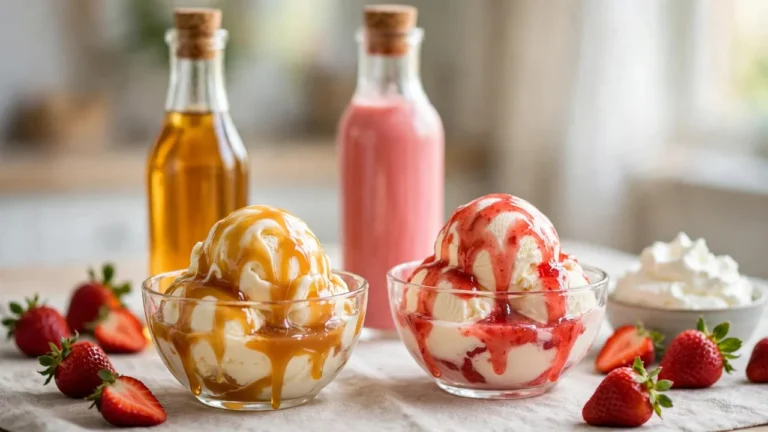
Syrup also works beyond coffee: try your vanilla or fruit syrups in baking. See baking with Torani syrup for cakes, glazes, and frostings that take the same flavors.
Frequently Asked Questions
Can you really make Torani syrup at home?
Yes, you can make syrups in the same style — sugar, water, and flavoring at the same sweetness strength. You cannot reproduce Torani’s exact commercial formula, which is not published, and your version will need refrigeration and a shorter shelf life.
What is the best sugar-to-water ratio for a Torani copycat?
Use 1¼ cups of sugar to 1 cup of water. That matches Torani’s roughly 19–20 grams of sugar per 2-tablespoon serving, while a standard 1:1 simple syrup is thinner and less sweet per spoonful.
How long does homemade Torani-style syrup last?
Plain sugar-based versions last 3–4 weeks refrigerated in a clean, sealed bottle. Fruit syrups last about 2 weeks. Discard any syrup that turns cloudy, moldy, sour-smelling, or fizzy.
Do I need to refrigerate homemade syrup?
Yes. Unlike bottled Torani, homemade syrup has no preservatives, so it must be refrigerated. Bottled Torani is shelf-stable, but that does not apply to anything you make at home.
Can I make sugar-free Torani-style syrup at home?
Yes, using a cup-for-cup sugar substitute and optionally ¼ teaspoon of xanthan gum for body. Expect a thinner texture and possible aftertaste; it works best in iced drinks.
Why does my homemade syrup taste weaker than Torani?
Usually one of three reasons: you used a 1:1 ratio instead of 1¼:1, you added the extract while the syrup was boiling, or you used too little flavoring. Fix the ratio first, then adjust flavoring by half-teaspoon steps.
Can I use homemade syrup in a SodaStream or Italian soda?
Yes. Fruit and vanilla syrups work well in sparkling water — use 1–2 tablespoons per glass and stir gently so you do not lose all the fizz.
Is homemade Torani-style syrup gluten-free?
It is gluten-free if every ingredient you use is gluten-free. Sugar, water, and pure vanilla extract normally are, but always check your flavoring bottle’s label.
How many drinks does one batch make?
One batch yields about 1⅔ cups, or roughly 13 servings of 2 tablespoons — enough for about 13 standard 16 oz lattes.
Can I sell homemade Torani-style syrup?
Do not sell it under Torani’s name or branding — that would be trademark infringement. Selling any homemade food product also involves local food-safety rules, so check your local regulations before selling anything.
Key Takeaways
- Match the strength: 1¼ cups sugar to 1 cup water is the copycat ratio that matters most.
- Master vanilla first, then vary only the flavoring step for caramel, hazelnut, and fruit versions.
- Refrigerate homemade syrup and use it within 3–4 weeks (2 weeks for fruit syrups).
- Homemade wins on cost per drink; the bottle wins on shelf life, consistency, and convenience.
- Never sell homemade syrup under Torani’s name, and always label bottles with flavor and date.
Start with the vanilla batch this weekend. Once it is in your fridge, your morning latte gets a lot cheaper — and a lot more fun to customize.
Sources: Torani FAQ on shelf life (torani.com/faqs); Torani Classic Caramel label nutrition via grocery listings; retailer and price-tracker listings observed 1 November 2026. Prices change — check current listings before buying.