Does Torani Syrup Expire? Shelf Life, Storage & Signs Your Bottle Has Gone Bad
Does Torani syrup expire? Yes, eventually, but not the way milk does. An unopened bottle of Torani Original syrup stays good for up to 36 months from the date it was made, and an opened bottle keeps its best flavor for 6 to 12 months when you store it properly. The date printed on the bottle is a best-by date, a promise about quality rather than a hard safety deadline.
That distinction matters. A bottle that is a month past its printed date is usually still fine to drink if it looks, smells, and tastes normal. A bottle that is well within date can still be ruined if it spent a summer on top of a hot stove or sat open with a dirty pump. This guide uses Torani’s own published shelf-life figures, explains what changes once a bottle is open, and shows you exactly how to tell a good bottle from one that belongs in the bin.
Key takeaways
- Unopened Original syrups last 36 months in glass and 24 months in plastic (PET), counted from the date of manufacture, according to Torani’s own FAQ.
- Opened bottles keep peak flavor for 6 to 12 months. Torani’s guidance is to use an opened bottle within a year for best quality.
- Puremade syrups are the exception. Torani recommends using them within 30 days of opening, even though the sealed bottle lasts 15 to 24 months.
- The printed date is about quality, not safety. Your eyes, nose, and taste buds are the real test after the date passes.
- Mold, a sour or fermented smell, cloudiness, or floating specks mean throw it out. Sugar crystals alone are not a sign of spoilage.
The Short Answer: Yes, But Not Like Milk Does
Torani syrup is mostly sugar and water, with natural flavors and a small amount of preservative. That recipe is naturally hostile to the microbes that spoil food. Sugar binds up the water in the syrup so bacteria and mold struggle to grow, and preservatives such as sodium benzoate and potassium sorbate add another layer of protection.
That is why a sealed bottle can sit in a pantry for years. It is also why “expired” Torani syrup rarely becomes dangerous overnight. What happens instead is slow decline: the flavor fades, the color dulls, the syrup thickens or thins, and eventually it stops tasting like the flavor on the label. You are far more likely to pour a disappointing latte than to pour something harmful, as long as the bottle was stored well and shows no signs of contamination.
There are exceptions, and this guide covers them. Dairy-based flavors, Puremade syrups, sugar-free syrups, and sauces all run on shorter clocks than a standard bottle of vanilla or caramel. And a bottle that has been contaminated, left open in heat, or stored with a crusty pump can spoil well before its date.
What the Date on the Bottle Actually Means
The date stamped on a Torani bottle is a best-by date. In the United States, best-by dates on shelf-stable foods are quality dates set by the manufacturer. They mark the point up to which the company guarantees the flavor, color, and texture you expect. They are not a government safety deadline, and food does not become unsafe the morning after the date passes.
Torani counts its shelf life from the date of manufacture, not from the day you buy the bottle or open it. That matters when you find a bottle at a discount store. A bottle that has already spent a year on a warehouse shelf has a year less of its printed life left, even though it is still sealed. Always check the stamp before you buy, and buy the freshest bottle when you have a choice.
You will usually find the date code printed on the neck or the back of the bottle, sometimes as part of a lot code. If the printing is smudged or missing, treat the bottle with extra care: check it closely before each use and use it up sooner rather than later.
How Long Does Torani Syrup Last Unopened?
Torani publishes exact shelf-life figures for every product line in its official FAQ, all counted from the date of manufacture. The bottle material matters: glass protects syrup better than plastic, so glass bottles carry a longer date. Here are the official figures, checked on Torani’s website on 25 November 2026.
| Product line | Unopened shelf life | Notes |
|---|---|---|
| Original Syrups, glass bottle | 36 months | The longest life of any Torani syrup |
| Original Syrups, PET plastic bottle | 24 months | Most bottles sold online are PET |
| Sugar Free Syrups, glass bottle | 24 months | Sweetened with sucralose and acesulfame potassium |
| Puremade Syrups, 750 ml glass | 24 months | White Peach and Lavender: 15 months |
| Puremade Syrups, 750 ml PET | 24 months | Peach, Raspberry, Strawberry: 18 months |
| Puremade Zero Sugar Syrups, 750 ml | 15 months | Caramel and Hazelnut: 24 months |
| Puremade Syrups, 375 ml | 24 months | Includes Puremade Zero Sugar 375 ml |
| Zero Calorie Beverage Sauce | 12 months | The shortest shelf life in the range |
| Puremade Sauces, 16.5 oz | 12 months | 64 oz foodservice sauces: 18 months |
| Puree Blends | 24 months | Opened: 6 weeks (see below) |
| Real Fruit Smoothie Mix | 12 months | Lemonade: 9 months |
The practical takeaway is simple. A sealed glass bottle of classic Torani syrup bought today is good for about three years. A sealed plastic bottle is good for about two. If you are stocking a home coffee bar, glass is the better buy when you have the choice, and it is worth checking the bottle type before you stock up on a flavor you use slowly.
One more thing to note: these figures assume proper storage, a cool, dark place away from heat and sunlight. A bottle that spent months in a hot garage or on a sunny windowsill will not live up to its printed date, no matter what the stamp says.
Torani shelf life at a glance
Original syrups, glass bottle, unopened
Original syrups, PET bottle, unopened
Opened bottle, peak flavor window
Puremade syrups once opened
All unopened figures are from Torani’s official FAQ and count from the date of manufacture. Source: torani.com/faqs, checked 25 November 2026.
How Long Does Torani Syrup Last After Opening?
Opening the bottle changes everything. Air, moisture, and tiny particles from the pump or your hands now reach the syrup, and the slow clock of flavor loss speeds up. Torani does not publish a single opened-bottle window for its Original syrups in its FAQ. The guidance Torani gives, and the figure most retailers and coffee guides repeat, is to use an opened bottle within one year for the best quality. Peak flavor sits in the first 6 to 12 months.
In practice, a bottle you open and use every day will usually be finished long before flavor becomes an issue. A 750 ml bottle holds about 25 servings of two tablespoons, and a daily latte drinker works through that in about a month. The bottles that go stale are the ones that sit half full in the back of a cupboard: the bottle of lavender you bought for one cocktail, or the holiday flavor you open once a year.
Some product lines have much shorter opened windows, and Torani states these directly:
- Puremade Syrups: use within 30 days of opening. Puremade skips the stronger preservatives of the Original line, which is the trade-off for its cleaner label.
- Puremade Zero Sugar Syrups: also 30 days once opened, per Torani’s FAQ.
- Puree Blends: 6 weeks once opened. These contain real fruit puree, so they behave more like juice than syrup.
- Real Fruit Smoothie Mix: 2 weeks once opened, and only if refrigerated.
- Sauces: Torani’s sauce guidance is to refrigerate after opening and use within about 4 weeks. Sauces are thicker, contain dairy or dairy-like ingredients in several flavors, and spoil faster than syrups.
If you only remember one number from this section, make it the Puremade rule. A 30-day window is easy to miss, and a half-used bottle of Puremade vanilla sitting open for three months is past what Torani recommends, even if it still smells fine.
Does Sugar Free Torani Syrup Expire Faster?
Yes, a little. Sugar is a preservative in its own right, and sugar-free syrups do not have it. Instead they rely on sucralose and acesulfame potassium for sweetness, plus the same preservatives as the regular line. Without sugar binding the water, the syrup is slightly more open to flavor loss and microbial growth.
Torani gives its Sugar Free glass bottles a 24-month unopened shelf life, a full year less than the 36 months for Original glass bottles. Once opened, independent guides put the peak-quality window for sugar-free syrups at about 3 to 6 months, roughly half the window of a regular syrup. That shorter window is reported guidance rather than a Torani-published figure, so treat it as a rule of thumb, not a deadline.
What does that mean in practice? If you keep a sugar-free bottle for your morning coffee and use it daily, you will finish it well inside the window. If you keep five sugar-free flavors and rotate slowly, buy the smaller 375 ml bottles where you can, and keep a note of the opening date on the cap. The same advice applies to Puremade Zero Sugar, which has the shortest unopened shelf life of the syrup lines at 15 months for most flavors.
7 Signs Your Torani Syrup Has Gone Bad
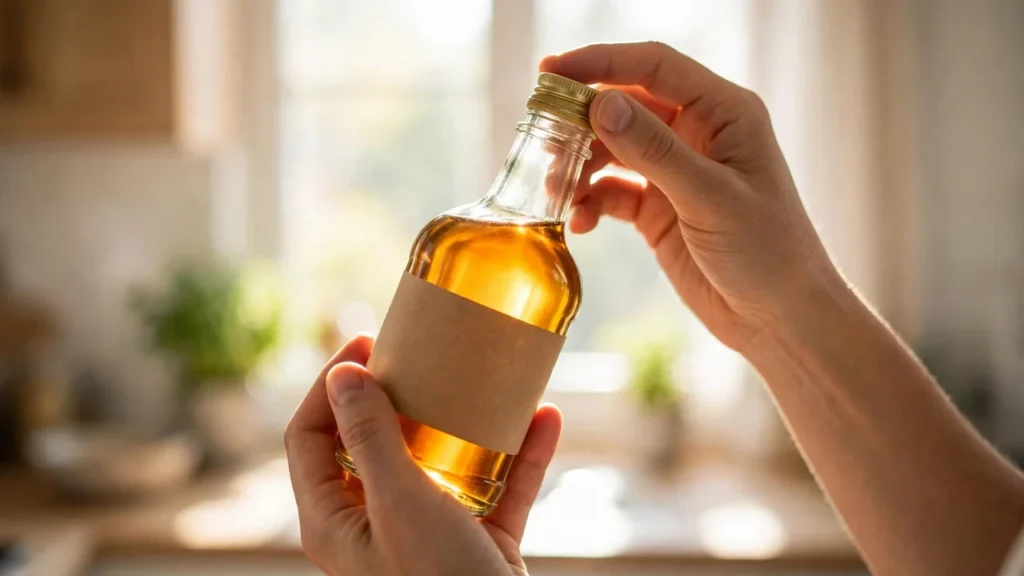
Dates are a guide. Your senses are the judge. Check a bottle in this order, and if any check fails, stop and throw the bottle out. Tasting comes last, and only if everything else looks and smells right.
1. Mold around the neck, cap, or pump
Any fuzzy growth, white, green, or black, means the bottle is done. Mold can grow where syrup dries around the opening, especially if the cap was left loose or the pump was not cleaned. Do not scrape it off and use the rest. Discard the whole bottle.
2. A sour, fermented, or vinegar-like smell
Fresh syrup smells sweet and true to its flavor. A sharp, sour, alcoholic, or vinegar-like smell means fermentation has started. This is the single most reliable warning sign. If it smells wrong, do not taste it.
3. Cloudiness or floating specks
Hold the bottle up to the light. Fresh syrup is clear or brightly colored, depending on the flavor. Cloudiness, floating particles, or a film on the surface suggest microbial growth. A few sugar crystals at the bottom are different, and covered below.
4. A major color change
Some fading over a year or two is normal oxidation, and a slightly duller color alone is not a reason to bin a bottle. A dramatic darkening, or a color that no longer resembles the flavor at all, is a sign the syrup is past its best and should go.
5. A thick, gloopy, or gritty texture that will not pour
Syrup thickens slowly with age and cold, which is normal. What is not normal is a texture that stays lumpy or grainy after a good shake, or a bottle that has turned almost solid. If it will not pour smoothly, it is finished.
6. A flat, dull, or off flavor
If the first five checks pass, taste a tiny amount on its own. Fresh syrup tastes bright and true to its flavor. A flat, stale, bitter, or metallic taste means the flavor compounds have broken down. It will not ruin a drink in the safety sense, but it will ruin the drink.
7. Sugar crystals at the bottom
Crystals are the one sign that usually means nothing. Sugar can crystallize out of syrup over time, especially after refrigeration or temperature swings. The syrup is normally still fine. Stand the sealed bottle in warm water for ten minutes and swirl gently, and the crystals will usually dissolve. If crystals come back together with cloudiness or a bad smell, discard the bottle.
Keep it or toss it? A 30-second check
- Within its best-by date, or just past it
- Smells sweet and true to the flavor
- Clear, bright color with no specks
- Pours smoothly after a shake
- Only a few sugar crystals at the bottom
- Any mold on the neck, cap, or pump
- Sour, fermented, or vinegar-like smell
- Cloudy liquid or floating particles
- Texture that stays lumpy after shaking
- Flat, bitter, or metallic taste
When in doubt, throw it out. A replacement bottle costs less than a ruined drink, and far less than a stomach upset.
What Is Actually in Torani Syrup, and Why It Lasts So Long
A bottle of Torani syrup is a short ingredient list. Take French Vanilla, one of the best-selling Original flavors. Torani lists its ingredients as pure cane sugar, water, citric acid, potassium sorbate (to preserve freshness), sodium benzoate (to preserve freshness), natural flavors, and caramel color. The nutrition panel for a two-tablespoon serving reads 80 calories, 20 grams of carbohydrate, 20 grams of total sugars, and 20 grams of added sugars, with no fat, fiber, or protein.
| Nutrition, per 2 tbsp (30 ml) | Torani French Vanilla (Original) | Torani Puremade Vanilla |
|---|---|---|
| Calories | 80 | 80 |
| Total carbohydrate | 20 g (7% daily value) | 20 g (7% daily value) |
| Total sugars / added sugars | 20 g / 20 g (39% daily value) | 20 g / 20 g (39% daily value) |
| Fat, fiber, protein | 0 g each | 0 g each |
| Sweetener | Pure cane sugar | Pure cane sugar |
| Ingredients | Pure cane sugar, water, citric acid, potassium sorbate, sodium benzoate, natural flavors, caramel color | Pure cane sugar, water, natural flavors, citric acid |
Figures from torani.com product pages, checked 25 November 2026. Values vary by flavor, so always check your own bottle label.
Three things in that list do the preservation work. Sugar lowers the water activity, which is a technical way of saying microbes cannot easily use the water in the syrup. Potassium sorbate and sodium benzoate are the preservatives that stop mold and yeast. Citric acid keeps the syrup slightly acidic, which also discourages growth. Puremade Vanilla drops the two preservatives and the caramel color, which is exactly why Torani gives it a 30-day opened window instead of a year.
On allergens, Torani’s own advice is to check the label on your bottle for up-to-date allergen information, since recipes can change. Most Torani syrups are listed without the major allergens, but flavors that contain dairy or nut notes are the ones to check carefully. Our full breakdown of what goes into a bottle of Torani syrup covers the ingredient list flavor by flavor, and our gluten-free guide covers the flavors that carry certification.
How to Store Torani Syrup So It Lasts
Storage matters more than the printed date. A bottle kept well can outlast its best-by date by months and still taste right. A bottle kept badly can go stale in weeks. The rules are simple, and they match Torani’s own guidance.
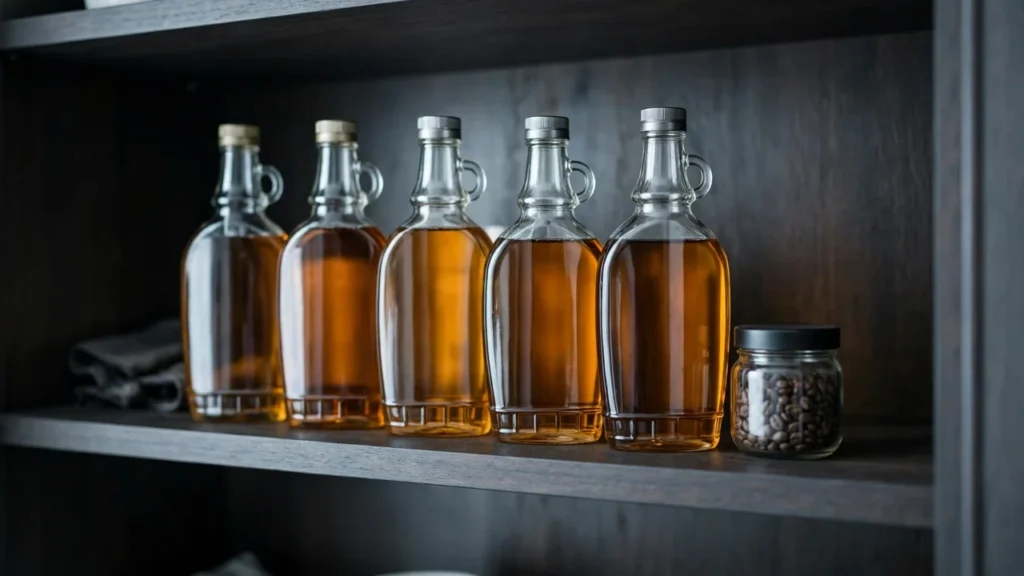
Keep it cool, dark, and upright
A pantry shelf or a kitchen cabinet away from the stove is the ideal home for Torani syrup. Cool means ordinary room temperature, roughly 60 to 75 degrees Fahrenheit. Dark means out of direct sunlight, which fades color and breaks down flavor compounds. Upright means the syrup stays off the cap, where dried syrup can crust, trap moisture, and invite mold.
Close it tightly every time
Air is the enemy after opening. Screw the cap on firmly after each use, and wipe the neck with a damp cloth if syrup has dripped there. A crusty ring around the opening is not just messy, it is a place where mold can start and then drop into the bottle.
Refrigerate or not? It depends on the bottle
Most Torani syrups do not need refrigeration, and Torani says so directly. Room-temperature storage is fine for Original and Sugar Free syrups, and refrigeration can actually cause sugar to crystallize, leaving grit at the bottom of the bottle. That said, the fridge has its uses. If your home runs hot, if you live in a humid climate, or if you know a bottle will take a year to finish, refrigeration can stretch the flavor window. Our full guide to whether Torani syrups need to be refrigerated walks through the trade-offs flavor by flavor.
One group must be refrigerated, with no debate. Torani’s dairy-based flavors, including Dulce de Leche, Irish Cream, and Sweet Cream, contain dairy ingredients and must go in the fridge after opening. If you are unsure whether a flavor is dairy-based, check the label or our refrigeration guide before you leave it on the shelf.
Keep the pump clean
A syrup pump dispenses about a quarter of a fluid ounce per stroke, which is why cafes love them, but a pump left uncleaned is the fastest way to contaminate a bottle. Rinse the pump in hot water every week or two, and run hot water through it before you put it on a fresh bottle. If you want the full case for and against pumps, see do you need a syrup pump for Torani.
Do not freeze it
Torani does not recommend freezing its syrups. Freezing changes the texture, encourages crystallization, and can crack a glass bottle. A cool pantry does the job better, and a bottle that has been frozen and thawed will rarely pour or taste the same.
Storage rules that actually extend shelf life
- Store upright in a cool, dark pantry
- Cap tightly after every single use
- Wipe the neck clean before capping
- Write the opening date on the cap
- Refrigerate dairy-based flavors at once
- Store above the stove or on a sunny sill
- Leave the cap loose or the pump dirty
- Pour used syrup back into the bottle
- Freeze a bottle to make it last longer
- Store a bottle on its side for weeks
What a Fresh Bottle Costs in November 2026
Shelf life is also a money question. A bottle that costs 8 dollars and lasts three years is cheap per drink, but only if you finish it. The table below shows real prices for standard 750 ml bottles, observed on 25 November 2026 unless a different date is noted. Prices move often, so check the current listing before you buy, and expect to pay more for bundles that include a pump.
| Retailer | Product | Price |
|---|---|---|
| Torani.com | French Vanilla, 750 ml | From $7.99 |
| Torani.com | Puremade Vanilla, 750 ml | $11.99 |
| Torani.com | Syrup pump for 750 ml bottles | $4.99 |
| Walmart | Sugar Free Caramel, 750 ml | $7.94 |
| Walmart | Green Apple, 750 ml, with gold pump | $20.99 |
| Walmart Business | Brown Sugar Cinnamon, 750 ml | $14.99 |
| Walmart Business | French Vanilla, 750 ml, with pump | $20.99 |
| Amazon | Sugar Free Lime, 750 ml | $17.04 (24 Nov 2026) |
| Amazon | Macadamia Nut, 750 ml, third party | $21.99 (31 Mar 2026) |
| Amazon | Creme Caramel, 750 ml | $19.99 (4 Mar 2026) |
| Amazon | Butterscotch, 750 ml | $18.44 (30 Mar 2026) |
| Amazon | Classic Caramel, 750 ml, list price | $17.20 |
| Target / Amazon | Lavender, 750 ml | $13.99 |
The spread is wide, and it tells a story. Buying direct from Torani or from Walmart in store is usually the cheapest route, often under 8 dollars a bottle. Amazon marketplace sellers often charge 17 to 22 dollars for the same bottle, which is the price of convenience and fast shipping. If you are buying several flavors, Torani offers free delivery on orders over 59 dollars, which can bring the per-bottle cost down sharply. For the full rundown of stores, see where to buy Torani syrup.
Think about shelf life when you compare prices. A 750 ml bottle holds about 25 two-tablespoon servings. At 8 dollars, that is about 32 cents a drink. At 20 dollars, it is about 80 cents. If you only use a flavor once a week, a bottle lasts about six months, which sits comfortably inside the opened window for an Original syrup but past the 30-day window for a Puremade. Slow-use flavors are the ones where the smaller 375 ml bottle, or a sugar-free bottle with a shorter life, earns its place.
Torani vs Monin: Which Lasts Longer?
Monin is the other big name in coffee syrups, and the two brands run on very similar clocks. Monin’s published guidance is also about three years unopened and about 6 to 12 months once opened, and it also relies on sugar and preservatives for stability. Neither brand has a meaningful shelf-life advantage over the other.
Where they differ is the details. Torani publishes a detailed shelf-life table by product line and bottle material, which makes it easier to know exactly where your bottle stands. Torani also spells out the short 30-day opened window for its Puremade line, a level of detail that helps buyers of clean-label syrups plan around a real deadline. If you are choosing between the brands, choose on flavor and price, not on expiry. For the full brand comparison, see Torani vs Monin: which syrup brand is better.
6 Mistakes That Shorten Your Syrup’s Life
- Storing bottles above the stove. Heat is the fastest way to age syrup. A bottle that lives in warm air loses flavor in months instead of years.
- Leaving the pump on a half-used bottle for months. Pumps are convenient, but they are also an open channel for air and kitchen microbes. Clean the pump regularly or cap the bottle between uses.
- Pouring leftover syrup back into the bottle. Syrup that has touched a glass, a spoon, or a drink is contaminated. Never return it to the bottle.
- Buying the big bottle for a flavor you rarely use. A 750 ml bottle of a once-a-month flavor will still be half full when its opened window closes. Buy the 375 ml size for slow flavors.
- Ignoring the Puremade 30-day rule. Puremade is the line most people get caught out by. Mark the opening date on the cap the day you open it.
- Storing syrup in the fridge door. If you do refrigerate, put the bottle at the back of the fridge where the temperature is stable. The door swings through big temperature changes every time it opens, which encourages crystallization.
Frequently Asked Questions
Does Torani syrup expire?
Yes. Unopened Original syrups last 36 months in glass and 24 months in plastic from the date of manufacture, according to Torani. Opened bottles keep their best flavor for 6 to 12 months. The printed date is a best-by date about quality, not a safety deadline, so a bottle just past its date is usually still fine if it looks, smells, and tastes normal.
Can you use Torani syrup after the expiration date?
Usually yes, if the bottle passes the sensory checks. Look for mold, sniff for a sour or fermented smell, check for cloudiness or floating specks, and taste a small amount. If all four checks pass, the syrup is fine to use. If any check fails, throw it out, even if the date has not passed yet.
How long does Torani syrup last after opening?
An opened bottle of Original or Sugar Free syrup keeps its best flavor for 6 to 12 months, and Torani’s guidance is to use it within a year. Puremade syrups are different: Torani recommends using them within 30 days of opening. Puree Blends last 6 weeks opened, and Real Fruit Smoothie Mix lasts 2 weeks opened if refrigerated.
Does Torani syrup need to be refrigerated after opening?
Most flavors do not. Torani says its Original and Sugar Free syrups are shelf-stable at room temperature after opening. The exception is dairy-based flavors such as Dulce de Leche, Irish Cream, and Sweet Cream, which must be refrigerated after opening. Refrigeration can extend the flavor window for other flavors, but it can also cause sugar crystals to form.
How can you tell if Torani syrup has gone bad?
Check for mold around the neck or cap, a sour or vinegar-like smell, cloudiness or floating specks, a major color change, or a thick and lumpy texture. A flat, bitter, or metallic taste is the final sign. Sugar crystals alone are not spoilage and usually dissolve in warm water.
Does sugar-free Torani syrup expire faster?
Yes, a little. Torani gives Sugar Free glass bottles a 24-month unopened shelf life, against 36 months for Original glass bottles. Once opened, reported guidance puts the peak-quality window at about 3 to 6 months, roughly half that of a regular syrup, because sugar-free syrups lack sugar’s preservative effect.
Can you freeze Torani syrup to make it last longer?
No. Torani does not recommend freezing its syrups. Freezing changes the texture, encourages crystallization, and can crack a glass bottle. A cool, dark pantry is the right place for storage.
How long does Torani Puremade syrup last?
Unopened Puremade syrups last 24 months in 750 ml glass, except White Peach and Lavender at 15 months, and 15 months for most Puremade Zero Sugar 750 ml bottles. Once opened, Torani recommends using Puremade syrups within 30 days.
Does Torani sauce expire faster than syrup?
Yes. Sauces have a shorter shelf life than syrups, with most at 12 months unopened, and they should be refrigerated after opening and used within about 4 weeks. Puremade Sauces in the 64 oz foodservice size last 18 months unopened, except Pumpkin Pie at 12 months.
What should you do with expired Torani syrup?
If it passes the look, smell, and taste checks, you can keep using it. If it fails any check, pour it out and recycle the bottle. Do not try to save a bottle with mold by skimming it, and do not use a spoiled bottle in cooking on the theory that heat will fix it.
The Bottom Line
Torani syrup does expire, but it gives you plenty of warning and plenty of time. An unopened glass bottle lasts three years from the day it was made. An opened bottle of a classic flavor stays at its best for 6 to 12 months. Puremade is the one line with a real deadline: 30 days once opened, so mark the cap.
Store every bottle upright in a cool, dark pantry, cap it tightly, keep the pump clean, and refrigerate only the dairy-based flavors. Then trust your senses over the stamp. If a bottle looks clear, smells sweet, and tastes like the flavor on the label, it is good to pour. If anything about it is off, let it go and open a fresh one. If you are building a home coffee bar and want to put the flavor to work, start with our complete guide to Torani syrup for coffee, and check how much Torani syrup to use per drink so a fresh bottle lasts as long as it should.
Last updated: 25 November 2026. Shelf-life figures are from Torani’s official FAQ at torani.com/faqs, checked 25 November 2026. Prices were observed on 25 November 2026 unless a different date is noted, and they change often, so check the current listing before you buy. Figures vary by flavor, so always check your bottle label.