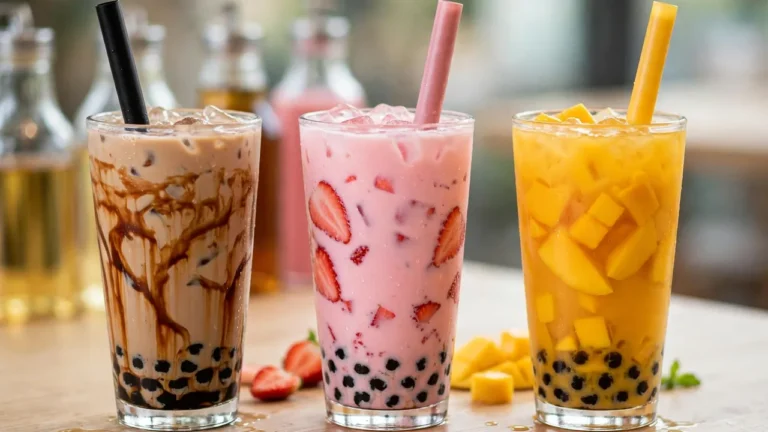
Torani Syrup for Smoothies: Best Flavors & Recipes That Actually Work
Torani syrup for smoothies is the fastest way to turn a plain fruit-and-milk blend into something that tastes like it came from a cafe. One or two tablespoons of the right flavor adds sweetness, color, and a clear fruit or dessert note without changing the texture of your smoothie.
This guide ranks the 10 best Torani syrup flavors for smoothies, gives you the exact amount to use, shows the sugar and calorie math, compares current prices, and shares eight tested recipes you can make in five minutes. Everything here is based on Torani’s own product pages and current retailer listings, checked on November 21, 2026.
Torani Syrup in Smoothies at a Glance
- How much to use: 1 to 2 tablespoons per 12 oz smoothie. Start with 1 tablespoon and taste.
- What it adds: About 40 to 45 calories and 10 to 12 g of sugar per tablespoon of Original syrup.
- Best all-round flavors: Strawberry, Mango, and Crème de Banana blend smoothly and pair with almost any fruit.
- Sugar-free option: Torani Sugar Free syrups add flavor with 0 calories and 0 g of sugar per serving.
- Watch out: Citrus flavors can curdle milk, so add them to juice or yogurt bases instead.
Why Torani Syrup Works So Well in Smoothies
A smoothie already has sweetness from fruit, so why add syrup at all? The answer is control. Fresh fruit varies from week to week. One batch of strawberries is jammy and sweet, the next is tart and watery.
A measured spoonful of Torani syrup evens that out, so the same recipe tastes the same every time.
Syrup also solves the flavor problem that frozen fruit creates. Freezing dulls flavor, and ice dilutes it further. Torani syrups are concentrated, so they punch through cold and ice in a way that a handful of berries sometimes cannot. That is why smoothie shops and cafes use syrups instead of relying on fruit alone.
Torani has been making syrups since 1925, and the range now runs to more than 100 flavors. For smoothies, that matters because you can build flavors that fresh fruit alone cannot give you: toasted marshmallow, white chocolate, salted caramel, or a clean vanilla base that ties a whole blend together.
There is one more practical advantage. A 750 ml bottle holds 25 servings of 2 tablespoons each, so one bottle covers roughly 25 to 50 smoothies depending on how much you use. At about $10.99 direct from Torani, that works out to roughly 22 to 44 cents of syrup per smoothie.
How Much Torani Syrup to Put in a Smoothie
The most common mistake is pouring syrup like juice. Torani syrup is concentrated, and a smoothie only needs a little. The table below gives a starting point for every size. Always blend, taste, and then add more if needed, because you cannot take syrup out once it is in.
| Smoothie size | Syrup to start with | Max before it gets too sweet |
|---|---|---|
| 8 oz (kids / snack) | 1 tablespoon | 1.5 tablespoons |
| 12 oz (standard) | 1 tablespoon | 2 tablespoons |
| 16 oz (large) | 1.5 tablespoons | 2.5 tablespoons |
| 20 oz (meal size) | 2 tablespoons | 3 tablespoons |
If you use a Torani pump, one pump dispenses roughly a quarter of a fluid ounce, so four pumps equal about 2 tablespoons. That makes a pump handy for repeatable recipes, though a measuring spoon is just as accurate. For the full breakdown of pumps, spoons, and serving math, see our guide to how much Torani syrup to use.
The Sugar Math, Honestly Stated
A 2-tablespoon serving of Torani Original syrup has 80 to 90 calories and 19 to 24 g of total sugars, depending on the flavor. That means 1 tablespoon adds about 40 to 45 calories and 10 to 12 g of sugar to your smoothie. The fruit and milk in the blend add their own sugars on top, so a smoothie with 2 tablespoons of syrup and a banana can easily pass 35 g of total sugar.
That is not a reason to avoid syrup. It is a reason to measure it. A spoonful that you control is very different from the free pour at a smoothie bar, where the same drink can carry three or four times as much syrup. If sugar is a concern, the Sugar Free line gives you the same flavor with 0 calories and 0 g of sugar per serving.
The 10 Best Torani Syrup Flavors for Smoothies
Not every Torani flavor belongs in a blender. Coffeehouse flavors like hazelnut and caramel work, but fruit flavors do the heavy lifting in smoothies because they match the fruit already in the glass. These ten are ranked for smoothie use specifically: how well they blend, how natural they taste cold, and how many recipes they fit.
| Rank | Flavor | Best in | Pairs with |
|---|---|---|---|
| 1 | Strawberry | Berry and banana blends | Banana, vanilla, yogurt |
| 2 | Mango | Tropical blends | Pineapple, coconut, peach |
| 3 | Crème de Banana | Creamy breakfast smoothies | Peanut butter, oats, cocoa |
| 4 | Peach | Light summer blends | Raspberry, mango, green tea |
| 5 | Coconut | Tropical and piña colada styles | Pineapple, mango, lime |
| 6 | Pineapple | Bright, tangy blends | Coconut, mango, orange |
| 7 | Blueberry | Antioxidant berry blends | Banana, vanilla, oats |
| 8 | Vanilla Bean | Any smoothie as a base note | Everything, especially berries |
| 9 | Chocolate Milano | Dessert and protein smoothies | Banana, peanut butter, coffee |
| 10 | Passion Fruit | Exotic, tart blends | Mango, pineapple, orange |
1. Strawberry
Strawberry is the safest first bottle to buy for smoothies, and the most versatile. It tastes like ripe strawberries rather than candy, it colors the blend a natural pink, and it works with milk, yogurt, almond milk, and juice bases alike. Our full review of Torani Strawberry Syrup covers its taste, price, and nutrition in detail.
Use it in strawberry banana smoothies, berry medleys, and strawberry milkshakes. One tablespoon is usually enough when fresh or frozen strawberries are already in the mix, since the syrup is there to sharpen the flavor rather than carry it alone.
2. Mango
Mango is the best tropical flavor Torani makes for smoothies. Torani describes the current recipe as more mango-forward than before, with a ripe, juicy aroma, and that shows in the glass. It blends especially well with pineapple and coconut, and it softens the tartness of yogurt-based smoothies.
Try 1 tablespoon of mango syrup with frozen mango chunks, half a banana, and coconut milk for a thick tropical blend that needs no extra sweetener. Our Torani Mango Syrup guide has the full nutrition and price breakdown.
3. Crème de Banana
Crème de Banana is the flavor most people overlook, and it may be the best smoothie syrup Torani sells. Real bananas vary, and a slightly green banana can leave a smoothie starchy and bland. This syrup adds a ripe, creamy banana note that fixes that in one spoonful.
It is outstanding in peanut butter banana smoothies, oatmeal breakfast blends, and chocolate banana protein shakes. Pair it with a spoonful of cocoa powder and a frozen banana for a healthy-tasting milkshake.
4. Peach
Peach is light, floral, and gentle, which makes it ideal for smoothies you drink in the morning. It does not overpower other fruit, so it works as a second flavor alongside raspberry, mango, or strawberry. It also pairs well with iced green tea bases for a lighter, juice-style smoothie.
Use 1 tablespoon in a peach raspberry blend with Greek yogurt and honey. For more on this flavor, see our Torani Peach Syrup review.
5. Coconut
Coconut syrup turns an ordinary smoothie into a tropical one. It adds a creamy, nutty sweetness that works with pineapple, mango, and lime, and it is one of the few flavors that tastes good in both dairy and non-dairy bases. A little goes a long way, so start with half a tablespoon if you are mixing it with another syrup.
Our Torani Coconut Syrup guide explains why it mixes so well in milk-based drinks, which is exactly what a smoothie needs.
6. Pineapple
Pineapple syrup brings brightness and a pleasant tang. It cuts through creamy bases like yogurt and coconut milk, which keeps tropical smoothies from tasting flat or heavy. Use it when a blend tastes too rich and needs lifting.
One tablespoon with frozen pineapple, coconut milk, and a squeeze of lime makes a piña colada style smoothie without alcohol. It also works in green smoothies, where its sweetness balances spinach or kale.
7. Blueberry
Blueberry syrup gives smoothies a deep purple color and a mellow, jammy berry flavor. It is less sharp than raspberry and less sweet than strawberry, so it suits people who find berry smoothies too tart. It blends beautifully with banana and vanilla.
Try it in an overnight-oats smoothie: frozen blueberries, oats, milk, yogurt, and 1 tablespoon of blueberry syrup, blended thick and served cold.
8. Vanilla Bean
Vanilla Bean is not a smoothie flavor on its own. It is a base note that makes every other flavor taste rounder and more finished. A teaspoon or two in any fruit smoothie adds warmth and a cafe-style finish, and it is the best choice when you want sweetness without a strong fruit identity.
It is also the most useful bottle to own if you only buy one syrup, because it improves berry, tropical, chocolate, and coffee smoothies alike. See our Torani Vanilla Bean Syrup review for the full details.
9. Chocolate Milano
Chocolate Milano is Torani’s milk-chocolate style syrup, and it turns a smoothie into a dessert you can still call breakfast. It works best with banana, peanut butter, and protein powder, where the chocolate flavor has something rich to cling to.
Blend 1 tablespoon with a frozen banana, a scoop of chocolate or vanilla protein powder, milk, and ice for a shake that tastes like a milkshake but keeps the protein. For more dessert-style ideas, see our guide to Torani syrup for desserts and ice cream.
10. Passion Fruit
Passion fruit is the most exotic flavor on this list, and it is best used in small amounts. Half a tablespoon adds a tart, tropical perfume that lifts mango and pineapple blends. Used alone it can be too sharp, so treat it as an accent flavor rather than the main one.
Combine it with mango syrup in a 1-to-2 ratio for a tropical blend that tastes layered instead of one-note.
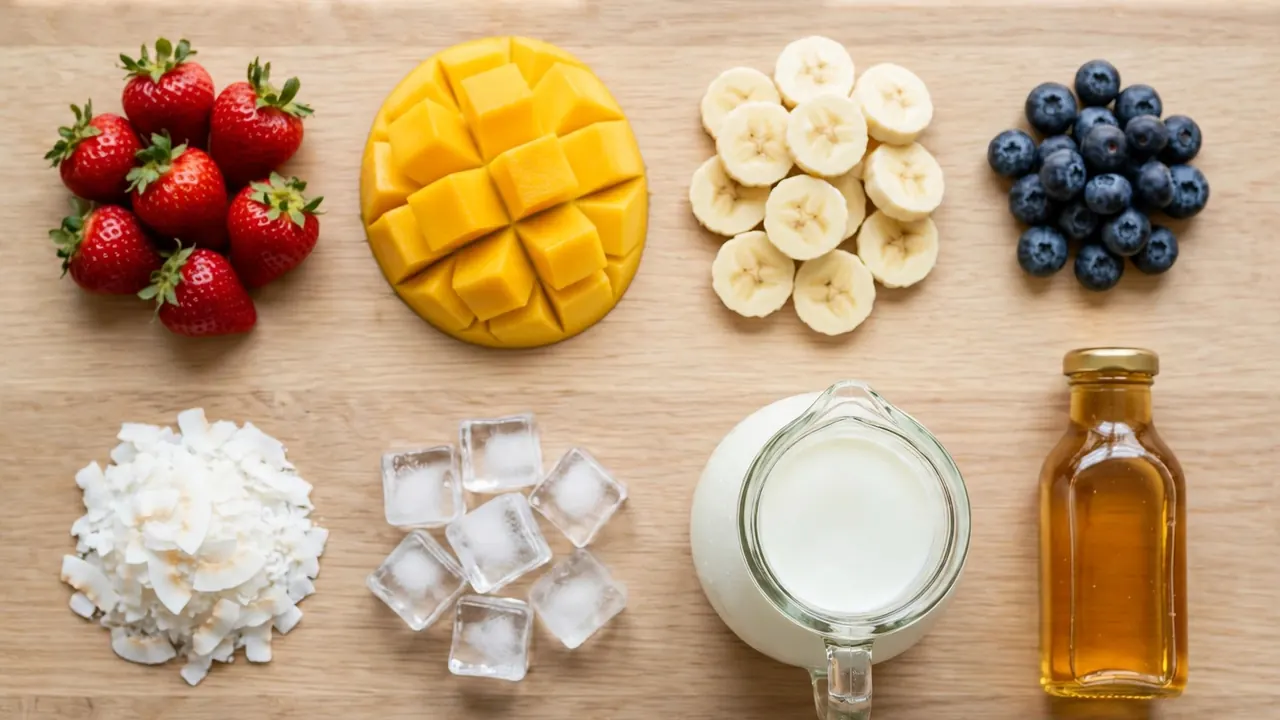
8 Easy Torani Smoothie Recipes
Every recipe below makes one 12 oz smoothie and takes about five minutes. Add the syrup last, blend, taste, and adjust. Frozen fruit gives a thicker texture than fresh fruit, so use frozen when you want a spoon-thick smoothie and fresh when you want a thinner, drinkable one.
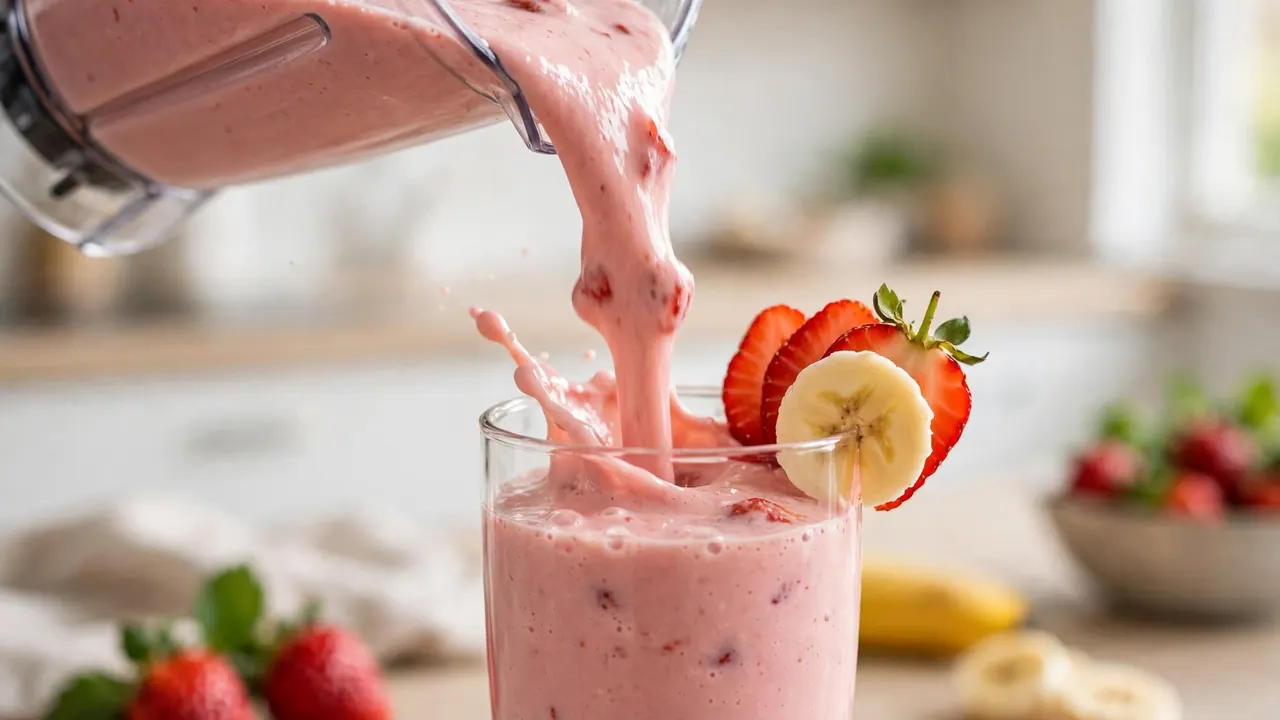
1. Classic Strawberry Banana Smoothie
- 1 cup frozen strawberries
- 1 ripe banana
- 3/4 cup milk or almond milk
- 1/2 cup Greek yogurt
- 1 tablespoon Torani Strawberry Syrup
- 1/2 cup ice
Blend everything on high for 45 seconds until completely smooth. The syrup sharpens the strawberry flavor and lets you skip honey or sugar entirely. This is the recipe to make first if you are new to Torani in smoothies.
2. Tropical Mango Pineapple Smoothie
- 1 cup frozen mango chunks
- 1/2 cup frozen pineapple
- 3/4 cup coconut milk
- 1 tablespoon Torani Mango Syrup
- 1/2 tablespoon Torani Coconut Syrup
- 1/2 cup ice
Blend until thick and creamy. The two syrups together taste like a beachside smoothie bar blend, and the coconut milk keeps it dairy-free. Add a squeeze of lime if you want a brighter finish.
3. Peanut Butter Banana Protein Smoothie
- 1 frozen banana
- 2 tablespoons peanut butter
- 1 scoop vanilla protein powder
- 1 cup milk
- 1 tablespoon Torani Crème de Banana Syrup
- 1/2 cup ice
Blend for a full minute so the peanut butter fully incorporates. The banana syrup fills in the flavor that a frozen banana alone cannot give, and the result tastes like a milkshake with roughly 25 to 30 g of protein depending on your powder. For more protein ideas, see our guide to Torani syrup for protein shakes.
4. Blueberry Vanilla Oat Smoothie
- 1 cup frozen blueberries
- 1/4 cup rolled oats
- 3/4 cup milk
- 1/2 cup Greek yogurt
- 1 tablespoon Torani Blueberry Syrup
- 1 teaspoon Torani Vanilla Bean Syrup
Soak the oats in the milk for two minutes before blending so they soften. This is a filling breakfast smoothie that keeps well in the fridge for a few hours, though it thickens as the oats absorb liquid.
5. Peach Raspberry Morning Smoothie
- 1 cup frozen peaches
- 1/2 cup frozen raspberries
- 3/4 cup orange juice or iced green tea
- 1/2 cup Greek yogurt
- 1 tablespoon Torani Peach Syrup
Blend until smooth. The juice base keeps it light and refreshing, which makes this a good warm-weather breakfast. If you use green tea instead of juice, the smoothie stays lighter and lower in sugar.
6. Chocolate Banana Milkshake Smoothie
- 1 frozen banana
- 1 cup milk
- 1/2 cup vanilla ice cream or frozen yogurt
- 1 tablespoon Torani Chocolate Milano Syrup
- 1 teaspoon Torani Vanilla Bean Syrup
- 1/2 cup ice
Blend briefly so the ice cream stays thick. This is the closest thing to a cafe milkshake you can make at home, and it works as a dessert as well as a treat breakfast. A drizzle of chocolate syrup on the glass is optional but looks great.
7. Piña Colada Style Smoothie (No Alcohol)
- 1 cup frozen pineapple
- 1/2 cup coconut milk
- 1/2 cup pineapple juice
- 1 tablespoon Torani Coconut Syrup
- 1/2 tablespoon Torani Pineapple Syrup
- 1/2 cup ice
Blend until slushy. The two syrups do the flavor work here, so you can use plain coconut milk instead of sweetened cream of coconut and keep the sugar lower. Garnish with a pineapple wedge and a cherry if you are serving guests.
8. Green Mango Detox Smoothie
- 1 cup frozen mango
- 1 big handful of baby spinach
- 3/4 cup coconut water
- 1/2 banana
- 1 tablespoon Torani Mango Syrup
- 1/2 tablespoon Torani Passion Fruit Syrup
Blend the spinach and coconut water first, then add the fruit and syrups. The mango and passion fruit completely cover the spinach flavor, which makes this the easiest way to get greens into a smoothie that still tastes like a treat.
Build Your Own Torani Smoothie: The 1-2-3 Formula
Use this formula to invent your own recipes without guessing at amounts.
- 1 cup frozen fruit for body and thickness
- 3/4 cup liquid (milk, almond milk, juice, coconut water, or iced tea)
- 1/2 cup creamy base (Greek yogurt, ice cream, or frozen yogurt) for richness
- 1 tablespoon Torani syrup for flavor and sweetness, then taste and adjust
- 1/2 cup ice if you want it extra thick and cold
Flavor rule: one main syrup plus one accent syrup at half the amount. Two full tablespoons of two different flavors usually fight each other instead of blending.
Sugar-Free Torani Syrups for Smoothies
If you are watching sugar, the Sugar Free line is the best way to keep using Torani in smoothies. These syrups are sweetened with sucralose, and they have 0 calories, 0 g of sugar, and 0 g of carbs per serving. The flavor range covers the smoothie essentials: Sugar Free Strawberry, Sugar Free Mango, Sugar Free Peach, Sugar Free Coconut, Sugar Free Vanilla, and Sugar Free Chocolate.
In blind taste tests at home, most people cannot tell Sugar Free Strawberry from the Original in a smoothie, because the fruit and milk mask the small difference in the sweetener. Sugar Free Vanilla is the most useful bottle of the range, since it works as a base note in any recipe on this page.
One caution: some people notice a slight aftertaste from sucralose in very simple blends, like a plain banana smoothie with only milk and syrup. In fruit-heavy smoothies the aftertaste disappears. If you are new to sugar-free syrups, start with a berry recipe, where the fruit flavor is strongest. Our roundup of the best sugar-free Torani syrups for coffee covers the wider range if you want one bottle that works in both coffee and smoothies.
Nutrition, Ingredients & Allergens
Torani Original syrups are simple products. The ingredient list for most fruit flavors is short: pure cane sugar, water, natural flavors, citric acid, and the preservatives potassium sorbate and sodium benzoate. Some fruit flavors also contain FD&C colors, which is worth knowing if you avoid artificial dyes.
The table below shows the nutrition for a 2-tablespoon serving, which is the serving size printed on Torani bottles. Values vary slightly by flavor, so treat these as a range rather than an exact figure for any single bottle.
| Per 2 tablespoons (30 ml) | Torani Original | Torani Sugar Free |
|---|---|---|
| Calories | 80 to 90 | 0 |
| Total fat | 0 g | 0 g |
| Total carbohydrate | 20 to 24 g | 0 g |
| Total sugars (all added) | 19 to 24 g | 0 g |
| Dietary fiber | 0 g | 0 g |
| Sodium | 0 to 10 mg | 0 to 5 mg |
| Servings per 750 ml bottle | 25 | 25 |
Allergen notes: Torani syrups are generally free from the major allergens, and Torani labels many fruit flavors as dairy-friendly. Nut-flavored syrups such as Hazelnut and Macadamia Nut are made in facilities that handle tree nuts, so check the label on your bottle if you have a nut allergy. For the wider health picture, including how Torani compares with other sweeteners, see our article on whether Torani syrup is healthy.
Torani also sells a separate Smoothie Mix line, which is a different product from the syrups in this guide. The mix combines fruit puree, syrup, and thickener, and the basic recipe is 4 oz of mix, 6 oz of liquid, and 1 cup of ice for a 12 oz smoothie. If you want a faster option with fewer ingredients to measure, the mix is worth trying, but the syrups give you more control over flavor and sugar.
What Does Torani Syrup Cost? Prices Checked November 21, 2026
Prices vary by retailer, flavor, and whether you buy single bottles or packs. The table below shows real listings found on November 21, 2026. Always check the current listing before you buy, since syrup prices move often.
Best value: the 4-packs on Amazon work out to about $6.48 per bottle, which is the cheapest reliable price we found. Single bottles usually cost $9 to $15 depending on the seller, so check at least two stores before ordering.
5 Mistakes That Ruin a Torani Smoothie
Most Torani smoothie failures come from five avoidable mistakes. Fix these and the recipes on this page work the first time.
1. Using citrus syrup in a milk base
Lemon, lime, and other citrus flavors can curdle milk, leaving white flecks and a sour taste. This is the same chemistry behind our guide to why Torani syrups curdle in milk. Use citrus syrups with juice, coconut water, or yogurt bases instead, or add the milk after blending the citrus part.
2. Pouring instead of measuring
A free pour from the bottle is usually 3 to 4 tablespoons, which doubles the sugar and makes the smoothie taste like syrup rather than fruit. Measure with a tablespoon until you know what your pour looks like.
3. Adding syrup before tasting the fruit
Very ripe bananas and peak-season berries are sweet enough on their own. Blend the fruit first, taste, and then decide whether you need the full tablespoon. Half a tablespoon is often enough with sweet fruit.
4. Mixing two strong flavors at full strength
Strawberry plus mango at a tablespoon each tastes muddled, not layered. Pick one main flavor at a full tablespoon and add the second at half a tablespoon or less.
5. Blending syrup with hot ingredients
Torani syrup is made for cold and room-temperature drinks. Pouring it into a hot smoothie base can make the flavor taste cooked and flat. Let cooked ingredients like oatmeal cool for a few minutes before blending.
How to Store Torani Syrup
Torani syrups do not need refrigeration after opening, and they keep best in a cool, dark cupboard away from sunlight. The bottle’s pump or cap should stay closed between uses, because exposure to air slowly dulls the flavor. An opened bottle stays at its best for about a year, and the printed best-by date on the bottle is the reliable guide.
Do not store syrup in the fridge unless the label says so. Cold storage can thicken some flavors and make them pour unevenly, which makes measuring harder. If a syrup has been open for a very long time and smells off or tastes flat, replace it. One bottle costs about $11, so it is not worth saving a stale one.
Smoothie Flavor Pairing Matrix
Start with the fruit in the left column, then add the syrup in the right column. Each pair is tested to blend well.
Frequently Asked Questions
Can you put Torani syrup in a smoothie?
Yes. Torani syrup is made for cold drinks, and smoothies are one of its best uses. Add 1 to 2 tablespoons per 12 oz smoothie, blend, and taste before adding more. Fruit flavors work best, while coffeehouse flavors suit dessert-style blends.
How much Torani syrup should I add to a smoothie?
Start with 1 tablespoon per 12 oz smoothie. That adds about 40 to 45 calories and 10 to 12 g of sugar. Go up to 2 tablespoons for a 12 oz smoothie if the fruit is tart, and up to 3 tablespoons for a 20 oz meal-size smoothie.
What is the best Torani syrup flavor for smoothies?
Strawberry is the best all-round choice because it works with milk, yogurt, and juice bases and pairs with banana, vanilla, and other berries. Mango is the best tropical choice, and Crème de Banana is the best choice for creamy breakfast smoothies.
Is Torani syrup healthy in smoothies?
Torani Original syrup adds 80 to 90 calories and 19 to 24 g of sugar per 2-tablespoon serving, so it makes a smoothie sweeter and less healthy than an unsweetened one. The Sugar Free line adds flavor with 0 calories and 0 g of sugar, which is the healthier option if sugar is a concern.
Can I use sugar-free Torani syrup in smoothies?
Yes. Sugar Free Torani syrups work exactly like the Original line in smoothies, with 0 calories and 0 g of sugar per serving. Sugar Free Strawberry, Mango, Peach, Coconut, and Vanilla are all good smoothie choices.
Does Torani syrup curdle milk in smoothies?
Citrus flavors like lemon and lime can curdle milk because their acidity reacts with dairy. Fruit flavors like strawberry, mango, and banana do not cause this problem. If you want a citrus smoothie, use a juice or coconut water base instead of milk.
What is the difference between Torani syrup and Torani Smoothie Mix?
Torani syrup is a concentrated flavoring you add by the tablespoon to your own fruit, milk, and ice. Torani Smoothie Mix is a ready-made base that already contains fruit puree, syrup, and thickener. The mix recipe is 4 oz of mix, 6 oz of liquid, and 1 cup of ice for a 12 oz smoothie.
How long does Torani syrup last once opened?
An opened bottle keeps its best flavor for about a year when stored in a cool, dark cupboard with the cap closed. It does not need refrigeration. Check the best-by date printed on the bottle, and replace the syrup if it smells off or tastes flat.
The Bottom Line
Torani syrup for smoothies works because it gives you control. One measured tablespoon fixes bland fruit, evens out flavor from batch to batch, and turns a plain blend into something worth making again. Strawberry, mango, and Crème de Banana are the three bottles to buy first, and the 1-2-3 formula on this page lets you build your own recipes from whatever fruit is in the freezer.
Start with the classic strawberry banana recipe, measure the syrup, and taste before you add more. Once you find your amount, the same bottle will carry you through 25 to 50 smoothies. That is a lot of cafe-style breakfasts for about $11.